Venice in Winter: Fog, Acqua Alta, Carnival 2027 – and Why the Lagoon City Is at Its Most Beautiful Now
19 Nov 2026 · 15 min read
Quick answer: Venice in winter is the quietest and often the cheapest time to visit the lagoon city – fog over the canals, empty lanes in the morning and an almost mystical mood. Expect cool, damp weather: in January the average daytime high at the Venice-Tessera station (1991–2020 normals) is about 8 °C (46 °F), with nights around 0 °C (32 °F). Between November and February you may meet acqua alta: according to Il Post, St Mark’s Square floods from a tide of roughly 75–80 cm, while the MOSE barriers only hold back the higher tides. Carnival 2027 runs from 23 January to 9 February 2027 according to the official website. The day-tripper access fee applies in 2027 only from 26 March to 15 August – in winter you don’t pay it. Checked 19.11.2026, sources below.
Picture yourself stepping out of your guesthouse at seven in the morning. No suitcase wheels rattling, no tour group behind a flag. A thin veil of mist hangs over the Grand Canal, and the palaces on the far bank appear slowly, as if someone were uncovering an old painting layer by layer. A vaporetto glides past, a bar somewhere rolls up its shutter, and the first espresso of the day drifts through the calle. This is Venice in winter – the city that belongs to the crowds in summer suddenly belongs to you again.
Plan this tripOur go-to links for a place to stay, rental cars, mobile data and travel gear:
To be honest: we visited Venice in May ourselves, drove to Tronchetto, had a room looking out over the rooftops and spent three days in the lagoon. The photos in this post are our own pictures from that trip – not from winter. Everything about winter (climate, flooding, Carnival 2027, the access fee) we checked on 19.11.2026 with official bodies and reliable media. Here is what really awaits you between November and March – and how to avoid the usual traps.
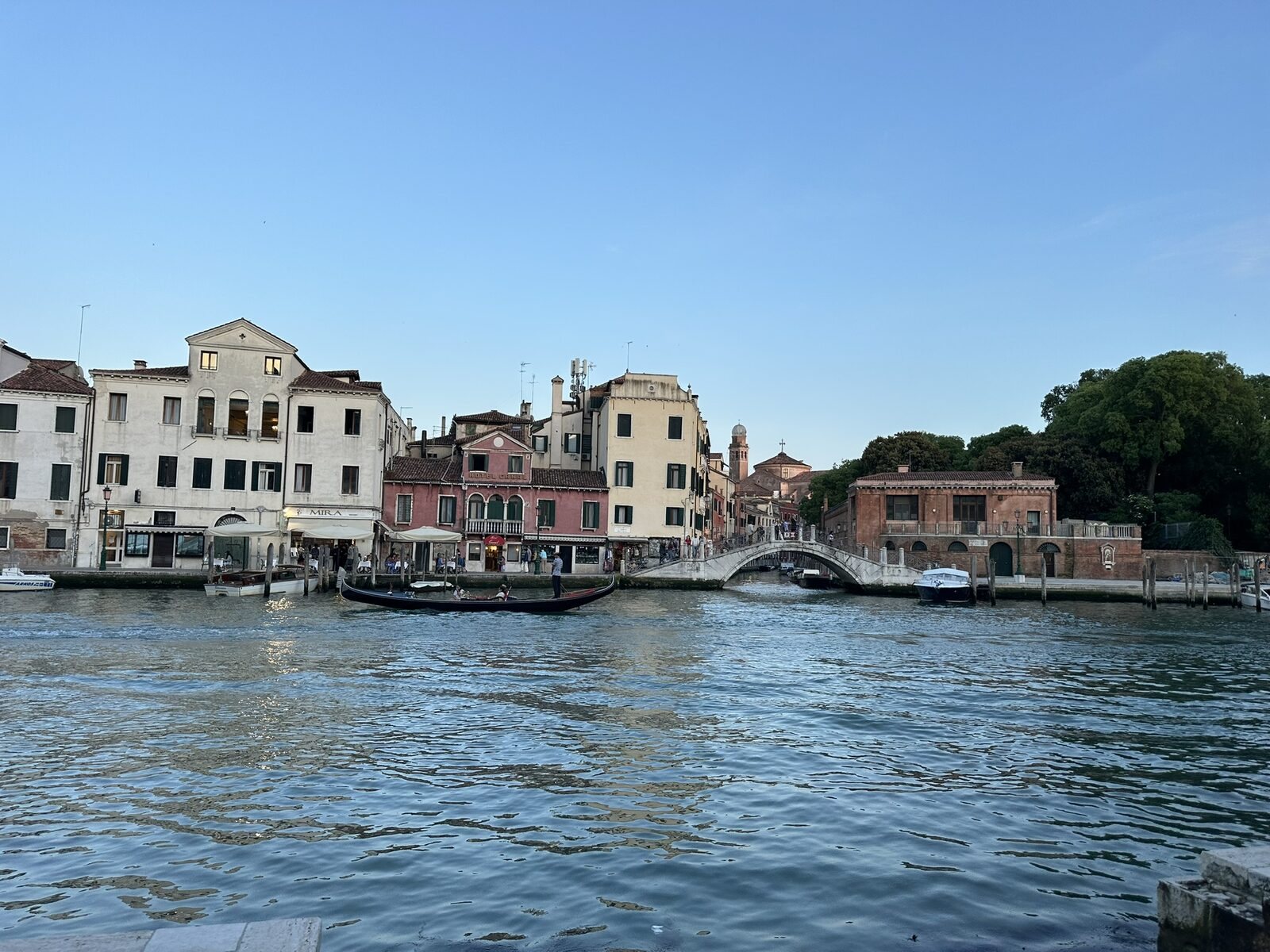
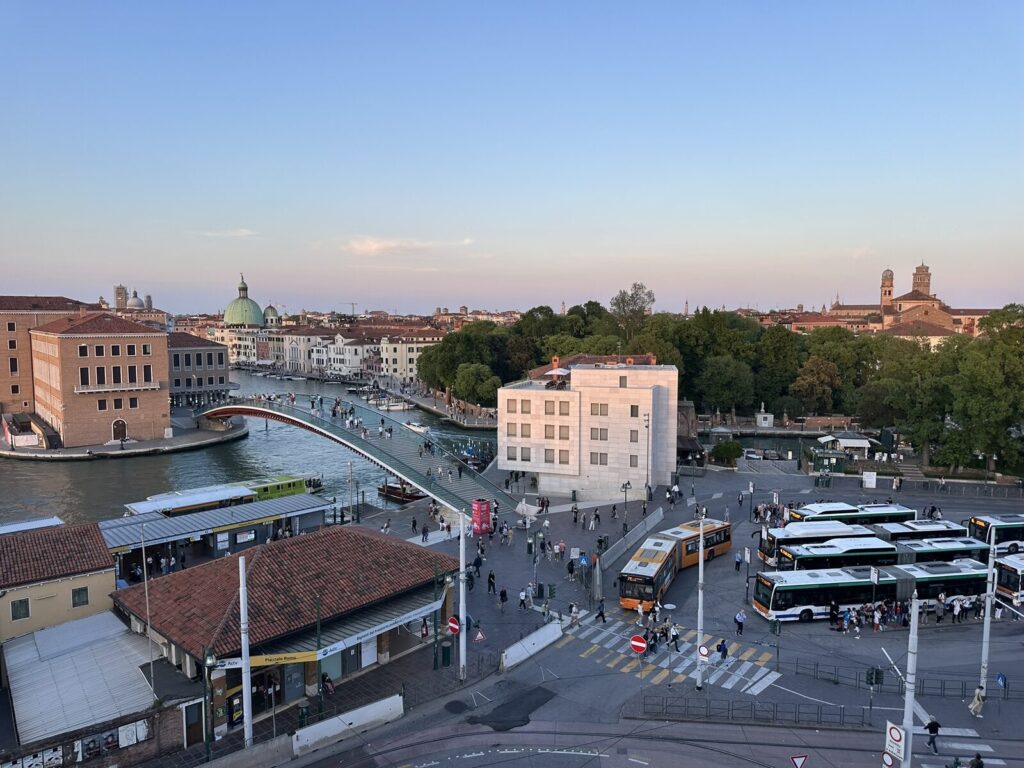
The Grand Canal with San Simeone Piccolo – our own photo from May. In winter the light is softer and the city emptier.
Venice in winter: weather, temperatures and fog
Venice sits in the middle of a lagoon, and that shapes its winter: rarely freezing hard, but damp, often still and foggy. The 1991–2020 climate normals for the Venice-Tessera station (at the airport, about 8 km from the centre) show:
Month
Avg high
Avg low
Rainfall
What it means for you
December
approx. 8 °C / 47 °F
approx. 1 °C / 34 °F
approx. 51 mm
Christmas mood, short days, high-water season
January
approx. 8 °C / 46 °F
approx. 0 °C / 32 °F
approx. 41 mm
quietest month, frequent fog, cheaper stays
February
approx. 9 °C / 49 °F
approx. 1 °C / 34 °F
approx. 56 mm
Carnival – busy and pricier
Source: WMO climate normals 1991–2020, Venezia-Tessera station, via climate-zone.com (converted and rounded). Individual winters vary.
What to wear: layers, a windproof jacket, hat and gloves – and above all waterproof shoes with good grip. Stone paving and wooden landings get slippery in damp fog. If you travel between November and February, pack light overshoes (more on that under acqua alta).
Light: it gets dark early in winter. Do the lagoon islands in the morning and save the old town for the evening, when the lanterns reflect in the canals.
Acqua alta: what really happens when Venice floods in winter
Acqua alta isn’t the end of the world; it’s part of the Venetian winter. When a high tide meets a southerly wind (scirocco), the sea pushes into the lagoon and the lowest parts of the city fill with water. The lowest of all is St Mark’s Square: according to Il Post it floods from a tide of roughly 75–80 cm, as does the Erbaria near the Rialto.
What does MOSE do?
MOSE is the system of movable barriers at the three entrances to the lagoon. According to Il Post it is raised to keep the tide in the city below 110 cm – 18 times between 28 January and 11 February 2026 alone, at roughly 200,000 euros per raising. What matters for you: because the barriers only go up for higher tides, St Mark’s Square can still get wet at tides of around 80–100 cm. Venetians distinguish, according to Il Post:
Tide
Name
What you notice
from approx. 80 cm
–
St Mark’s Square and low spots wet
90–109 cm
marea sostenuta
several lanes flooded, raised walkways set up
110–139 cm
marea molto sostenuta
large areas affected – MOSE is normally raised
140 cm and above
alta marea eccezionale
exceptional
How to handle acqua alta calmly
Check the forecast: the City of Venice’s tide centre (Centro Maree) publishes tide forecasts for the coming days on the municipal website. Take a look in the evening before planning the next day.
Floods last hours, not days: the water comes with the tide and goes with the ebb. Plan a museum, church or café for the peak hours.
Use the walkways: at higher tides the city sets up raised walkways (passerelle) on the main routes – stay on them and keep right so people can pass.
Bring overshoes: light plastic overshoes from home are the best investment. Buying them on the spot in a hurry means paying tourist prices.
Avoid ground-floor rooms: in winter a first-floor room is the better choice – and quieter too.
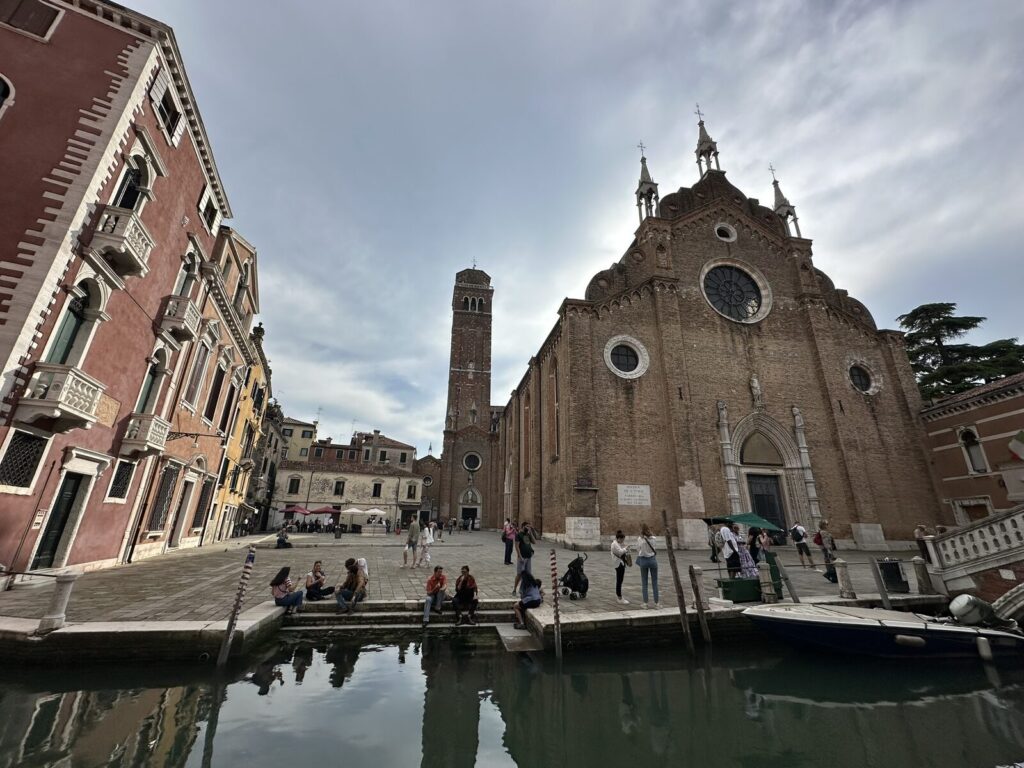
The Frari basilica – one of the finest churches for a rainy or flooded day. Our photo from May.
Venice Carnival 2027: dates and honest tips
Carnival is the highlight of the Venetian winter. According to the official Carnevale di Venezia website, it runs in 2027 from Saturday 23 January to Tuesday 9 February 2027. Note: some travel sites still give 30 January as the start – the organiser’s official site is what counts. The detailed programme (Festa delle Marie, Flight of the Angel, events on the water) had not yet been published on 19.11.2026.
How to enjoy Carnival without the stress
Book your stay now: the Carnival weekends are the busiest days of winter. If you’re flexible, choose the weekdays in between – the same masks, far fewer crowds.
Photograph early: you’ll see the most beautiful masks early in the morning along the Riva degli Schiavoni and around San Zaccaria, before the day-trippers arrive.
Masks from the workshop: real papier-mâché masks are made in workshops (botteghe), where you can often watch them being painted. Cheap mass-produced masks at the stalls around San Marco are usually not Venetian craft.
Balls and dinners only via official channels: buy tickets for official Carnival dinners and shows on the official Carnival website or directly from the organiser – not via unknown resellers.
Christmas, New Year and festivals: Venice in December and January
Festa della Madonna della Salute (21 November): every year a votive pontoon bridge is laid across the Grand Canal to the church of Santa Maria della Salute, and Venetians make their way there on foot – one of the most genuine festivals in the city, with no tourist programme at all.
Advent and Christmas: Venice in December isn’t a Christmas-market city like Vienna; it’s quiet: lights in the lanes, nativity scenes in the churches, panettone in every pasticceria. If you want big Christmas markets, see our guide to Vienna’s Christmas markets.
New Year’s Eve: celebrations centre on St Mark’s Square; the city usually announces the exact programme in December. Accommodation costs considerably more over New Year and sells out early.
Regata della Befana (6 January): traditionally, rowers dressed as the “Befana” (the Epiphany witch) race on the Grand Canal – a quirky, lovable spectacle to close the holidays.
Venice entry fee 2027: do you pay in winter?
No. After the trial years, the contributo di accesso (day-tripper fee) has been set for 2027: according to the city’s official site (cda.ve.it) and La Voce di Venezia it applies on 72 days from 26 March to 15 August 2027, from 8:30 am to 4:30 pm, with a maximum of 10 euros. No day between November and February is included. The city will announce exemptions and the booking portal later. If you come at Easter (26–29 March 2027), you’ll need to register as a day visitor.
Watch out for “Venice pass” websites: around the fee there are private sites with official-sounding names. Register only with the City of Venice – the details and the direct route are in our Venice guide.
Travelling from outside the EU: ETIAS and lookalike sites
If you travel on a non-EU passport that is visa-free for Schengen (for example from the US, UK, Canada or Australia), keep an eye on ETIAS, the EU’s new travel authorisation. The EU has announced it for the end of 2026 with a fee of 20 euros (Wikipedia, citing EU sources) – check the current status before you travel. Many intermediary websites already charge a multiple of the official fee for the same form. A quick check: the real EU website ends in europa.eu. We learned this the hard way ourselves – we once paid an intermediary a multiple for an entry form because the site looked completely normal. That’s why our guides show you the right way, with a QR code and step-by-step instructions. Our ETIAS chapter is coming soon – save your spot on our guides page.
Venice in winter: 10 things you have to experience
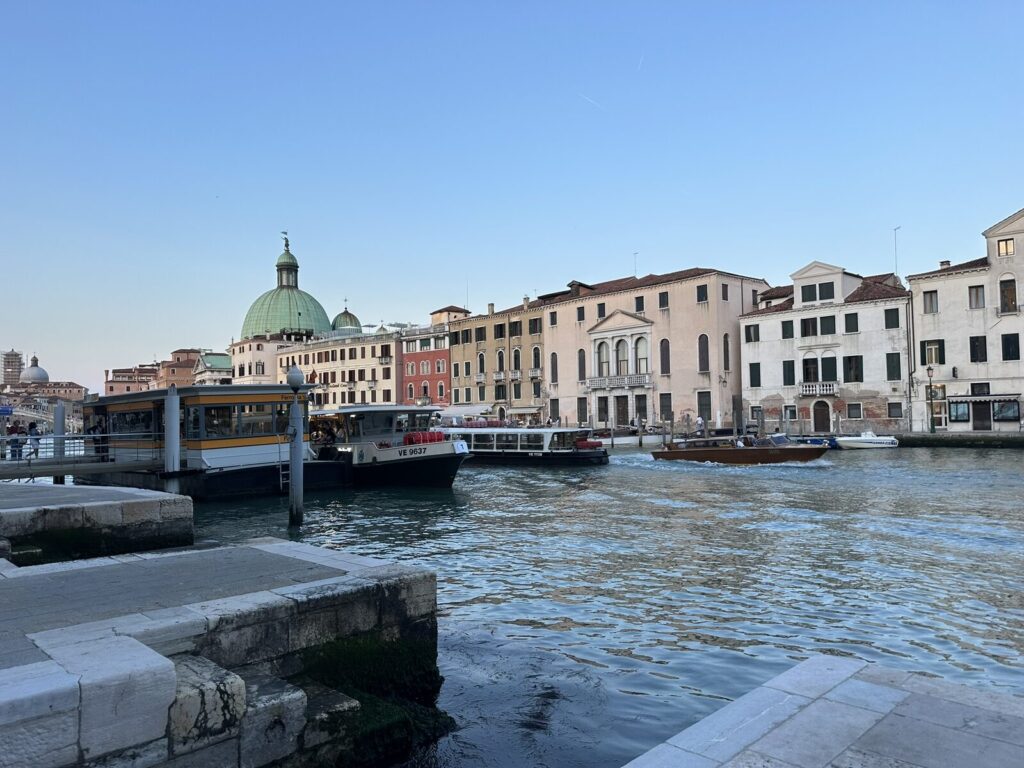
The Grand Canal in morning mist on vaporetto line 1 – slow, past every palace. Which ticket pays off is explained in Venice vaporetto tickets.
St Mark’s Square at 8 am: almost empty, the pigeons, the light – easy in winter, impossible in summer.
Burano in winter: the colourful houses glow even brighter in grey light, and you’ll have the lanes nearly to yourself.
Murano’s glass furnaces: it’s warm in the workshops – perfect for a cold day.
The Lido in winter: an empty beach facing the Adriatic and the feeling of being at the end of the world.
A bàcaro crawl in the evening: cicchetti (small bites) and a glass of wine in the wine bars around the Rialto – this is how Venetians eat.
Churches and scuole: the Frari, San Zaccaria, Scuola Grande di San Rocco – perfect for rain and high water.
Sunset from a fondamenta: the winter sun sits low, and in the late afternoon the sky over the lagoon often turns pink.
Cannaregio: the district where Venetians still live – Fondamenta della Misericordia and Ormesini for the evening.
Hot chocolate in a café: thick as pudding, topped with cream – the ultimate winter ritual.
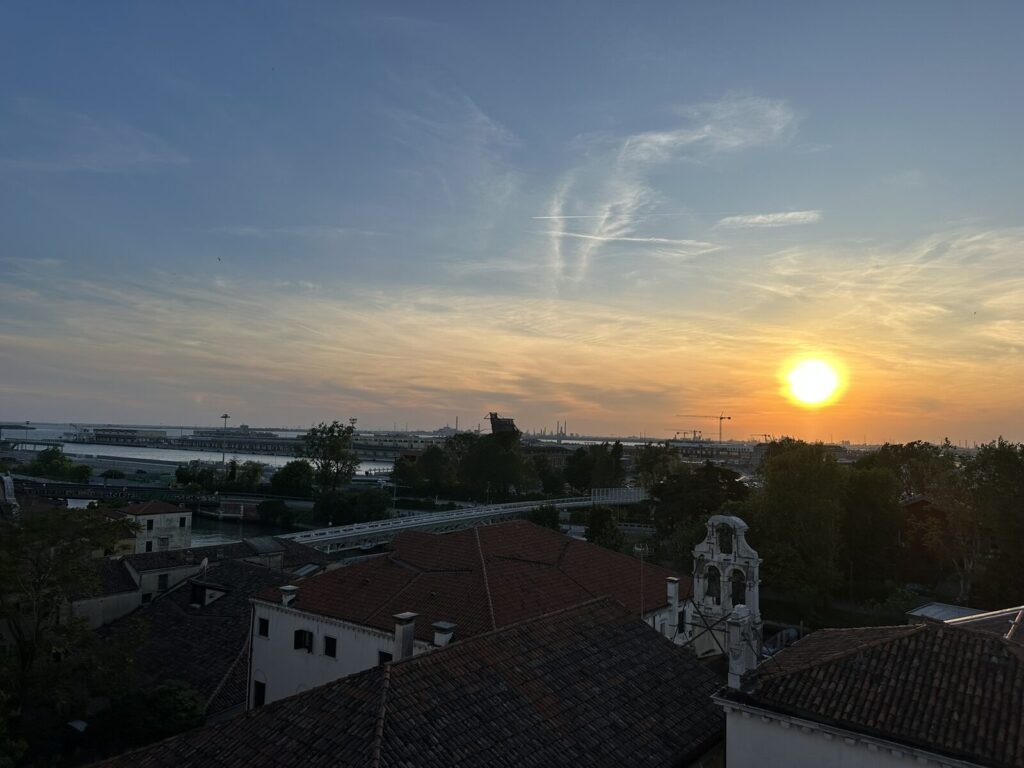
Sunset over the rooftops – the view from our room (May).
Getting to Venice in winter: car, train, plane
By car: that’s how we came. Cars stop at Piazzale Roma or Tronchetto; from there you continue on foot or by vaporetto. Which car park costs what and where the traps are is in Venice by car. In winter, allow for fog on the motorway around Mestre.
By train: Venezia Santa Lucia station sits right on the Grand Canal – you step out and you’re in the middle of the city. Make sure you don’t get off at Venezia Mestre.
By plane: from Marco Polo airport you reach the city by bus, water taxi or Alilaguna boat. The water taxi is lovely but the most expensive option – always agree the fare before boarding.
Piazzale Roma from above – buses and cars end here; from here you walk or take a boat. Our photo from May.
Venice in winter on a budget: where you really save
Apart from Christmas, New Year and Carnival, winter is the cheapest time for accommodation in Venice. In our experience, January and the weeks between Carnival and Easter are the quietest. We deliberately don’t quote average prices here because they swing enormously from week to week: always compare for your exact dates.
Item
Money-saving tip
Trap
Accommodation
January, weekdays, Cannaregio or Castello
Carnival and New Year – prices jump
Vaporetto
a travel pass instead of single tickets if you ride a lot
single tickets add up fast
Food
cicchetti in a bàcaro, pizza al taglio
restaurants with touts around San Marco
Coffee
standing at the bar
at a table on St Mark’s Square – a multiple
City access fee
not due in winter
private “pass” websites
Venice in winter: the traps
1. Ignoring acqua alta: without checking the tide forecast you’ll be standing on St Mark’s Square in canvas shoes. Check the Centro Maree forecast the evening before.
2. Table instead of counter: in Italy a seat at a table often costs extra (coperto, service). If you just want a quick espresso, drink it at the bar.
3. Water taxi without a fixed fare: always agree the price before boarding.
4. Carnival tickets from strangers: book official dinners, balls and shows only on the official Carnival site or with the organiser.
5. Gondola without a price: agree price and duration before you step in – in winter you have time to do it calmly.
6. Wrong station: Venezia Mestre isn’t Venice – your destination is Venezia Santa Lucia.
Our recommendations for Venice in winter (advertising – we earn a small commission at no extra cost to you):
Trips to Murano and Burano, Doge’s Palace tours, gondola rides: Venice on GetYourGuide – usually free cancellation.
Compare hotels in Cannaregio, Castello or Dorsoduro: Booking.com
An apartment with a canal view for several nights: Airbnb
Travel medical insurance: SafetyWing · data on the go: Airalo eSIM · pay without fees: Wise card
Checklist: Venice in winter
☐ Pack waterproof shoes and light overshoes
☐ Check the Centro Maree tide forecast the evening before
☐ First-floor room rather than ground floor
☐ Carnival 2027 (23 Jan – 9 Feb): book early or avoid on purpose
☐ Choose a vaporetto pass that matches your days
☐ Plan churches and museums for foggy or flooded hours
☐ Visit Murano and Burano in the morning
☐ Train to Venezia Santa Lucia, not Mestre
☐ Water taxi and gondola only at an agreed price
☐ Non-EU passport: check ETIAS status, only on a site ending in europa.eu
Yes, if you like peace, atmosphere and fog. Outside Christmas, New Year and Carnival, Venice in winter is far emptier and usually cheaper than in spring and summer.
How cold is Venice in winter?
In January the long-term average daytime high (1991–2020, Venice-Tessera station) is about 8 °C (46 °F), with nights around 0 °C (32 °F). The humidity often makes it feel colder.
When is acqua alta in Venice?
Mainly between autumn and late winter, when high tides meet a southerly wind. According to Il Post, St Mark’s Square floods from around 75–80 cm. Floods usually last only a few hours.
Does MOSE protect Venice from flooding?
From the high tides, yes: the barriers are raised to keep the tide below 110 cm. Lower tides that still reach St Mark’s Square are not stopped by MOSE.
When is Venice Carnival 2027?
According to the official website, from 23 January to 9 February 2027. The detailed programme will be published later.
Do you have to pay to enter Venice in winter?
No. In 2027 the access fee applies on 72 days from 26 March to 15 August, from 8:30 am to 4:30 pm. No day between November and February is included.
What can you do in Venice when it rains?
Churches like the Frari basilica, the Scuola Grande di San Rocco, the Doge’s Palace, the glass furnaces on Murano and a bàcaro crawl with cicchetti.
What is the quietest winter month in Venice?
Usually January, from 6 January until Carnival starts – in 2027 roughly the second and third weeks of January.
Can you visit Burano and Murano in winter?
Yes, the vaporetti run all year. Fog can slow the boats down; plan the islands for the morning.
Conclusion: Venice in winter is the city as it’s meant to be
Venice in winter takes a little planning – waterproof shoes, a glance at the tide forecast, the right week. In return you get something that’s barely possible in summer any more: empty lanes in the morning, mist over the Grand Canal, cicchetti among locals and a St Mark’s Square all to yourself. We experienced Venice in May – in winter a completely different, quieter city is waiting. Come in January for the calm or late January for Carnival – but come.
Carnevale di Venezia, official website: 2027 dates (carnevale.venezia.it, accessed 19.11.2026)
Comune di Venezia, contributo di accesso: 2027 calendar and hours (cda.ve.it, accessed 19.11.2026); La Voce di Venezia: “Calendario 2027 del Contributo di accesso: 72 giornate” (15.10.2026)
Il Post: “Il Mose è molto attivo” (11.02.2026) – raisings, thresholds, tide categories, costs
MeteoWeb: MOSE raised again after almost three months (14.05.2026); Centro Maree, Comune di Venezia
WMO climate normals 1991–2020, Venezia-Tessera station (via climate-zone.com, accessed 19.11.2026)
Wikipedia: European Travel Information and Authorisation System (ETIAS) – planned start and fee (accessed 19.11.2026)
Our own trip to Venice in May (photos and arrival by car)
Plan this tripOur go-to links for a place to stay, rental cars, mobile data and travel gear:
🔔 Get new articles & deals as a notification?No spam – max. 4 a day, switch off anytime.
Your choice
We only use what is necessary to run this website. Everything else – such as statistics or content from third parties – only with your consent. You can change your choice at any time.