Travel tips
Bangkok in the Rainy Season: Months, Day Plan, Prices – What Really Happens
Bangkok rainy season May–October: wettest month September (336 mm), usually 1–2 h of afternoon rain. Climate table, day plan, transport, den…
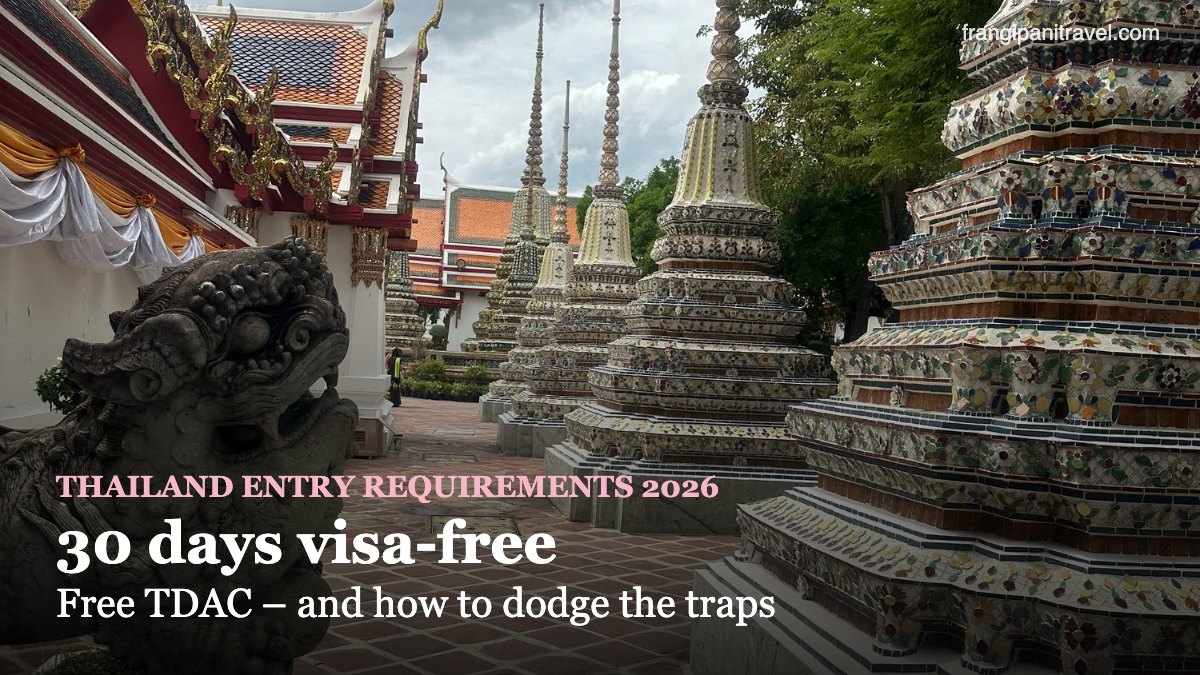
Quick answer: Since 15 September 2026, the Thailand entry requirements for travellers from Austria, Germany, Switzerland and many other countries allow a visa-free stay of 30 days for tourism – the old 60-day rule has been scrapped. You need a passport valid for at least six months on arrival and the Thailand Digital Arrival Card (TDAC), which is free and can be filled in no earlier than 72 hours before arrival – only at tdac.immigration.go.th. There is currently no tourist entry fee. Status: 6 Nov 2026, sources below.
You are standing in the arrivals hall at Suvarnabhumi. The air conditioning hums, and outside the heavy, humid warmth is waiting to wrap around you like a wet towel. In front of you, hundreds of people in queues – and this is the moment you find out whether your preparation worked. If you have the TDAC on your phone, a passport with enough validity and an answer to “How long are you staying?”, you are through in minutes. If not, you are hunting for a form on a dead connection – or you already paid 50 or 80 euros at home on a site that only looked like the government.
We love Thailand – Bangkok, Phuket, the longtail boats off Krabi – and we are flying back by February 2027 at the latest. So we took a close look at the new rules: what changed in September 2026, what is actually mandatory, where the traps are and which websites to use. No scaremongering, no agency fees.
| Topic | What applies (6 Nov 2026) | Official source |
|---|---|---|
| Visa-free stay | 30 days for tourism (e.g. AT, DE, CH) – since 15 Sep 2026, previously 60 days | Royal Thai Gazette 31 Aug 2026, Thai Ministry of Foreign Affairs |
| Extension | once, up to 30 days, before expiry, directly at Immigration | German Foreign Office, Thai Immigration |
| Passport | valid for at least 6 months on arrival | German Foreign Office |
| TDAC (digital arrival card) | mandatory for all foreigners, free, no earlier than 72 h before arrival | tdac.immigration.go.th |
| Proof of funds | at least THB 20,000 per person / THB 40,000 per family, spot checks | German Foreign Office |
| Entry fee | not in force (450 THB planned, 2027 at the earliest) | Tourism authorities, planning stage |
| Visa-free land entries | max. 2 per calendar year (no such cap for air arrivals) | Royal Thai Gazette 31 Aug 2026 |
Sources: Royal Thai Gazette vol. 143 (31 Aug 2026, English translation via tvc.co.th), Thai MFA press briefing of 3 Sep 2026 (mfa.go.th), German Foreign Office travel advice for Thailand, official TDAC website. Rules can change – check before you fly.
Sounds simple? It is – once you know the three stumbling blocks: the 30 days, the TDAC and the fake websites. One at a time.
From July 2024 to September 2026, Austrians, Germans and many others could stay 60 days without a visa. That is over. With four notifications signed on 26 August and published on 31 August 2026 in the Royal Thai Gazette, Thailand repealed the 60-day exemption. Since 15 September 2026, Austria, Germany and Switzerland are back to a 30-day visa exemption – explicitly for tourism only. Anyone who entered before 15 September keeps the stay shown in their entry stamp (source: MFA briefing, 3 Sep 2026).
What does that mean in practice? Two weeks of island hopping plus a few days in Bangkok fit easily. But if you plan six or eight weeks in one go, as many long-term travellers do, you now need to think ahead:
The German Foreign Office also notes that entry may be refused if your tourist stays add up to more than 180 days a year. Worth knowing before that “quick” visa run to Malaysia.
Now to the form most travellers trip over – not because it is hard, but because they end up on the wrong site.
Since 1 May 2025, the Thailand Digital Arrival Card (TDAC) has replaced the old paper TM6 card. It is mandatory for all foreign travellers, whether you arrive by air, land or sea. And it is free: the title of the official site literally says “No Fees Required”.
Step by step:
Our advice: fill in the TDAC at home the evening before your flight, with good internet and a clear head – not at the gate. A typo in your passport number costs you more time at the counter than the whole form.
Easy enough. The catch is not the form, but what Google shows you first.
As soon as the TDAC became mandatory, the copies appeared. Thai Immigration warned on 1 May 2025 and again in June 2025 about fake TDAC websites that charge money and harvest personal data (reported by the Bangkok Post and Pattaya Mail, among others). The pattern is always the same: official-looking design, a flag, “Apply now”, then a “service fee” – for a form that is free.
This is exactly why we make our guides: instead of clicking through ads, the Frangipani guide “Thailand: Bangkok, the North & the Islands” gives you every official website as a link and QR code – TDAC, immigration, ferries, trains. Lose 30 to 80 euros once to an intermediary site, and the guide has paid for itself several times over. (The Thailand guide is coming soon; you can follow it on the guides page.)
Thai border officers are polite but thorough. Know these points:
Book your first nights where you can cancel for free: hotels in Bangkok and Phuket on Booking.com (ad), apartments with kitchen and pool on Airbnb (ad). How to avoid the classic mistakes is explained in Booking Airbnb the right way.
For years a “Thailand tourism fee” has been floating around the news, first 300 baht, now 450 baht. As of 6 Nov 2026: the fee is not in force. The National Tourism Policy Board approved the 450 baht in principle on 14 August 2026; consultation, Cabinet approval, publication and a 180-day lead time follow. Realistically, collection for air arrivals starts in 2027 at the earliest (source: Siam Legal, 28 Aug 2026). A departure tax was also discussed in October 2026 – also not decided.
The same goes for an electronic travel authorisation (ETA) for visa-exempt nationalities: announced since 2024, but currently not required for Austrians or Germans. What matters for you: anyone selling you a “Thailand ETA” or a “Thailand entry fee” today is selling something that does not exist yet.
Thailand is relaxed – except for a few rules where there is no joking. According to the German Foreign Office:
For cash and cards we keep it simple: bring little cash, withdraw locally with a card at the real exchange rate. Thai ATMs usually charge foreign cards a fixed fee per withdrawal – so withdraw less often, but larger amounts. We use Wise (ad), because you pay in baht at the mid-market rate without your home bank’s hidden mark-ups.
Our recommendations for entering Thailand (Advertising – we earn a small commission, your price stays the same)
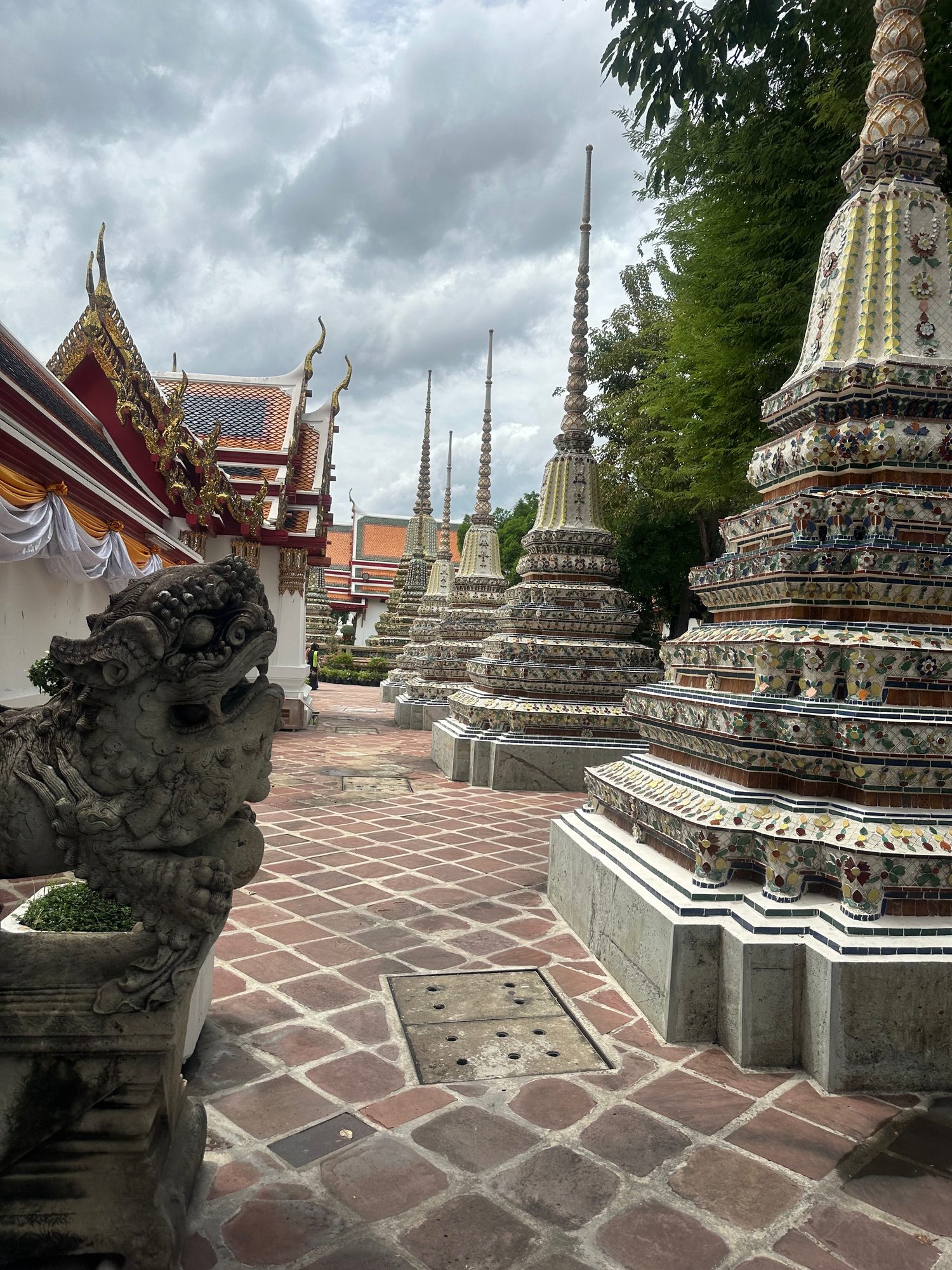
TDAC done, stamp in your passport – and now? Most travellers land in Bangkok, either at Suvarnabhumi (BKK) or Don Mueang (DMK), the low-cost airport. How to get into the city without a taxi rip-off – Airport Rail Link from 15 baht, metered taxi, Grab, bus – is covered in detail here: Bangkok airport to city.
Our tip for the first hour: activate your SIM or eSIM at home, withdraw baht at an ATM in the arrivals hall (not at the exchange booth before customs) and save the route to your accommodation as a screenshot. Then you have arrived before the city swallows you – and you can enjoy what makes it special: street kitchens at midnight, golden temples in the morning light, longtail boats on the Chao Phraya. Our favourite places are in Bangkok things to do, the quiet corners down south in Phuket hidden gems.
Since 15 September 2026, travellers from Austria, Germany, Switzerland and the other listed countries can stay up to 30 days for tourism. The previous 60-day rule no longer applies. A one-time extension of up to 30 days is possible at an Immigration Office, according to the German Foreign Office.
The list published in the Royal Thai Gazette on 31 August 2026 includes Austria, Germany and Switzerland among many others. Check the official list for your nationality with the Thai embassy or the Thai MFA.
No. The Thailand Digital Arrival Card is free. Sites that charge a fee are intermediaries or scams – the real site is tdac.immigration.go.th.
No earlier than 72 hours (3 days) before you arrive in Thailand. Ideally the evening before your flight, with good internet, and save the confirmation offline.
Yes, every arriving person needs their own card and their own passport.
Yes. Since 1 May 2025, the TDAC applies to all foreign travellers – by air, land and sea. Also note: visa-free entries over land are limited to two per calendar year.
Not as of 6 Nov 2026. A 450-baht fee is planned; according to Siam Legal (28 Aug 2026) it will be collected for air arrivals in 2027 at the earliest.
It is not required for visa-free entry. We still recommend it, because private hospitals in Bangkok and on the islands are expensive.
Overstays are fined per day on departure and can lead to entry bans. Plan ahead: apply for an extension at Immigration before your stay expires, or get a visa beforehand.
Passend dazu:
Want more? Read next how to get into the city without a rip-off: Bangkok airport to city – or start dreaming of the Andaman Sea: Krabi and Phi Phi by longtail boat.
Ad: partner links – if you book through them, we earn a small commission and your price stays the same.
Bangkok rainy season May–October: wettest month September (336 mm), usually 1–2 h of afternoon rain. Climate table, day plan, transport, den…

Coatis (quatis) at Iguazu Falls: why they bite, the official park rules, what to do after a bite, which other animals you will see (toucans,…
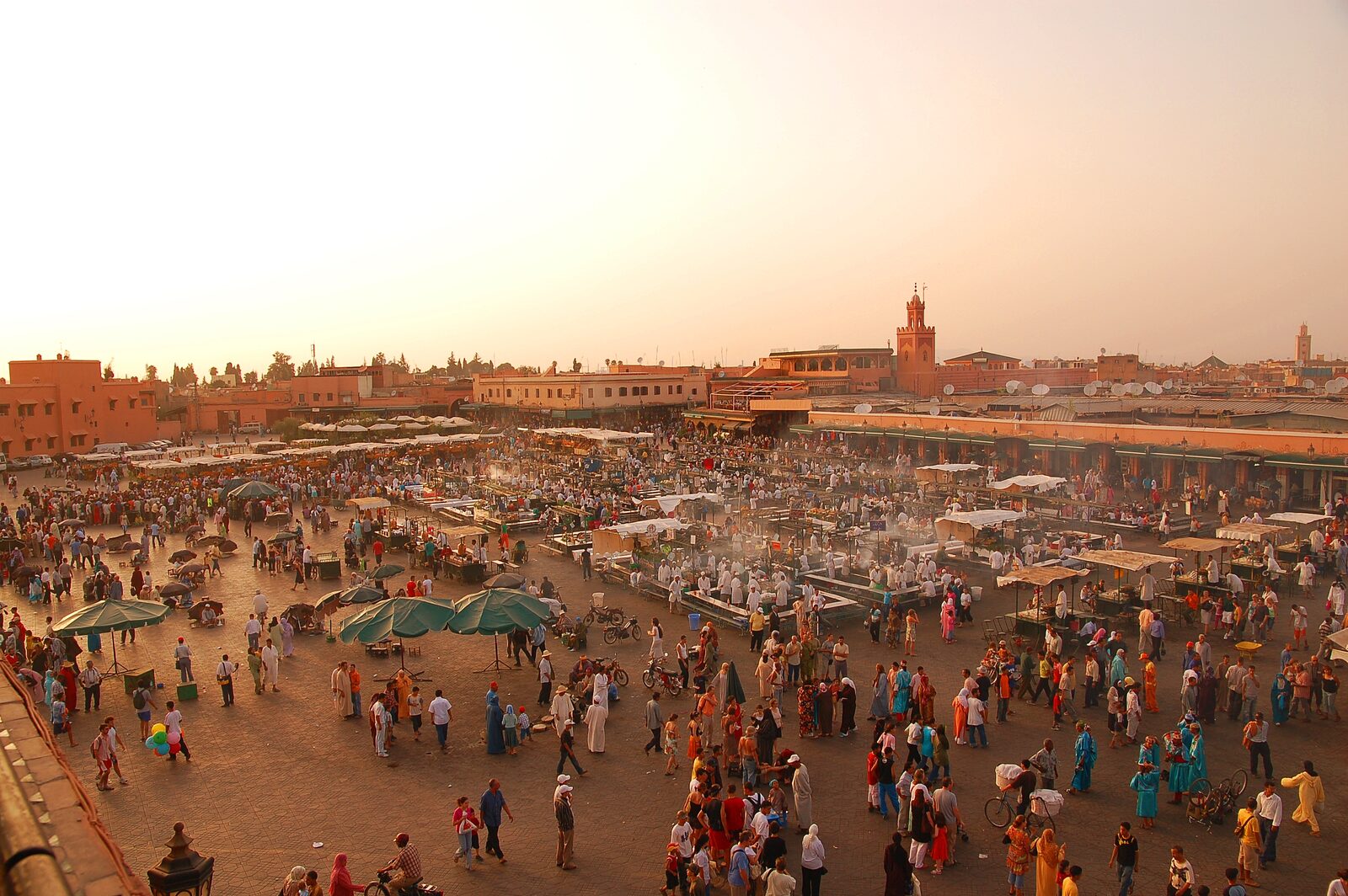
The best time to visit Morocco month by month – with climate data for Marrakech, Fes, the coast and desert, Ramadan 2027, festivals and typi…
We only use what is necessary to run this website. Everything else – such as statistics or content from third parties – only with your consent. You can change your choice at any time.