Quick answer: The Argentina side of Iguazu Falls (tours ↗*) is where you get closest to the water: walkways lead right over the edge, and at the end of the Garganta del Diablo boardwalk you stand above the cauldron where most of the river plunges down. According to Argentina’s National Parks Administration (APN), the day pass for foreign visitors has cost 60,000 pesos (“General” category) since 1 June 2026; children up to and including 6 years are free, and a second visit within 72 hours is 50% off. Official online sales: ventaweb.apn.gob.ar. From Foz do Iguaçu (Brazil) you cross the border to Puerto Iguazú by bus, taxi or tour – bring your passport and plan a full day. Checked 20.11.2026, sources below.
Plan this tripOur go-to links for a place to stay, rental cars, mobile data and travel gear:
You hear it before you see it. At first it’s just a rushing sound behind the trees, then a rumble you feel in your chest. The boardwalk runs over calm, brown water; butterflies land on the railing, a heron stands motionless on a rock. And then, after a little over a kilometre, the river opens up – and right beneath you it simply disappears. The spray rises like a white wall, the ground trembles, and for a moment you forget you’re holding your phone. This is the Garganta del Diablo, the Devil’s Throat. On the Argentina side you don’t stand in front of it – you stand right above it.
We travelled through Brazil in spring 2026 and used Foz do Iguaçu as our base: the Brazilian side with its huge panorama in the afternoon, and the next morning a day trip across the border to Argentina. The photos in this post are our own pictures of the Iguazu Falls. We checked prices, rules and the official ticket route for the Argentina side with Argentina’s National Parks Administration on 20.11.2026 – because this is where many travellers pay more than they need to.
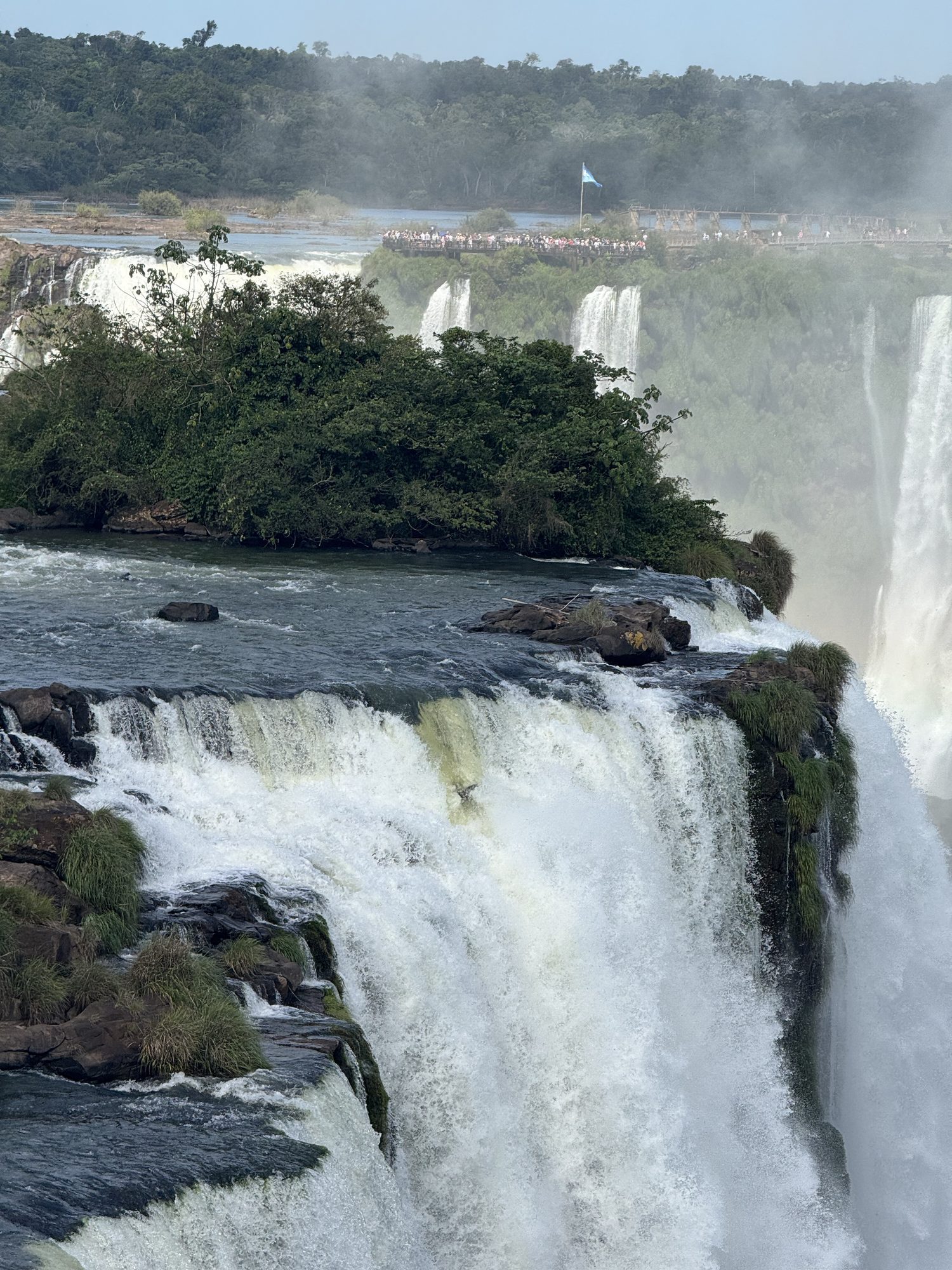
Water pouring over the edge into the Devil’s Throat – our own photo of the Iguazu Falls (spring 2026).
Iguazu Falls Argentina side vs Brazil side – what’s the difference?
The Iguazu River forms the border here. The larger part of the falls lies on Argentine territory, while the Brazilian side looks across at them. That shapes the character of the two parks:
Topic
Argentina side (Parque Nacional Iguazú)
Brazil side (Parque Nacional do Iguaçu)
Experience
Up close: walkways above and below the falls, Devil’s Throat from above
The big panorama over almost all the falls, walkway in front of the Devil’s Throat
Time needed
a full day
half a day
Base town
Puerto Iguazú (Argentina)
Foz do Iguaçu (Brazil)
Entry for foreign visitors
ARS 60,000 day pass “General” (APN, valid from 01.06.2026)
Our honest take: If you only have one day, choose the Brazil side for the overview. If you have two days – and you should – the second belongs to Argentina. Only together do you get the whole picture: Brazil shows you how vast Iguazu is, Argentina lets you feel it.
Iguazu Falls Argentina side tickets 2026: prices and the official way to buy
Entry fees for Argentina’s national parks are set by the National Parks Administration (APN). According to its official fee page, the following prices have applied to Iguazú since 1 June 2026 (Resolución 157/2026):
Ticket
General (incl. foreign visitors)
Nacional (Argentines)
Provincial residents
Day pass
ARS 60,000
ARS 25,000
ARS 8,000
Flexipass 3 days
ARS 120,000
ARS 50,000
ARS 16,000
Flexipass 7 days
ARS 210,000
ARS 87,500
ARS 28,000
Source: Administración de Parques Nacionales (argentina.gob.ar/parquesnacionales/tarifas), “Valores y promociones vigentes a partir del 1º de junio de 2026”, accessed 20.11.2026. The student rate (ARS 15,000) only applies with an Argentine DNI and proof of enrolment at an Argentine school.
Children: According to APN, children aged 0 to 6 inclusive enter free.
Second day at half price: APN gives 50% off the second day of your visit, valid for 72 hours from your first entry – perfect if you want to see the Devil’s Throat once in the morning and once in the late light.
ID: According to APN you show your passport or ID at the ticket office or entrance. As an international traveller that’s your passport, which you need for the border anyway.
Official online sales: On its fee page, APN links to its web shop ventaweb.apn.gob.ar. Alternatively, buy directly at the ticket office at the park entrance.
What that means in euros, pounds or dollars depends heavily on the current peso rate – the peso has swung sharply for years. Convert the amount on the day with a reliable currency app instead of trusting older conversions in blogs. And note: many websites still show the old prices from before June 2026.
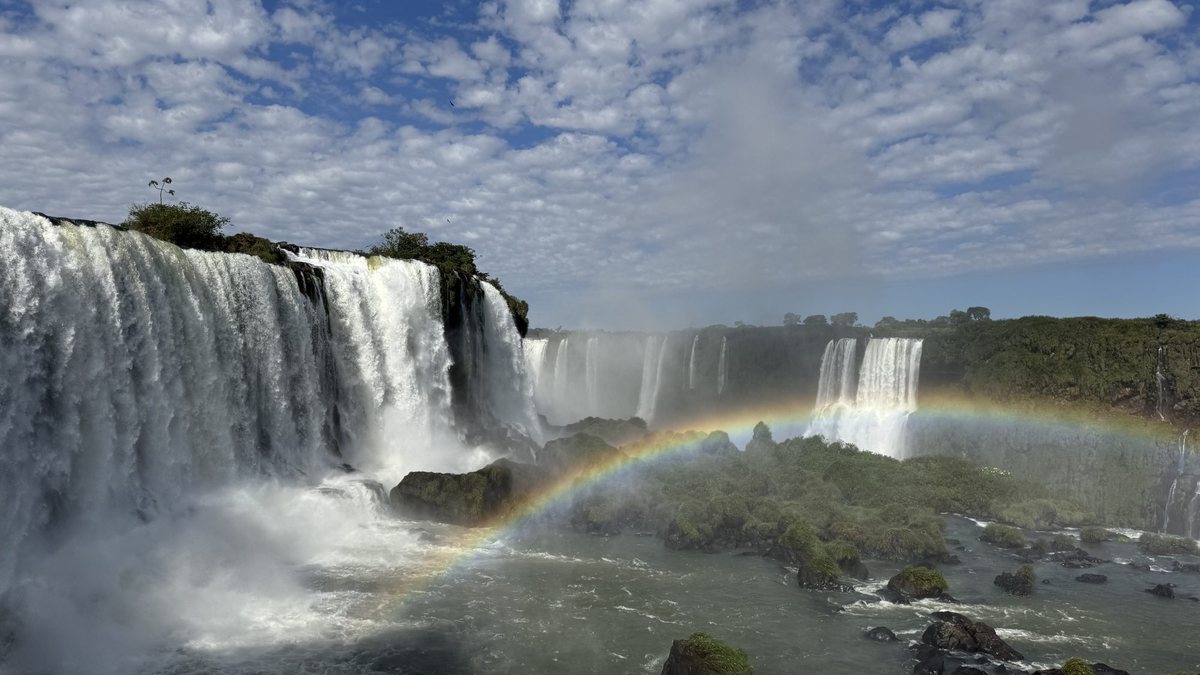
There’s almost always a rainbow somewhere in the spray – our own photo of the falls.
Devil’s Throat, Upper Circuit, Lower Circuit: the trails in the park
The Argentine park is a network of walkways and paths through the rainforest. For a first visit, three routes matter:
Garganta del Diablo (Devil’s Throat): The highlight. A train through the forest takes you to Garganta station, from where a long boardwalk crosses the wide, calm river – until it suddenly tips into the abyss. You stand at the edge, spray in your face, thunder in your stomach. Bring a rain jacket or poncho and pack your phone in something waterproof.
Paseo Superior (Upper Circuit): A walkway leading directly over the brinks of several falls. You look down as the water vanishes into the forest – no stairs, great with kids.
Paseo Inferior (Lower Circuit): Here you walk through the forest below, past falls so close you feel their coolness. More steps, more green, more wildlife – and the best photo angles from below.
The park train (Tren de la Selva): According to a local transfer company citing APN information, the train between Estación Central and Estación Garganta is included in the entry fee, and the last train towards Garganta leaves at 15:30. APN itself doesn’t state this on its fee page – double-check at the ticket office. What really matters is the time: arrive too late and you’ll miss the Devil’s Throat.
Opening hours: According to two independent information sites, the falls area is open daily from 8:00 to 18:00, with last entry at 16:00. APN’s official fee page lists no hours – just go early.
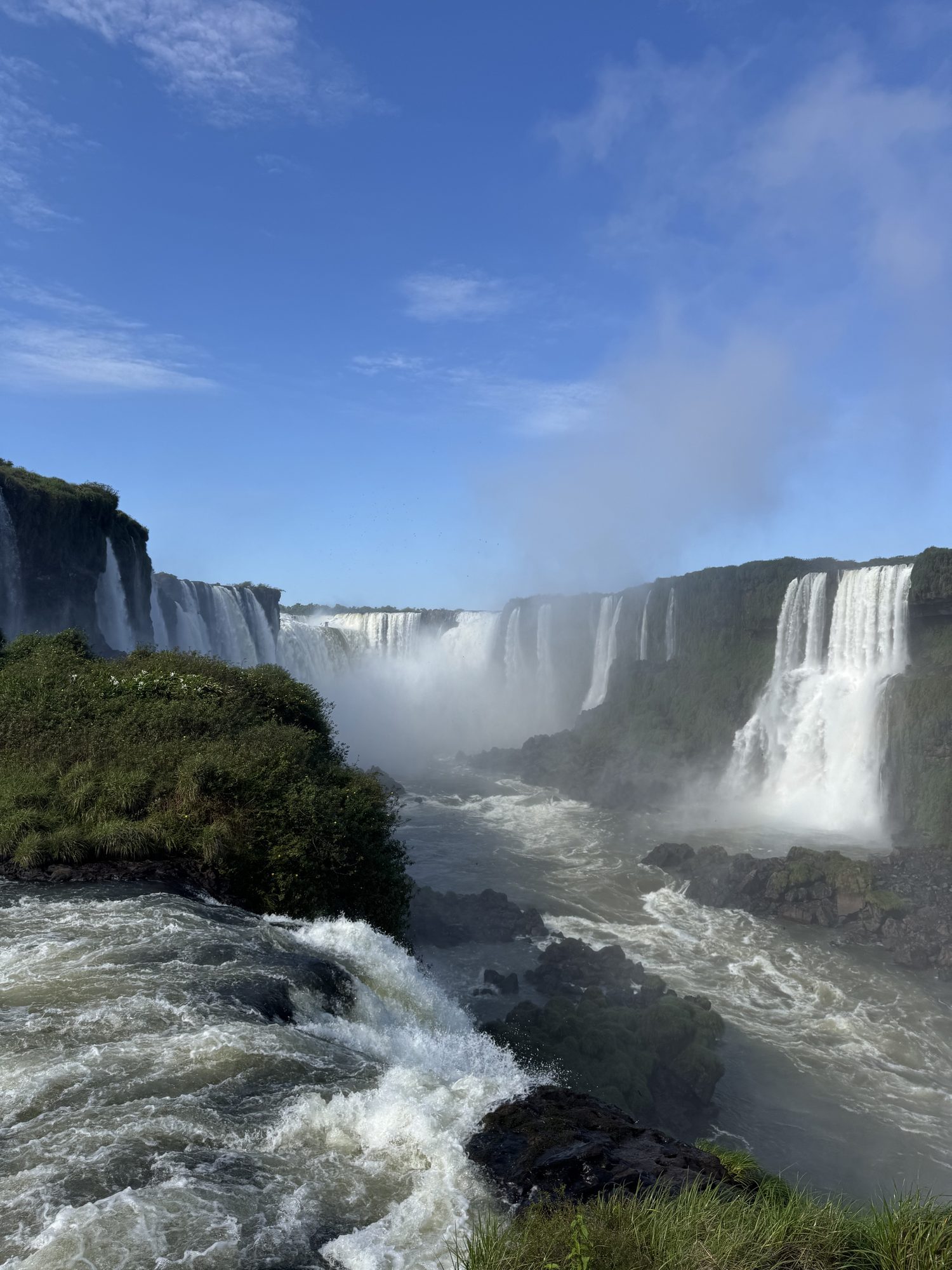
Roaring water in the gorge – our own photo of the Iguazu Falls.
Our one-day plan for the Iguazu Falls Argentina side
This is how to use a day if, like us, you’re staying in Foz do Iguaçu:
Leave early (before 8 am): Breakfast, passport, head for the border. Border waiting times are hard to predict; mornings are usually quieter.
Devil’s Throat first: Right after entry, take the train to the Garganta before the big groups arrive. The morning light in the spray is magical.
Midday: Upper Circuit – flat, scenic, ideal for the middle of the day.
Afternoon: Lower Circuit with its close-up views. This is where you’re most likely to meet coatis, toucans and butterflies.
Late afternoon: Back to Brazil or an evening in Puerto Iguazú.
If you’d like two days on the Argentina side, the second-day discount pays off. For most people, one full day plus half a day on the Brazil side is perfect.
Getting there: from Foz do Iguaçu across the border to Puerto Iguazú
If you’re staying in Foz do Iguaçu, you cross into Argentina via the Tancredo Neves Bridge. There are three ways:
Public bus: According to the Brazilian travel portal Melhores Destinos (updated 19.11.2026), the bus companies Crucero del Norte and Río Uruguay run daily, roughly between 7 am and 7 pm, from near the city bus terminal TTU to Puerto Iguazú bus station. From there, buses run to the national park. Ask for current fares and departures at the counter – timetables online are often out of date.
Taxi or private driver: Comfortable, and according to Melhores Destinos taxis get a priority lane at the border. Uber doesn’t work across the border. Agree on the price in advance and compare several offers – prices quoted online mostly date from 2024.
Guided day trip: Hotel pick-up in Foz, border, park and return in one. Costs more than the bus but saves planning and waiting. Check whether park entry is included – usually it isn’t.
Rental car: According to Melhores Destinos, many Brazilian rental contracts forbid driving to Argentina, and you’d also need the Mercosur insurance Carta Verde. For a day trip, a rental car is usually the worst option.
Documents: Bring your passport – you exit Brazil and enter Argentina, with stamps or registration on both sides. Check the current entry rules for Argentina with your government’s official travel advice before you go. For Brazil itself, see our guide to Brazil entry requirements 2026 (in German).
Time zone: Foz do Iguaçu and Puerto Iguazú currently share the same time (both UTC−3) – no need to change your watch.
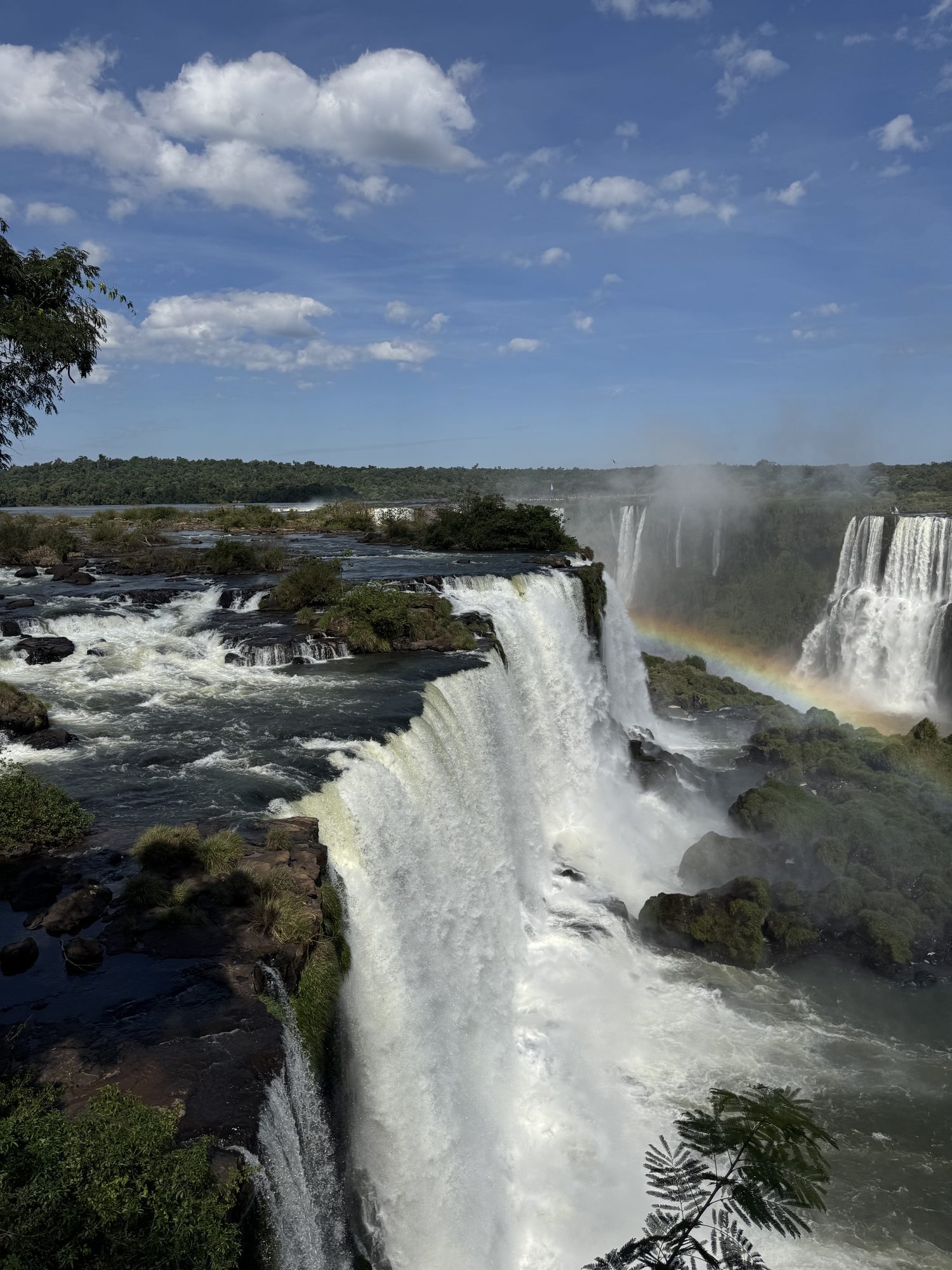
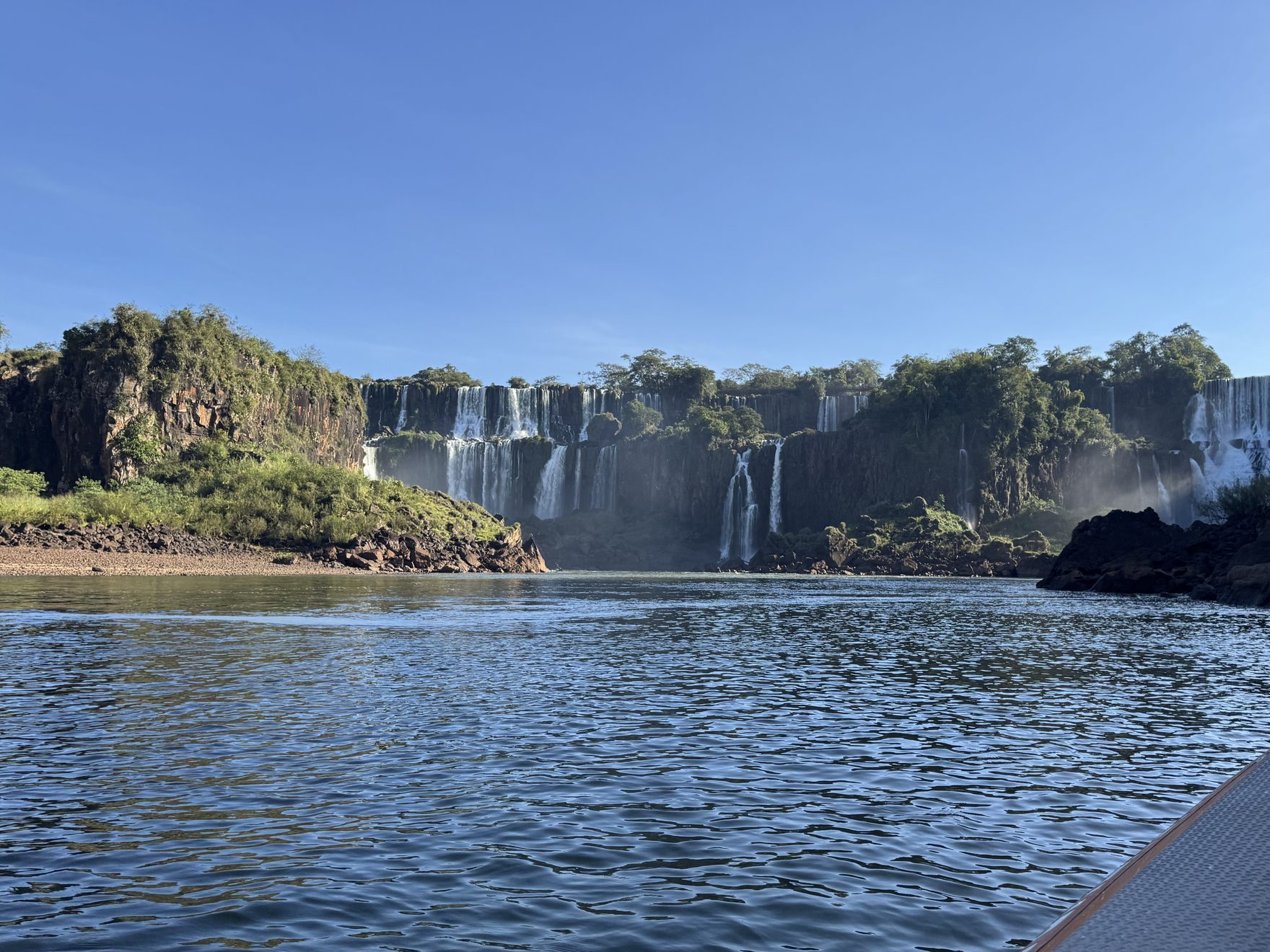
From the water the falls look even mightier – our own photo from the Iguazu River.
Argentina has its own currency, the peso (ARS), and the exchange rate has been moving sharply for years. Three things help:
Don’t exchange at the border: Exchange offices at border crossings rarely offer good rates.
Card plus a little cash: Some pesos in cash are handy for buses, snacks and small things. APN’s fee page doesn’t say whether the park ticket office takes cards – an online ticket avoids the question.
Wise card: We use Wise privately and for our business: you pay or withdraw at the real exchange rate instead of the one an exchange booth dictates. Always choose to be charged in pesos, never in your home currency (dynamic currency conversion).
Best time to visit the Iguazu Falls in Argentina
Time of day: As early as possible, so you reach the Devil’s Throat before the day groups. Afternoons are lovely on the Lower Circuit when the light slants through the forest.
Day of the week: Weekdays – avoid Argentine public holidays and long weekends, when it’s busiest.
Season: Water volume changes with rainfall upstream. With lots of water, the spray at the Devil’s Throat is so dense you barely see anything but feel everything; with less water, more individual falls appear. It’s beautiful in every season.
Heat: In the southern summer (December to February) it’s hot and humid – bring water, sunscreen and a hat.
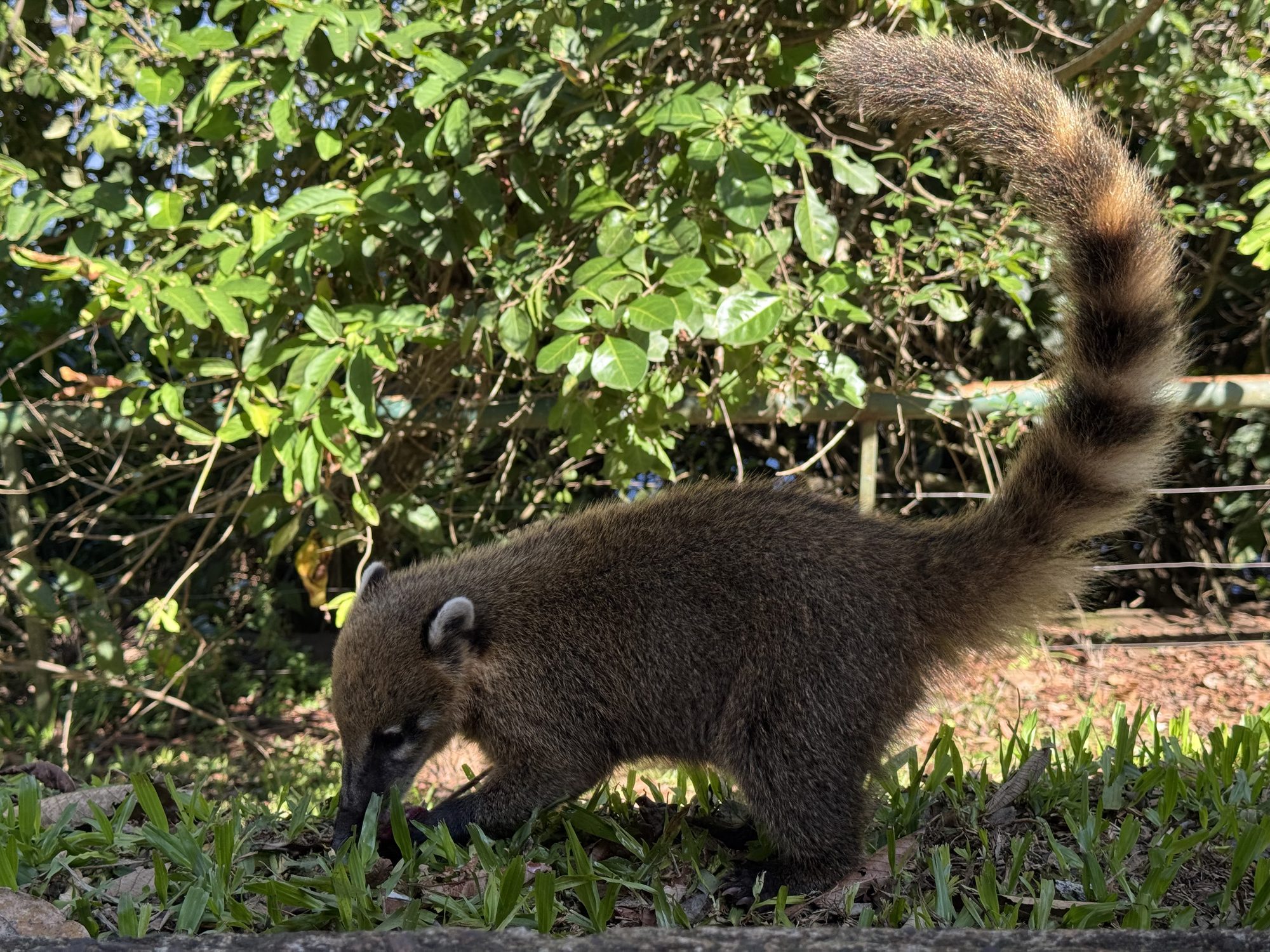
Cute but not harmless: coatis by the path – our own photo. Never feed them!
Traps on the Argentina side
1. Outdated prices and resellers: Many sites still quote pre-June-2026 fees or sell “tickets” with a mark-up. Officially, entry is sold only via ventaweb.apn.gob.ar or at the park ticket office.
2. Too late for the Devil’s Throat: According to local sources, the last train towards Garganta leaves at 15:30. Start leisurely at noon and you’ll miss the heart of the park.
3. Feeding coatis: They look tame but bite and scratch when they smell food. Eat only in enclosed areas, keep bags closed. More in Iguazu coatis & wildlife rules.
4. Changing money at the border: Poor rates. Use a card and small amounts of cash instead.
5. Rental car across the border: Often forbidden by contract and not insured without Carta Verde.
6. Taxi without a fixed price: Agree on the price for the return trip including waiting time beforehand.
7. Unprotected phone: The spray at the Devil’s Throat is like a waterfall from below. Use a waterproof pouch or your phone will be soaked by the end of the walkway.
Our recommendations for Iguazu (advertising – we earn a small commission at no extra cost to you):
Day trips from Foz do Iguaçu to the Argentina side, boat tours under the falls: Iguazu on GetYourGuide – usually free cancellation. Check whether park entry is included.
Compare hotels in Foz do Iguaçu or Puerto Iguazú: Booking.com
Pay at the real rate in Brazil and Argentina: Wise card
Travel medical insurance: SafetyWing · Data in both countries: Airalo eSIM
Checklist: Iguazu Falls Argentina side
☐ Passport packed (Brazil–Argentina border)
☐ Argentina entry rules checked in advance
☐ Tickets only from official sources: ventaweb.apn.gob.ar or park ticket office
☐ Leave early – reach the Devil’s Throat before midday
☐ Last train to the Garganta in mind (15:30 according to local sources)
☐ Rain jacket or poncho, waterproof phone pouch
☐ Water, sunscreen, hat, comfortable shoes
☐ Some pesos plus a Wise card, always pay in pesos
☐ Taxi or driver price agreed in advance
☐ Food well packed – never feed the coatis
FAQ: Iguazu Falls Argentina side
How much is the entry fee on the Argentina side of Iguazu Falls?
According to Argentina’s National Parks Administration, the day pass for foreign visitors (General category) has cost 60,000 pesos since 1 June 2026. Children up to and including 6 enter free, and a second day within 72 hours is half price.
Where do I buy official tickets for Iguazu Argentina?
Through the National Parks Administration’s web shop, ventaweb.apn.gob.ar, or directly at the ticket office at the park entrance. You don’t need sites that add a mark-up.
Which side of Iguazu Falls is better?
Both. Brazil shows the big panorama in half a day; Argentina takes you right over the falls on walkways and needs a full day. If you can, do both.
How much time do I need for the Argentina side?
Plan a full day. Devil’s Throat, Upper Circuit and Lower Circuit are easily doable in one day if you start early.
How do I get from Foz do Iguaçu to the Argentina side?
By public bus (Crucero del Norte or Río Uruguay) across the Tancredo Neves Bridge to Puerto Iguazú and on by bus to the park, by taxi or private driver, or on a guided day trip.
Do I need a passport for the day trip to Argentina?
Yes, bring your passport. You exit Brazil and enter Argentina. Check the current rules with your government’s official travel advice before you go.
Is there a time difference between Foz do Iguaçu and Puerto Iguazú?
Not at the moment: both are on UTC−3.
Can I visit the Argentina side with children?
Yes, easily. The Upper Circuit and the walkway to the Devil’s Throat are flat. According to APN, children up to and including 6 enter free. Just keep an eye on the coatis.
Is a second day on the Argentina side worth it?
For photographers and nature lovers, yes: according to APN you pay only half on a second day within 72 hours – and the Devil’s Throat in evening light is a different experience from the morning.
Conclusion: on the Argentina side you feel Iguazu
The Brazil side showed us how unbelievably vast the Iguazu Falls are. The Argentina side put us right in the middle: over the edge, into the spray, into that thunder you still hear hours later. Bring your passport, buy your ticket officially, be at the Devil’s Throat early – and leave enough time just to stand there. It’s one of those places you never forget.
Administración de Parques Nacionales (APN): “Derechos de acceso a Parques Nacionales” – fees, exemptions, second-day discount, web sales (argentina.gob.ar/parquesnacionales/tarifas, prices valid from 01.06.2026, accessed 20.11.2026)
Primera Edición: “Rigen nuevas tarifas para el Parque Nacional Iguazú y otras áreas protegidas del país” (01.06.2026) – Resolución 157/2026
Cataratas Transfer: Horarios Parque Nacional Iguazú (updated 23.09.2026) – park train, opening hours; parquenacionaliguazu.com.ar (independent information site) – opening hours, last train
Melhores Destinos: “Transportes em Foz do Iguaçu” (updated 19.11.2026) – buses to Puerto Iguazú, taxi, rental car, documents
Our own trip: Brazil in spring 2026, Foz do Iguaçu as a base with a day trip to Argentina (photos)
Plan this tripOur go-to links for a place to stay, rental cars, mobile data and travel gear:
🔔 Get new articles & deals as a notification?No spam – max. 4 a day, switch off anytime.
Your choice
We only use what is necessary to run this website. Everything else – such as statistics or content from third parties – only with your consent. You can change your choice at any time.