
Travel tips
Bangkok in the Rainy Season: Months, Day Plan, Prices – What Really Happens
Bangkok rainy season May–October: wettest month September (336 mm), usually 1–2 h of afternoon rain. Climate table, day plan, transport, den…
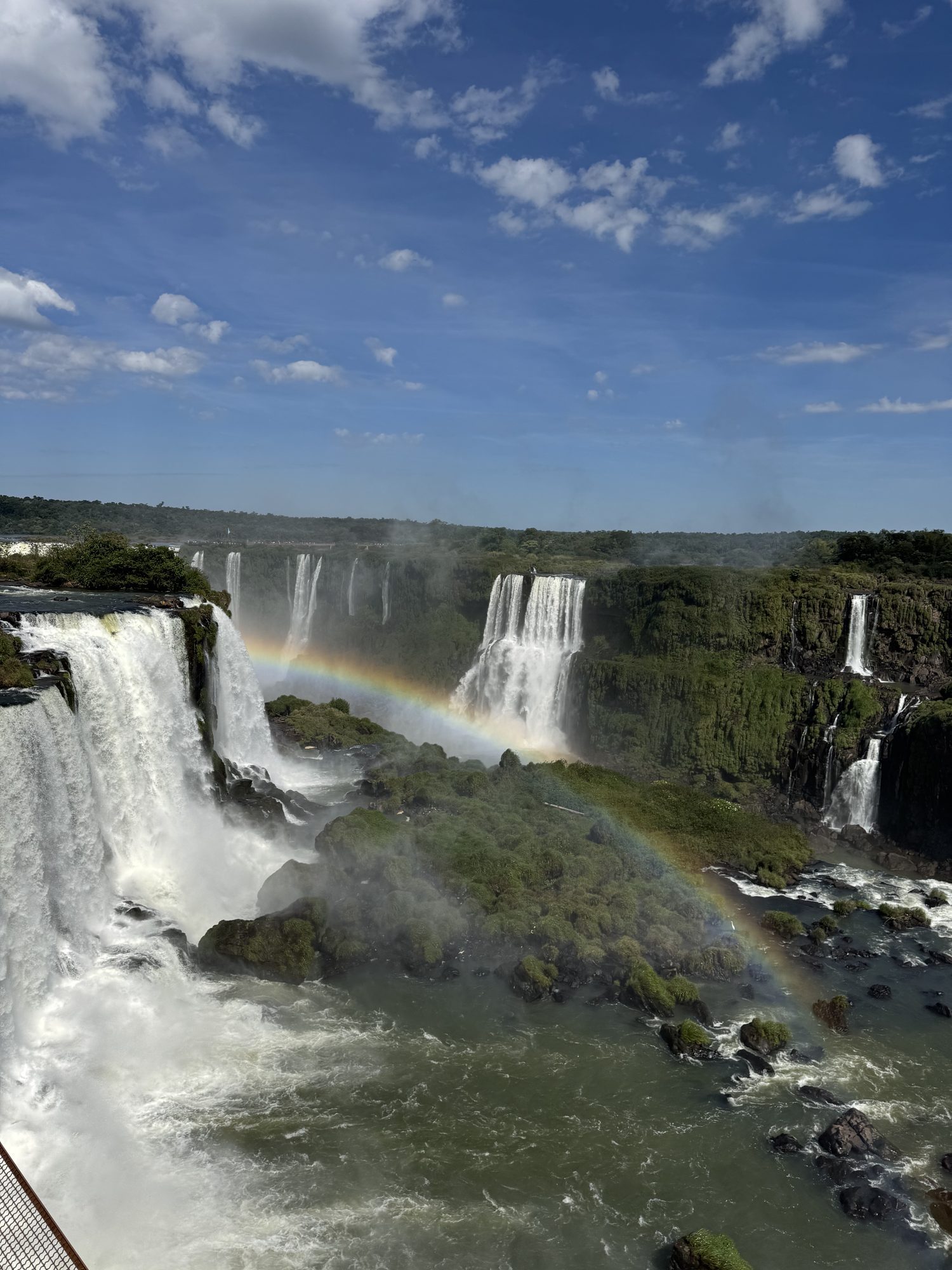
Short answer: The Iguazu Falls (Iguaçu in Portuguese) sit on the border between Brazil and Argentina. The Iguazu Falls Brazil side – Parque Nacional do Iguaçu near Foz do Iguaçu – gives you the big panorama; the Argentine side takes you closer to the water. Entry in Brazil: R$ 134 for international visitors (since 19.12.2025), sold officially only at cataratasdoiguacu.com.br. Argentina: AR$ 60,000 for international visitors (since May 2026). Plan at least two days, one per side. Take city bus line 120 to the park instead of an expensive transfer. Biggest traps: reseller tickets, weekends in high season, and a phone without waterproof protection.
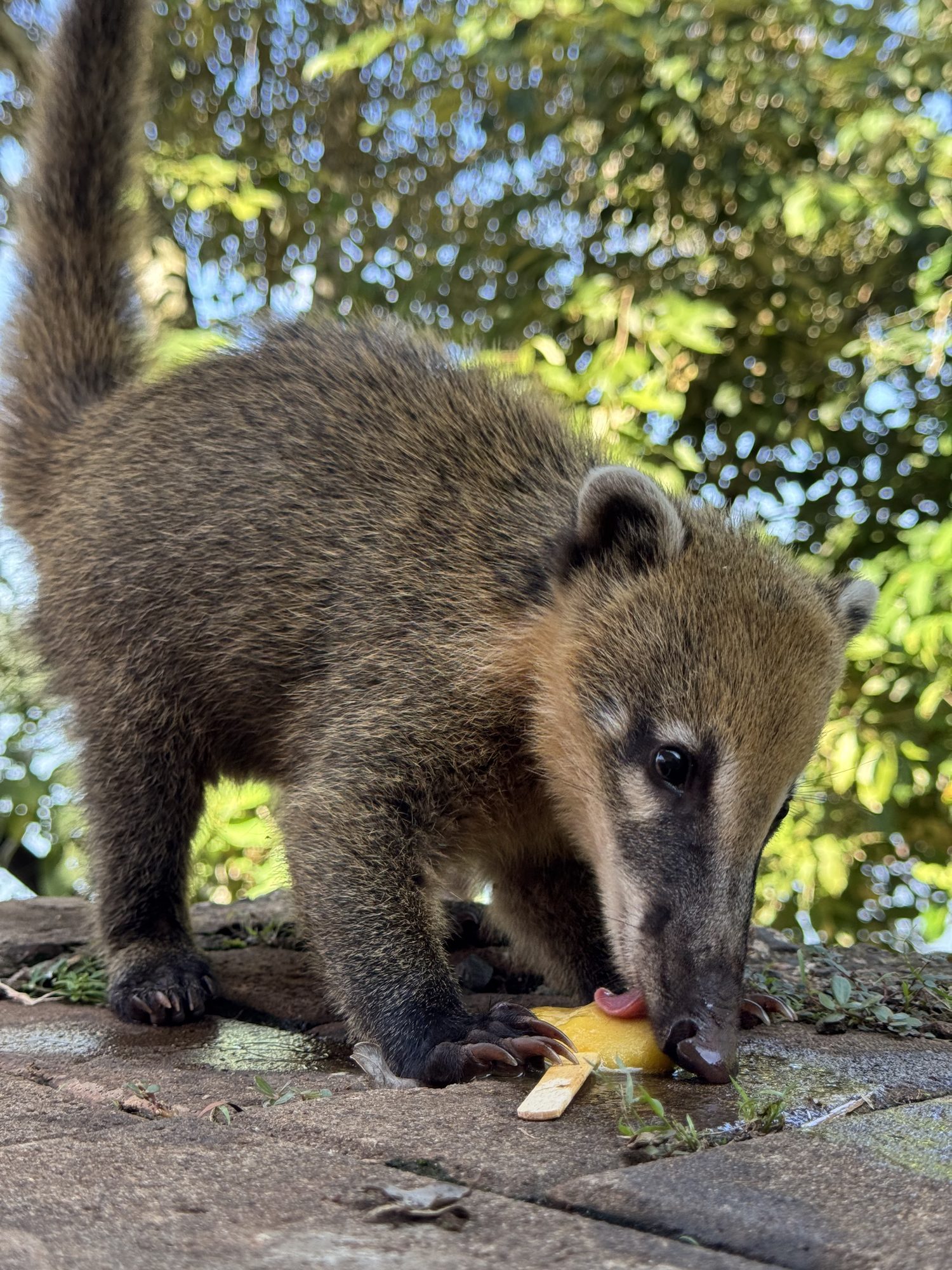
You hear the Iguazu Falls before you see them. First a deep rumble behind the trees, then a fine mist on your skin, then the rainforest opens up – and in front of you an entire river drops into the gorge. Hundreds of falls side by side, rainbows in the spray, coatis sniffing around visitors’ feet for food, and swifts flying straight through the curtain of water.
We spent two days in Foz do Iguaçu in spring 2026 – after a night bus from Rio de Janeiro, about 22 hours in a reclining seat. Foz was our base: the Brazilian side in the afternoon, and the next morning a day trip across the border into Argentina. Both sides were worth it. But it was the Brazilian side that made us understand how huge this place really is.
This post covers everything you need for the Iguazu Falls Brazil side: current prices from official sources, how to get there cheaply, when to go, which extras are worth it – and which traps cost you money for nothing.
The Iguaçu River forms the border between Brazil and Argentina here. Depending on water levels, between 150 and around 300 individual falls pour over an edge several kilometres long – many sources say at least 275. The heart of it all is the Devil’s Throat (Garganta do Diabo in Portuguese, Garganta del Diablo in Spanish): a U-shaped chasm that swallows much of the river. The Brazilian national park has been a UNESCO World Heritage Site since 1986, the Argentine one since 1984.
| Topic | Brazil side (Parque Nacional do Iguaçu) | Argentina side (Parque Nacional Iguazú) |
|---|---|---|
| Base town | Foz do Iguaçu (Brazil) | Puerto Iguazú (Argentina) |
| Experience | Panorama over almost all falls, walkway to the Devil’s Throat | Up close, walkways right above the Garganta del Diablo |
| Time needed | Half a day (a full day with the boat ride) | Full day |
| International entry | R$ 134 (Mercosur R$ 121), since 19.12.2025 | AR$ 60,000, since May 2026 (incl. eco train) |
| Official tickets | cataratasdoiguacu.com.br (choose date and time) | iguazuargentina.com |
| Inside the park | Park bus to the trail, Trilha das Cataratas approx. 1.2 km | Eco train and several circuits |
| Our tip | Go first – for the big picture | Go second – for the raw power up close |
Everything starts at the visitor centre at the end of Avenida das Cataratas. You show your ticket and a double-decker bus takes you through the forest to the stops. Private cars are not allowed inside – the bus is included in the ticket. For the classic route, get off at the Trilha das Cataratas stop.
The trail is about 1.2 kilometres long, mostly downhill, with railings, steps and many viewpoints along the slope. It gets louder after every bend. Allow half an hour of pure walking – realistically more, because you will stop at every viewpoint. For visitors with limited mobility, a panoramic lift gives step-free access to the Devil’s Throat viewing area.
At the end, a walkway leads out over the water, right into the spray in front of the Devil’s Throat. You will get wet – properly wet. The roar is so loud you have to shout. It’s one of those moments when everyone goes quiet for a few seconds and just stares.
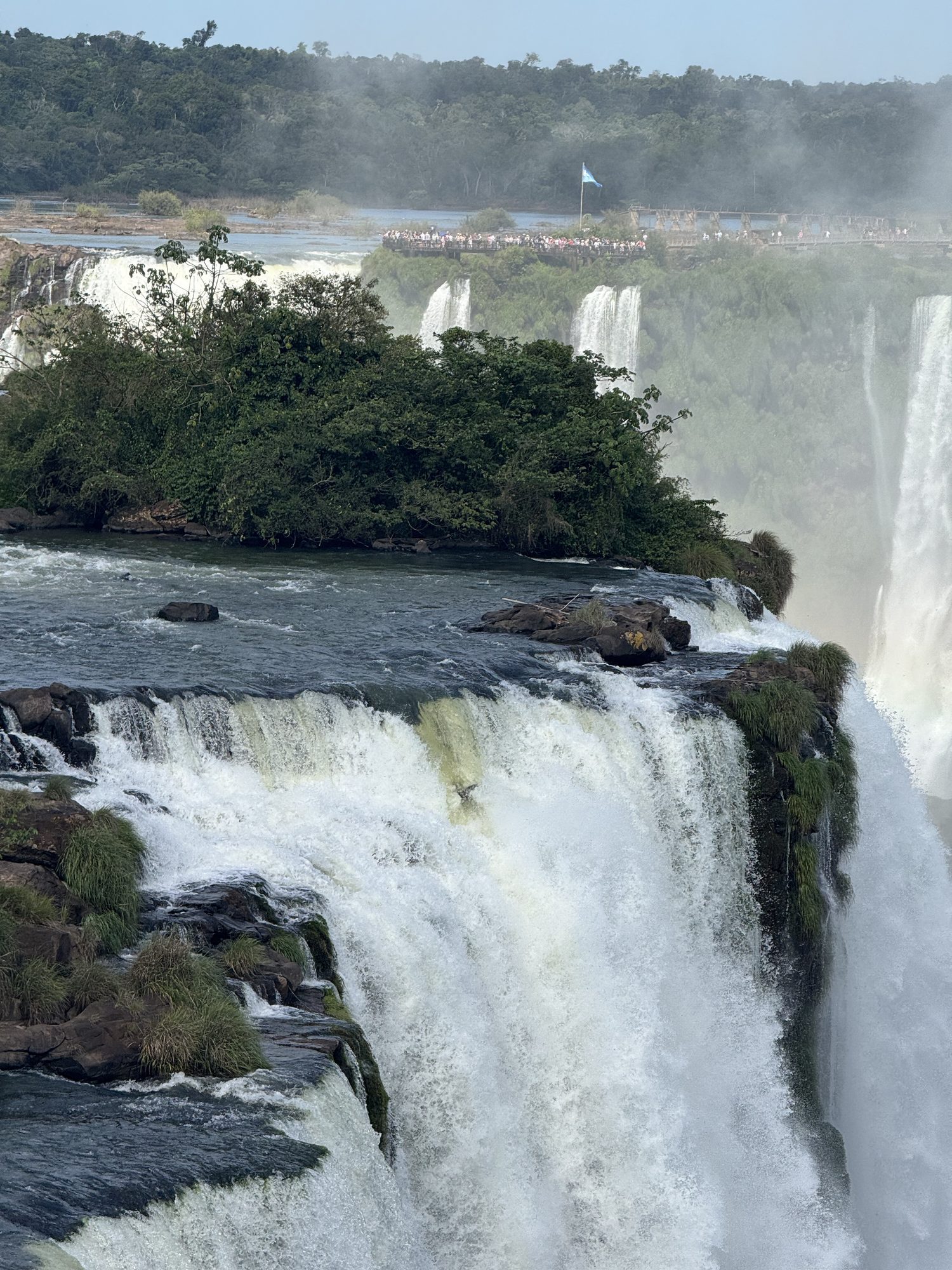
At the top, the final stop Porto Canoas has a restaurant overlooking the river above the falls. Park buses take you back to the visitor centre from there. Check the time of the last bus in the evening.
The Iguazu Falls Brazil side sells tickets officially online with a date and time slot. Since 19.12.2025, according to the local newspaper H2FOZ, prices are R$ 134 for international visitors and R$ 121 for Brazilians and Mercosur citizens. The park usually opens at 9 am, earlier in high season; last entry is usually in the afternoon. Hours change – always check the official site the day before.
On the Argentine side, international visitors have paid AR$ 60,000 since May 2026 according to the official rates page; children under six are free. Because the peso moves a lot, convert to your currency shortly before your trip – for example in the Wise app.
| Item | Price according to source | Official place to buy |
|---|---|---|
| Entry Brazil, international | R$ 134 | cataratasdoiguacu.com.br |
| Entry Brazil, Mercosur | R$ 121 | cataratasdoiguacu.com.br |
| Entry Argentina, international | AR$ 60,000 | iguazuargentina.com |
| City bus line 120 (terminal – park) | approx. R$ 4.50 per ride (per travel portal) | on the bus |
| Taxi city – park | approx. R$ 120–180 per car (guide value) | official taxi rank or app |
| Macuco Safari boat ride | R$ 386 (August 2024 per Melhores Destinos) | in the park / with the operator |
All prices without guarantee; see source dates below. Prices on site and online can change at any time.
Foz do Iguaçu airport (IGU) lies practically on the road between town and the entrance to the Iguazu Falls Brazil side, with flights from São Paulo, Rio and other cities. If you only have one or two nights, this is the fastest way.
From Rio de Janeiro the bus takes around 22 hours. Sounds brutal, but it was surprisingly good: a fully reclining seat (leito), clean bus stations, punctual departure. Our ticket cost about €60 back then. If you have time and want to save, you also save a hotel night and a flight.
From the city bus terminal TTU in the centre, line 120 “Parque Nacional” runs to the park’s visitor centre – according to travel portals every 20 to 30 minutes, 40 to 50 minutes travel time, for a few reais. A taxi or ride-hailing app costs many times that. Hotels and street sellers love to offer “transfer plus ticket” packages – often far more expensive than doing both yourself.
For the Argentine side you cross the Tancredo Neves Bridge to Puerto Iguazú. There are scheduled buses, taxis and organised tours. Bring your passport, plan for waiting time at the border and carry some cash in pesos. Check the exact entry rules for your nationality with your foreign ministry before you travel.
The falls are spectacular all year – but never the same. In the wetter months (southern spring and summer) the river often carries more water: more powerful, louder, more spray, sometimes brownish. At normal levels the water is clearer and you see more detail of the individual falls. During extreme floods walkways may close; after long droughts the falls shrink visibly.
The time of day often matters more than the month: right at opening or late afternoon is quietest. Weekends, Brazilian public holidays and school holidays mean long queues. For rainbows you need sun – on the Iguazu Falls Brazil side the afternoon gives you good chances, and that’s exactly what we saw.
To be honest: we don’t have a Brazil guide yet – we only sell what we have experienced and properly checked ourselves. All Frangipani guides follow the same principle: the official, cheaper booking page instead of expensive middlemen, the mistakes that cost us money, and the places that are truly worth it. The difference between an official ticket plus city bus and a street seller’s “complete package” alone easily adds up to a three-digit amount for two people – over a whole trip, often several hundred euros. Heading north for winter after Brazil? Take a look at our Norway Winter Guide. See all guides
For your trip to the Iguazu Falls
Advertising: partner links – if you book or buy through them, we earn a small commission at no extra cost to you. As an Amazon Associate we earn from qualifying purchases.
Passend dazu:
Both. The Brazil side gives you the big panorama over almost all the falls; the Argentine side takes you right up close with its walkways. We used Foz do Iguaçu as our base and did Argentina as a day trip.
Since 19.12.2025, international visitors pay R$ 134 and Mercosur citizens R$ 121. Tickets are sold officially at cataratasdoiguacu.com.br.
According to the official rates page, AR$ 60,000 for international visitors (since May 2026), including the eco train. Children under six are free.
Half a day is enough for the Trilha das Cataratas and the Devil’s Throat walkway. With the boat ride or the bird park it becomes a full day.
City bus line 120 from the TTU bus terminal in the centre to the visitor centre. It costs a few reais; taxis or transfers cost many times more.
All year. In wetter months the falls carry more water; at normal levels you see more detail. Time of day matters more: early morning or late afternoon, not at weekends.
On the Devil’s Throat walkway, yes; on the boat ride, completely. Pack a rain poncho and a waterproof phone case.
In theory yes, in practice it gets rushed – a border crossing, two parks and queues. Two days are far more relaxed.
They are wild animals that bite and scratch when they want food. Don’t feed or touch them and keep your bag closed.
Related: Brazil: Atins, Lençóis Maranhenses and Iguaçu · Rio de Janeiro tips · Money abroad · Starlink on the road · Rental car or motorbike · How many countries are there? · All destinations · Frangipani guides
Sources (accessed 30.10.2026): H2FOZ – ticket price adjustment for the Cataratas do Iguaçu (prices from 19.12.2025); Parque Nacional Iguazú – Tarifas (iguazuargentina.com); La Nación, 15.05.2026 – new rates for Argentine national parks (Resolución 132/2026); Wikipedia – Iguaçu National Park (UNESCO 1986, number of falls); Melhores Destinos – Cataratas do Iguaçu (1,200 m trail, Macuco Safari, opening hours); Um Viajante – Cataratas do Iguaçu: best time and tips; Uncharted Lens – Foz do Iguaçu Airport to Iguaçu National Park (line 120, taxi guide values). Own experience: Brazil trip in spring 2026, two days in Foz do Iguaçu with a day trip to Argentina.
New: Coatis at Iguazu Falls: rules, wildlife and tips in the national park
Bangkok rainy season May–October: wettest month September (336 mm), usually 1–2 h of afternoon rain. Climate table, day plan, transport, den…

Coatis (quatis) at Iguazu Falls: why they bite, the official park rules, what to do after a bite, which other animals you will see (toucans,…

The best time to visit Morocco month by month – with climate data for Marrakech, Fes, the coast and desert, Ramadan 2027, festivals and typi…
We only use what is necessary to run this website. Everything else – such as statistics or content from third parties – only with your consent. You can change your choice at any time.