Quick answer: Zakopane in summer means hiking in the High Tatras from June to September – usually at its best and quietest in September. The classic is Morskie Oko (tours from Zakopane ↗*) (about 8–9 km on a paved road, 2–2.5 hours each way), plus the easy Kościeliska Valley, Giewont for sure-footed hikers and Kasprowy Wierch by cable car (high season 2026 online 99–165 zł return). National park entry is 11 zł, hiking at night is banned from March to November, and thunderstorms often roll in from midday – so start early. Updated: 17.11.2026, official sources below.
Plan this tripOur go-to links for a place to stay, rental cars, mobile data and travel gear:
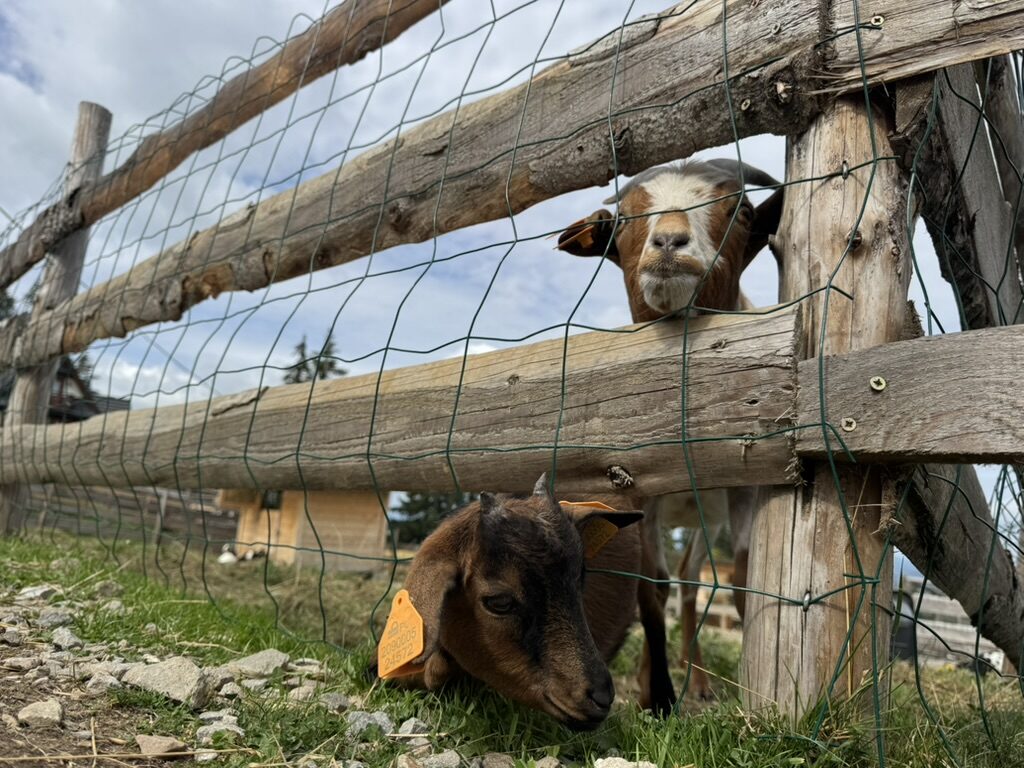
It’s six in the morning, the meadow in front of our glamping dome is wet with dew, and behind the spruces the Tatras draw a sharp grey line across the sky. Two goats peer over the fence as if to ask where we’re off to so early. The answer: up, while the air is still clear – because by afternoon the clouds pile up over Giewont, and then the mountain belongs to the weather. That’s Zakopane in summer: green pastures, cold mountain lakes, wooden houses with steep roofs, and in the evening the smell of grilled oscypek drifting along Krupówki.
We were in Zakopane ourselves in late summer 2026 – every photo in this guide is our own. Prices, rules and opening hours were checked on 17.11.2026 with the official sources: cable car operator PKL, Tatra National Park (TPN), mountain rescue TOPR and the town of Zakopane. Prefer snow? Then read Zakopane in winter.
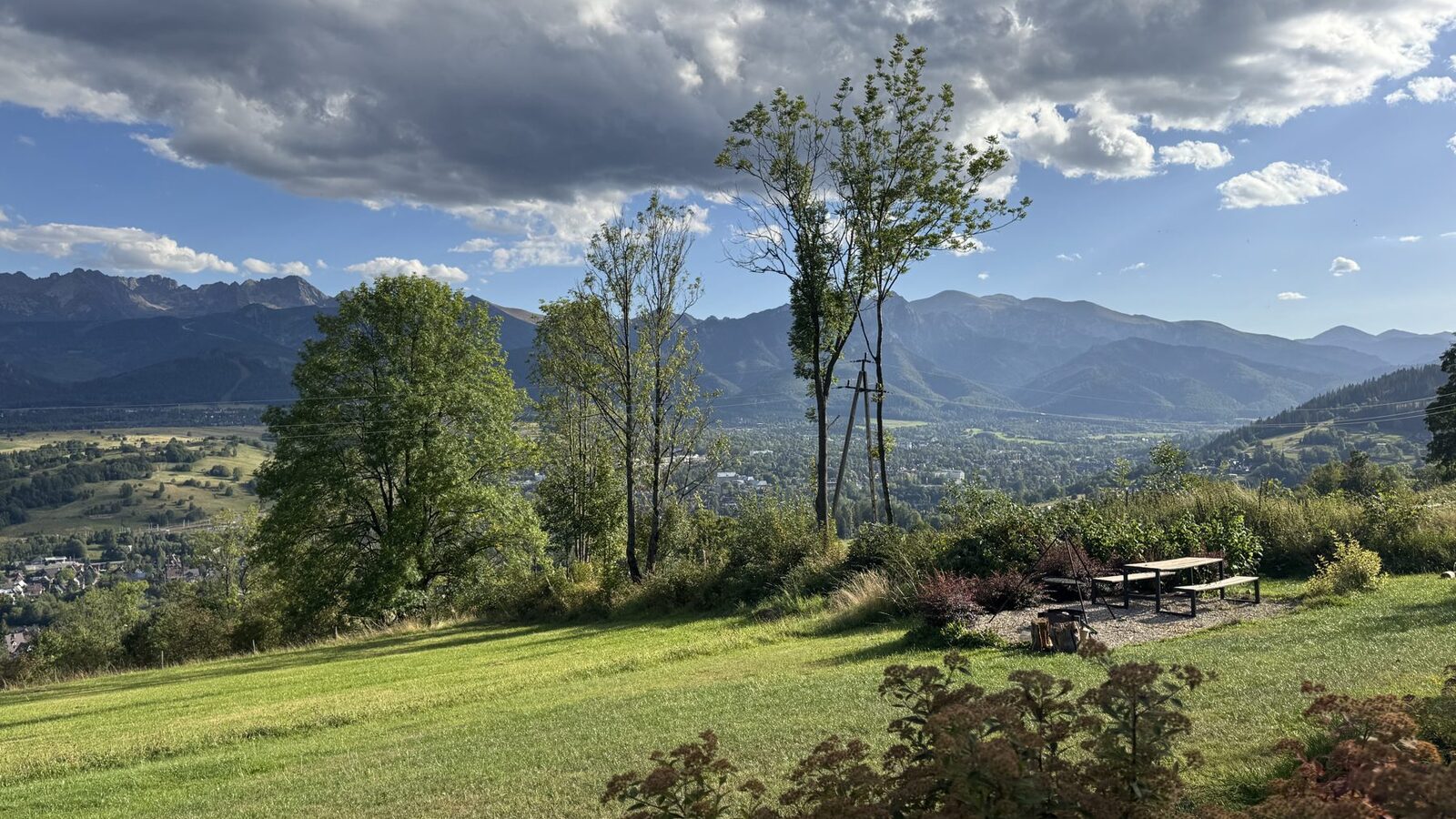
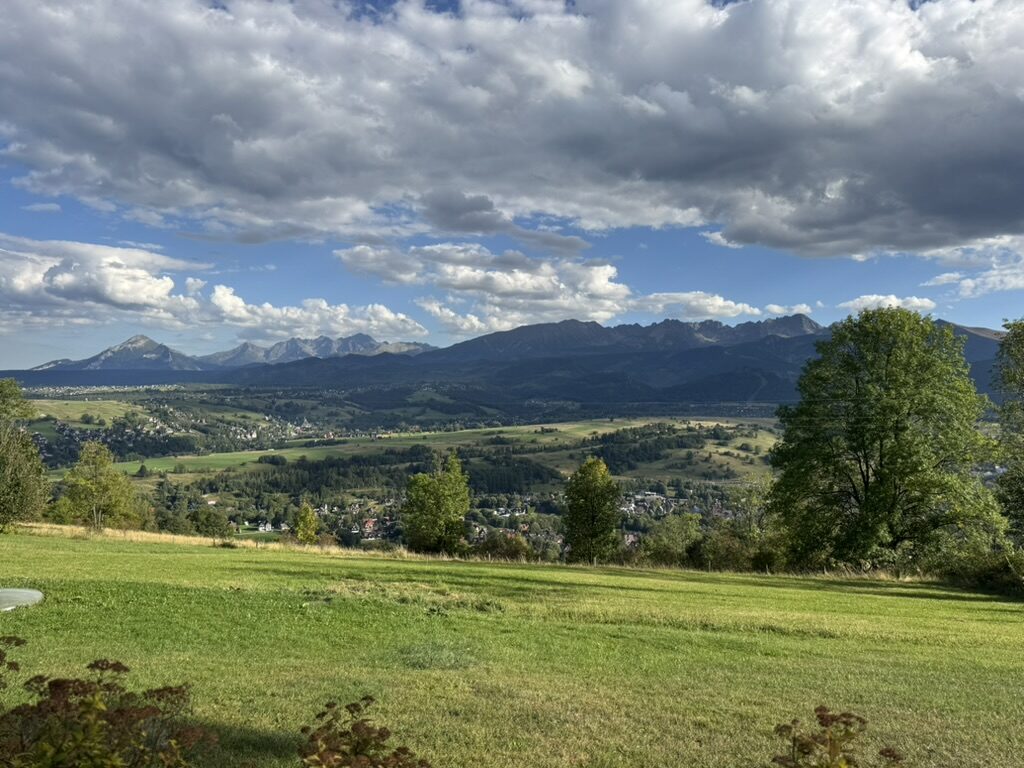
Zakopane in summer: green slopes with the whole Tatra range behind – our view in late summer 2026
Zakopane in summer: weather and best time to go
Zakopane sits at about 850 metres, the peaks around it at 1,900 to almost 2,500 metres. Down in town it’s summer; up top it can be cool and windy even in July. The town of Zakopane gives these guide values:
Month
Temperature in town
What to expect
June
about 12–22 °C
Longest days, first afternoon storms, sometimes snow left in high gullies
July
about 15–25 °C (peaks 5–15 °C)
Afternoon thunderstorms are the norm, peak season, busy trails
August
about 15–24 °C
Very busy until mid-August, noticeably quieter afterwards
September
about 10–18 °C
Often the most stable weather, far fewer people, cold nights
Source: town of Zakopane (visit.zakopane.pl), weather and climate page, as of 01.09.2026.
Our tip: If you can choose, go in late August or September. The pastures are still green, the huts are open, and you don’t share Morskie Oko with half the region. In July and August: start early, summit early, get down early.
Hiking in the Tatras: the four summer classics
The Polish Tatras are small but truly alpine. You don’t need to climb to experience them – but you should know which route suits you:
Route
Who it suits
What you need to know
Morskie Oko (1,395 m)
Everyone, including families
From the Palenica Białczańska car park about 8–9 km on a car-free paved road, 499 m of ascent, 2–2.5 hours each way. Alternatives: the national park e-bus or a horse cart to Włosienica.
Kościeliska Valley
Families, easy-goers, rainy days
A wide, gentle valley on the western edge of Zakopane with side trips to caves; Jaskinia Mroźna (Frosty Cave) opens seasonally and costs extra.
Giewont (1,894 m)
Sure-footed hikers with a head for heights
The “Sleeping Knight” with its cross. Chains and two-way traffic on the summit dome – queues on summer weekends. Strictly off-limits if storms threaten.
Kasprowy Wierch (1,987 m)
Everyone – by cable car
Cable car from Kuźnice, ridge to Slovakia at the top. If you’re fit, walk one way and ride the other.
Everything on getting there, parking and horse carts is in Morskie Oko from Zakopane. The national park recommends arriving at the car park by 8 am – in July and August it’s often full before 9.
Kasprowy Wierch in summer: cable car prices 2026
The cable car leaves from Kuźnice and, according to PKL, takes about 20 minutes with a stop at Myślenickie Turnie; a return ticket gives you 1 hour 40 minutes at the top. Every ticket is for a fixed time slot. High season in 2026 ran from 4 June to 30 September:
Source: PKL Kasprowy Wierch price list, accessed 17.11.2026. Children up to 4 ride free on a guardian’s ticket. Summer 2027 prices have not been published yet.
The gap is big: buy on the spot in Kuźnice and you pay up to 130 zł more than online at the cheapest slot. The road to Kuźnice is closed to cars – from the Jana Pawła II roundabout it’s about a 40-minute walk, or take a bus or taxi.
Gubałówka and Krupówki in summer
The Gubałówka funicular (1,120 m) leaves from the top end of Krupówki and takes 3.5 minutes to the best Tatra view in town. In high season (4.6.–30.9.2026) a return cost 44 zł online or 49 zł at the ticket office; in July and August it runs from 8 am to 9:30 pm. Up top there’s a summer toboggan run and a panoramic path towards Butorowy Wierch – after five minutes it’s just you and the cows. Details: Gubałówka funicular.
Krupówki itself is Zakopane’s promenade: wooden stalls, grilled oscypek, music, souvenirs – and tourist prices. Two streets over, you’ll often eat for half the price.
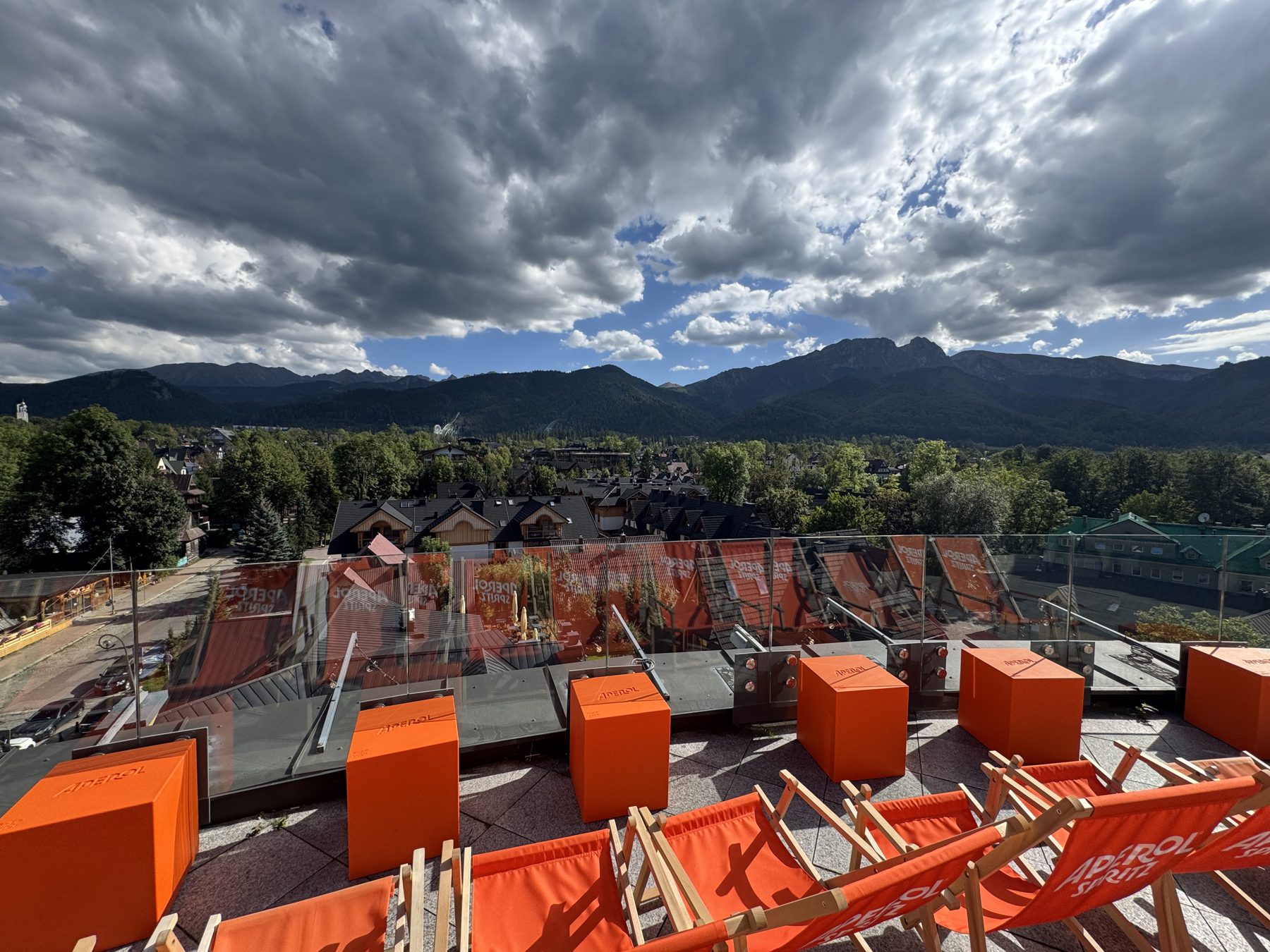
Above the rooftops of Zakopane – our photo from late summer 2026
Zakopane thermal baths in summer
Thermal baths aren’t just for winter: after eight hours on tarmac and rock there’s nothing better than a 36 °C outdoor pool with a Tatra view – and on rainy days they’re your plan B. All four big spas open roughly 9 am to 10 pm daily. Summer costs more: Termy Zakopiańskie charges 11 zł extra in high season (2.5 hours otherwise from 69 zł online), and Chochołowskie Termy raises prices from 26 June to 31 August. Which one suits you: Zakopane thermal baths compared.
National park rules, bears and thunderstorms
Almost every trail around Zakopane lies in the Tatra National Park (TPN). A few rules to know before you set off:
Entry: 11 zł per day (reduced 5.50 zł, children under 7 free), online at tpn.gov.pl or at the booths on the trail.
Daylight only: From March to the end of November, walking in the national park is banned from dusk to dawn. Since 1 February 2026 the ban applies in winter too.
Stay on marked trails – going off-trail is not allowed in the national park.
Bears: Brown bears live in the Tatras and do turn up near popular trails, for example in the Kościeliska Valley or on the way to Morskie Oko. The national park’s advice: stay calm, keep your distance, back away slowly, don’t run or shout (bears can hit around 50 km/h over short distances), never get between a mother and her cub, talk rather than sneak, never leave food scraps and never feed them.
Thunderstorms: In July, afternoon storms are the norm. The town of Zakopane advises not starting any summit after 11 am and leaving exposed terrain by 1 pm at the latest. If you hear thunder, turn back. On 22 August 2019 lightning struck Giewont – four people died and more than 150 were injured.
Mountain rescue TOPR: 985 or +48 601 100 300, 112 if reception is weak. Check the mountain forecast at pogoda.topr.pl before every hike.
Getting to Zakopane from Vienna
Train to Kraków: According to Trainline, about 10 trains a day run from Vienna to Kraków, usually 4 of them direct; the fastest direct connection takes 5 hours 18 minutes.
Kraków – Zakopane: The fastest Pendolino takes about 1 hour 57 minutes according to PKP Intercity; private buses take around 2 hours – often longer on summer weekends on the Zakopianka road.
By car: We drove via Bratislava and Slovakia, about 4.5 hours. You need the digital vignette for Slovak motorways – buy it only from the official seller. All details in Driving in Poland.
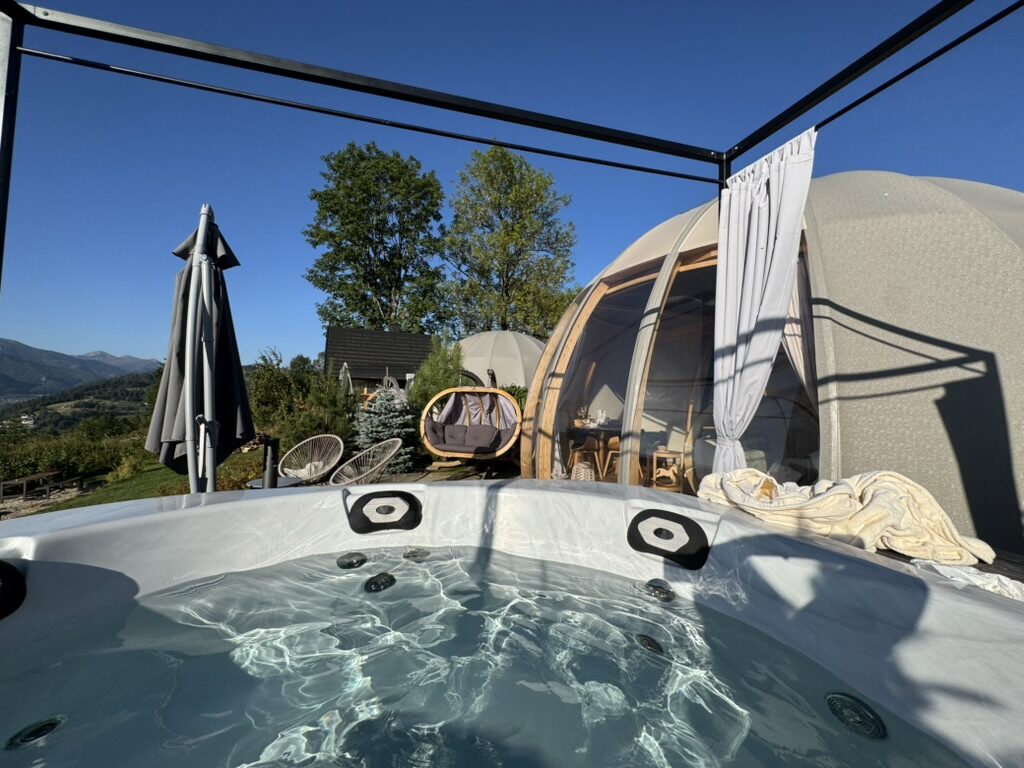
Around Krupówki you’re within walking distance of restaurants and the Gubałówka funicular, but you pay more and hear more. For hikers the south of town towards Kuźnice is handy. On the slopes above town you get peace and Tatra views – that was our pick: a glamping dome with a hot tub, clouds over the peaks in the morning, stars above the bed at night, and two goats as neighbours. Our review: Glamping dome with hot tub in Zakopane.
Our glamping dome with hot tub above Zakopane – late summer 2026The neighbours: two curious goats at the fence
Costs: Zakopane in summer at a glance
Item
Price
≈ Euro*
Tatra National Park entry (day)
11 zł
€2.50
Parking Palenica Białczańska (online)
36–75 zł
€8–17
TPN e-bus Zakopane → Włosienica (incl. entry)
89 zł
€20
Kasprowy cable car return online (high season 2026)
99–165 zł
€22–37
Gubałówka return online (high season 2026)
44 zł
€10
Termy Zakopiańskie 2.5 h online (low season; high season +11 zł)
from 69 zł
from €16
*Converted at the NBP mid-rate of 4.4070 zł per euro on 13.11.2026, rounded. Always pay in złoty in Poland, not euros – see Money in Poland.
The traps of Zakopane in summer
1. Late at the car park: In July and August Palenica is often full before 9 am. Buy your parking ticket online at tpn.gov.pl – it’s valid only on the booked day.
2. Buying the cable car at the Kuźnice desk: up to 229 zł instead of from 99 zł online. Buy only on the official PKL site.
3. Summits in the afternoon: Standing at the foot of Giewont at noon often means walking into a storm. Start early.
4. Underestimating dusk: Night hiking is banned from March to November – and it gets dark in the forest earlier than you think. Pack a headlamp anyway.
5. Unofficial “Zakopane” websites: some are private resellers. Always buy directly from PKL, TPN or the spa.
6. “Pay in euros?”: always choose PLN at the card terminal.
Our recommendations for Zakopane in summer (advertising – we earn a small commission at no extra cost to you):
Tours and day trips in Zakopane and the Tatras: Zakopane on GetYourGuide – usually free cancellation.
Compare hotels and guesthouses in Zakopane: Booking.com
A wooden chalet or apartment with Tatra views: Airbnb
Travel medical insurance: SafetyWing · data on the go: Airalo eSIM · złoty at the real rate: Wise card
Checklist: Zakopane in summer
☐ Book your cable car time slot online with PKL
☐ Palenica parking online, national park entry 11 zł
☐ Check the mountain forecast at pogoda.topr.pl, start early
☐ Save 985 and +48 601 100 300 in your phone
☐ Sturdy shoes, rain jacket, warm layer, sun protection, headlamp
☐ Water and snacks – leave no leftovers (bears)
☐ Swimwear for the thermal baths
☐ Always pay in złoty
FAQ: Zakopane in summer
When is the best time to visit Zakopane in summer?
For hiking, June to September. According to the town of Zakopane, September usually brings the most stable weather and fewer people; it gets noticeably quieter after 15 August. July and August are the busiest months on the trails and at the car parks.
How warm is Zakopane in summer?
In July the town of Zakopane expects about 15–25 °C in town and only 5–15 °C on the peaks, so pack a warm layer even in high summer.
How much is the Tatra National Park entry fee?
In 2026 a day ticket costs 11 zł (reduced 5.50 zł, children under 7 free), around €2.50 – online at tpn.gov.pl or at the ticket booths on the trails.
How much is the Kasprowy Wierch cable car in summer?
In high season (4 June–30 September 2026) a return ticket cost 99–165 zł online depending on the time slot, 165 zł at the Gubałówka lower-station ticket office and 229 zł at the Kuźnice desk, according to PKL. You get 1 hour 40 minutes at the top.
Can you hike in the Tatras at night?
No. From March to the end of November, walking in the Tatra National Park is banned from dusk to dawn. Plan to be back down before dark.
What should you do in a thunderstorm in the Tatras?
Start early, reach summits by late morning and leave exposed terrain by around 1 pm. If you hear thunder, turn back – especially on Giewont with its chains and metal cross.
What should you do if you meet a bear?
Stay calm, keep your distance, back away slowly, don’t run and don’t shout. Never leave food scraps and never feed wild animals – that’s the Tatra National Park’s advice.
How do I get from Vienna to Zakopane?
Take the train to Kraków (fastest direct connection 5 h 18 min according to Trainline), then the Pendolino (about 1 h 57 min) or a bus to Zakopane. By car via Slovakia it’s about 4.5 hours – with a Slovak vignette.
Our verdict: Zakopane in summer is hiking with a wow factor – if you get up early
Zakopane in summer packs mountain lakes, pastures, ridges and thermal baths into a small space. Whether you spend a day at Morskie Oko, stroll through the Kościeliska Valley or let the cable car carry you up Kasprowy, the difference between a great day and a rainy, crowded one is almost always the clock. Set off at seven, have your tickets online and spend the afternoon in a spa instead of on a ridge, and you’ll see the Tatras at their best.
PKL (Polskie Koleje Linowe): Kasprowy Wierch price list high and low season 2026; Gubałówka prices and opening hours 2026 (pkl.pl, accessed 17.11.2026)
Tatrzański Park Narodowy: entry, Palenica parking, e-bus, Morskie Oko (tpn.gov.pl, accessed 11/2026)
Radio Kraków: night-hiking ban March–November (01.03.2024, updated 23.10.2026); TPN bear advice (10.03.2026); Giewont after the lightning disaster (05.09.2019)
Two Continents: night-hiking ban extended to winter from 01.02.2026 (02.02.2026)
Town of Zakopane (visit.zakopane.pl): weather and climate, thunderstorm advice (as of 01.09.2026)
🔔 Get new articles & deals as a notification?No spam – max. 4 a day, switch off anytime.
Your choice
We only use what is necessary to run this website. Everything else – such as statistics or content from third parties – only with your consent. You can change your choice at any time.