The short answer: Zakopane in winter is Poland’s most snow-sure mountain town. According to Polish weather service IMGW (1991–2020 normals), January averages −3.3 °C in town and −7.4 °C on Kasprowy Wierch. You can ski high-alpine runs on Kasprowy Wierch (day pass 2025/26: 169–199 zł, roughly €38–45) or the snowmaking-equipped, floodlit Kotelnica Białka, then soak in thermal pools facing the Tatras (Termy Bukovina from 89 zł for 3.5 hours). Morskie Oko (tours from Zakopane ↗*) is reachable in winter on an 8 km asphalt road each way – but the park’s e-buses have been suspended since 14.11.2026 because of snow and ice. Buy cable car and parking tickets only on official websites, check the TOPR avalanche bulletin and save the rescue number 985. Checked 15.11.2026, sources below.
Plan this tripOur go-to links for a place to stay, rental cars, mobile data and travel gear:
Picture this: you’re sitting in hot thermal water, steam rising into freezing air, while the snow-covered peaks of the High Tatras glow pink in the last light of the day. A few hours earlier your skis were at almost 2,000 metres, and by evening the whole of Krupówki street smells of charcoal, grilled sheep’s cheese and mulled wine. That is the picture that made Zakopane in winter famous – with Poles, Slovaks, Czechs and more and more visitors from across Europe.
To be honest with you: we visited Zakopane in late summer, staying in a glamping dome with a hot tub above town, with two curious goats at the fence and the best oscypek of our lives. Our own photos from that trip show green slopes – you’ll find them in our guide Zakopane in summer. For this winter guide we show you real winter pictures, freely licensed from Wikimedia Commons (photo credits below). For the winter part we didn’t rely on gut feeling – every price, rule and climate figure was checked on 15.11.2026 with the official sources: cable car operator PKL, Tatra National Park (TPN), mountain rescue TOPR and weather service IMGW. Here’s what winter in Zakopane really looks like – and where the traps are.
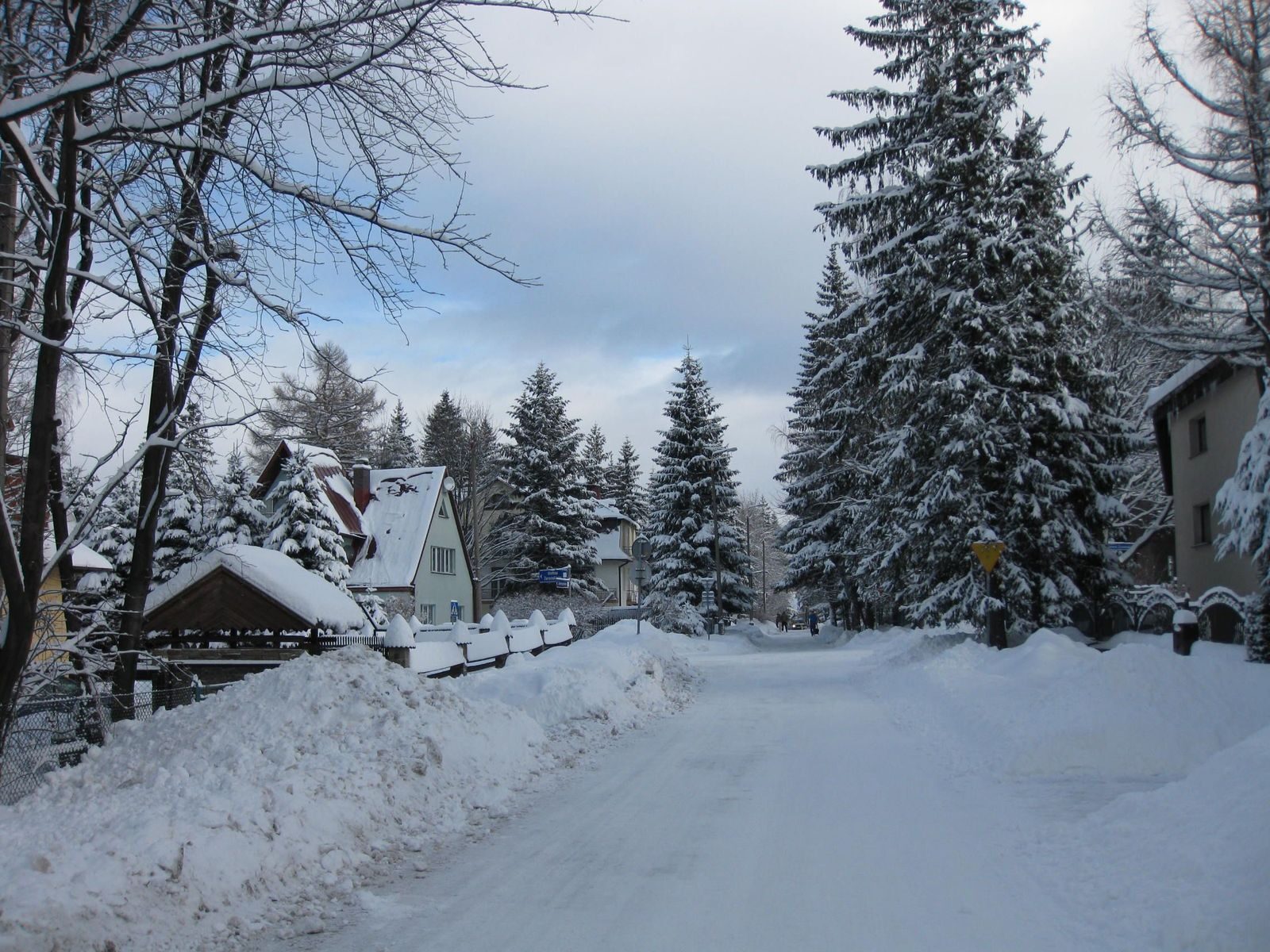
Zakopane in winter: when it snows, the whole town disappears under a thick blanket · Foto: Konrad Wąsik, CC BY 3.0
Zakopane in winter: weather, snow and temperatures
Zakopane sits at about 850 metres, its local mountain Kasprowy Wierch just under 2,000 metres. IMGW’s official climate normals (1991–2020 averages) show the difference clearly:
Station
January mean
January avg high/low
Snow
Zakopane (855 m)
−3.3 °C
1.1 °C / −7.0 °C
about 179 days with snow cover per year
Kasprowy Wierch (1,991 m)
−7.4 °C
–
about 216 days with snow cover per year; average maximum snow depth in February 130.5 cm
Source: IMGW climate normals 1991–2020 (Zakopane and Kasprowy Wierch). Individual winters vary widely: in 2024/25 the deepest snow on Kasprowy reached only 86 cm according to Radio Kraków.
What does that mean for you? In town, January often hovers around freezing by day and drops well below at night. Up on the mountain it’s proper winter, with wind. Dress in layers, bring warm gloves and a hat – and for valley walks, shoes with grip or microspikes, because paths ice up quickly.
Best time: the normals show the most snow in January, February and March. If you prefer it quieter, avoid the Polish school winter holidays and the days between Christmas and New Year.
Skiing in Zakopane: Kasprowy Wierch or Kotelnica Białka?
Kasprowy Wierch – high-alpine and natural
Kasprowy Wierch is Poland’s only truly high-alpine ski area. According to operator PKL, the Gąsienicowa (1,200 m) and Goryczkowa (2,100 m) runs plus a 3.5 km ski road down to the valley have no snowmaking and no floodlights. Everything depends on natural snow – in return you ski in real high-mountain scenery.
PKL’s price list shows the day pass at 169 zł online at least 7 days ahead (reduced 135 zł), 189 zł online at short notice and 199 zł at the ticket office; an Express version with no queuing costs 269 zł. It includes one cable car ride up and both chairlifts. Important: the 2026/27 season start and the new winter prices are not yet published on PKL’s website (as of 15.11.2026). On 15.11.2026 PKL reported: cable car running, chairlifts and runs closed, 17 cm of snow.
Kotelnica Białka and the smaller areas
If you want reliable groomed slopes, snowmaking and night skiing, head to Białka Tatrzańska, about 20 km from Zakopane. Kotelnica Białka belongs to Tatry Super Ski, which says it covers 19 resorts in Poland and Slovakia with over 84 km of slopes and 100 lifts. According to the resort, 2026/27 passes have been on sale online since October, up to 25% cheaper than at the ticket office. Zakopane itself has smaller hills such as Nosal, Polana Szymoszkowa and Harenda – good for beginners, children and half a day.
Area
Type
Best for
Watch out
Kasprowy Wierch
high-alpine, natural snow
confident skiers, freeriders
wind and snow dependent, timed cable car slots
Kotelnica Białka
snowmaking, floodlit
families, cruisers
busy at weekends and holidays
Nosal, Szymoszkowa, Harenda
small town hills
beginners, kids
short runs
Kasprowy Wierch without skis: the cable car in winter
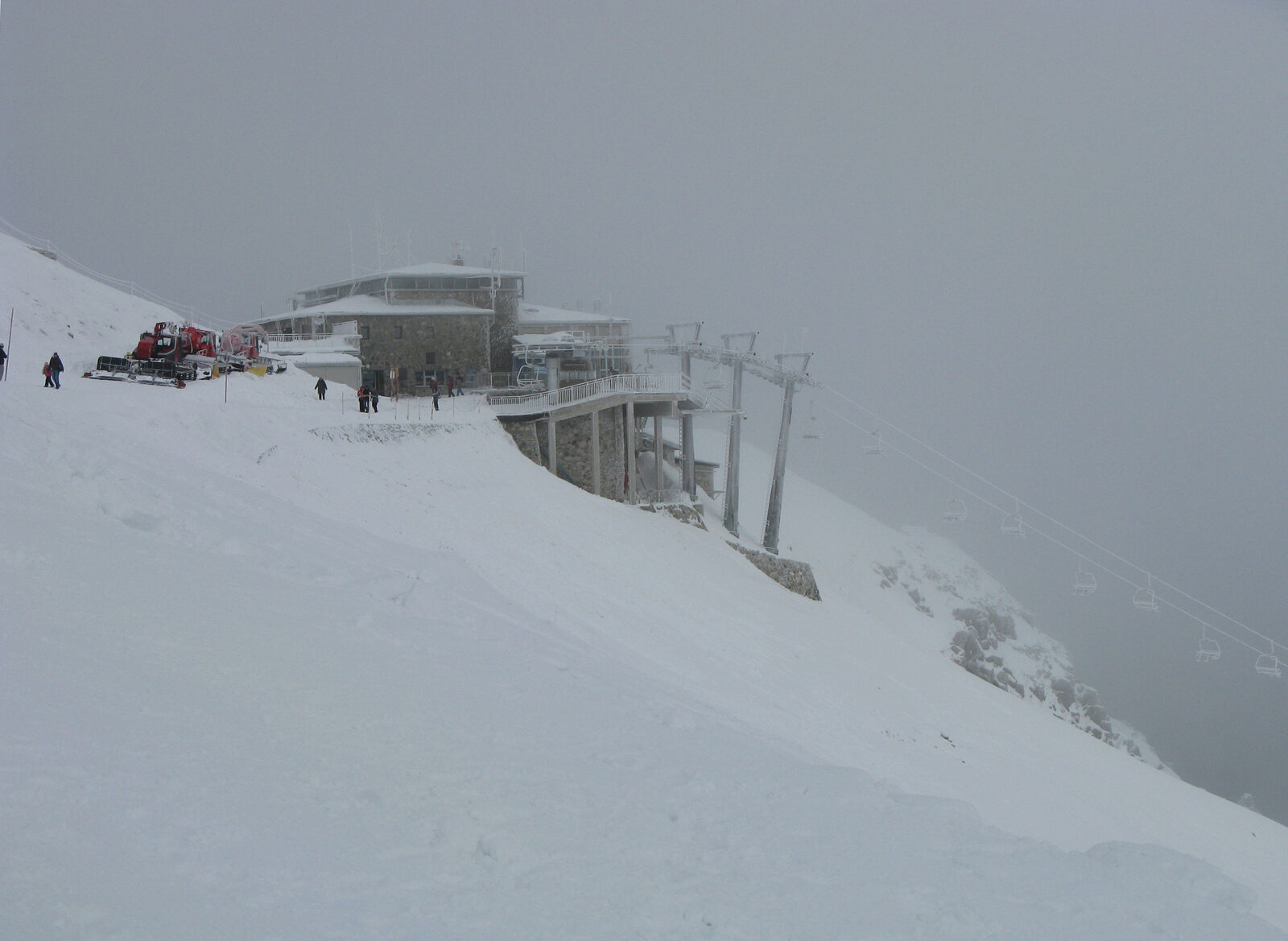
Even without skis the ride up Kasprowy Wierch is worth it: the Slovak border at the top, the snowy Tatras below. The cable car starts in Kuźnice; PKL says the ride takes about 15 minutes with a change at the Myślenickie Turnie middle station. A return ticket gives you 1 hour 40 minutes at the top.
The top station on Kasprowy Wierch (1,987 m) in winter · Foto: Margoz, CC BY-SA 4.0
In the 2025/26 high season a return ticket cost 165 zł at the ticket office (reduced 129 zł) and 99–165 zł online depending on the time slot. Prices from 19.12.2026 are not yet published. Every ticket is for a fixed time slot; PKL explicitly recommends buying online in advance to avoid the long queues in Kuźnice and arriving 15 minutes early. If wind stops the cable car, PKL’s FAQ says you get a 100% refund.
Good to know: the road to Kuźnice is closed to cars. From the Jana Pawła II roundabout it’s about a 40-minute walk according to PKL, or take a bus or taxi.
Gubałówka and Krupówki in winter
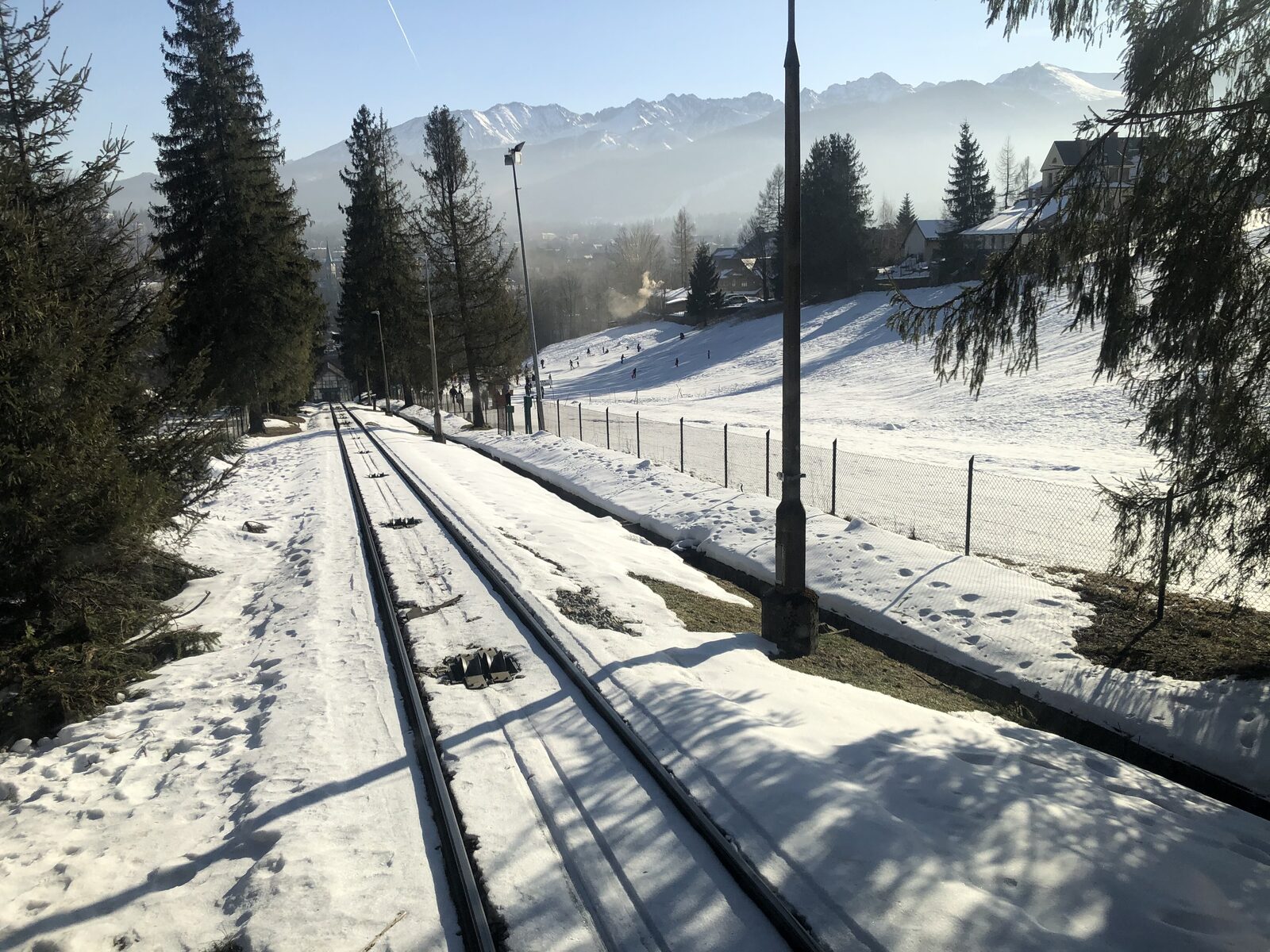
The Gubałówka funicular climbs straight from the town centre to a panorama of the entire Tatra range. In the low season until 18.12.2026 a return costs 37 zł online (42 zł at the office) according to PKL. Heads-up: from 16 to 27.11.2026 the funicular is closed for its autumn inspection; a replacement bus runs every 15–30 minutes from 9:30 am to 7 pm at the same fare. The Butorowy Wierch chairlift is closed from 16 to 28.11.2026.
Down below is Krupówki, Zakopane’s main promenade. Our tip from experience: Krupówki is the tourist strip – two streets further, food often costs half as much. Everything about the funicular, prices and timing is in Gubałówka funicular.
The funicular up Gubałówka in winter – Tatra views waiting at the top · Foto: Kgbo, CC BY-SA 4.0
Zakopane thermal baths in winter: the perfect end to every day
Nothing feels better after a day on the slopes than outdoor thermal water in sub-zero air. The four best-known spas around Zakopane (official prices, checked 15.11.2026):
Spa
Adult price
Highlight
Termy Bukovina (Bukowina Tatrzańska)
from 89 zł for 3.5 h, from 125 zł full day (low season until 20.12.2026)
outdoor pools facing the Tatras
Terma Bania (Białka Tatrzańska)
pool zone 2.5 h online from 73 zł, 89–99 zł at the desk (valid until 17.12.2026)
right by the Kotelnica slopes
Chochołowskie Termy
seasonal prices on the official website
pools Sun–Thu 9 am–10 pm, Fri–Sat 9 am–11 pm
Termy Zakopiańskie (Aqua Park)
check the official website
central, in town
From the Christmas holidays higher peak-season prices usually apply, so check the spa’s website shortly before you go. Our full comparison: Zakopane thermal baths compared.
Morskie Oko in winter: what works and what doesn’t
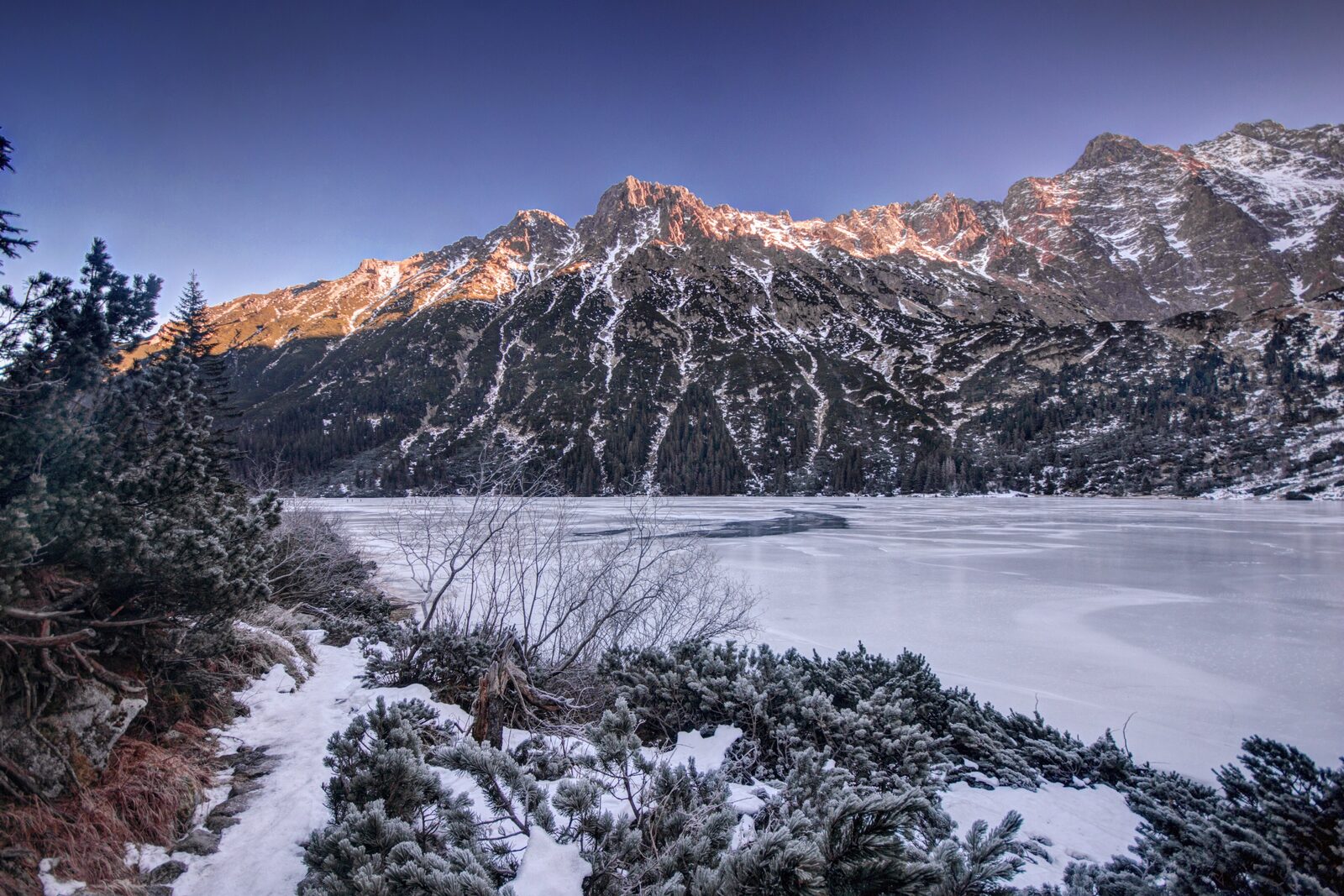
Poland’s most famous mountain lake is a fairy tale in winter too – frozen over, framed by rock walls. According to the Tatra National Park the route is about 8 km on an asphalt road from Palenica Białczańska car park, around 2.5 hours each way; allow 7 hours in total.
Morskie Oko in winter – frozen solid, peaks glowing in the evening light · Foto: Aneta Pawska, CC BY 3.0
E-buses: the park’s electric buses have been suspended since 14.11.2026 until further notice because of snow and ice.
Horse carts: since 01.09.2026 they only go as far as Wodogrzmoty Mickiewicza (about 2.9 km) – you walk the rest. Fares are set by the drivers.
Parking: online tickets for Palenica or Łysa Polana cost 36–75 zł depending on season and how early you book, linked to your number plate. On site there are only leftover spaces at the highest price. Arrive before 8 am.
Entry: the national park costs 11 zł (reduced 5.50 zł), online or by QR code at the entrance.
The Tatras are high mountains. According to the national park, trails are not closed because of avalanche danger in winter – each hiker decides. Summer waymarks can disappear under snow. From 1 December to 15 May some passes are closed entirely, for example the route Dolina Pięciu Stawów – Świstówka Roztocka – Morskie Oko.
Before any hike: check the avalanche bulletin at lawiny.topr.pl and the mountain forecast at pogoda.topr.pl. Mountain rescue TOPR recommends an avalanche transceiver, probe and shovel (plus training) whenever there’s snow cover, crampons and an ice axe on steep ground, and always a headlamp, spare warm layers, a first-aid kit, food and water.
TOPR mountain rescue: 985 or +48 601 100 300, or 112 with weak signal.
For families and anyone without high-mountain experience, the valleys are the better winter choice: the Kościeliska Valley, the Chochołowska Valley or the road to Morskie Oko.
Christmas and New Year’s Eve in Zakopane
Between the holidays Zakopane is packed, and for good reason: wooden houses under snow, lights in the fir trees, highlander music. For New Year’s Eve 2025/26, zakopane.com reported a free concert on Górna Równia Krupowa organised by the town, its cultural centre and a radio station. No programme for New Year’s Eve 2026/27 has been officially confirmed yet (as of 15.11.2026) – check the town’s website closer to the date.
Our oscypek tip: this smoked sheep’s cheese is an EU Protected Designation of Origin (Regulation (EC) No 127/2008). A good oscypek is soft and squeaks when you bite it – and it comes off a charcoal grill, not an electric one, which makes it rubbery. Have it with cranberry jam.
Getting to Zakopane in winter
Train from Kraków: according to PKP Intercity, the 2025/26 timetable had 9 daily train pairs plus 2 seasonal ones between Kraków and Zakopane; the fastest Pendolino takes about 1 hour 57 minutes. There’s also the overnight train “Podhalanin”.
Bus from Kraków: private buses take about 2 hours according to Radio Kraków – often longer with snow and weekend traffic on the Zakopianka road.
By car: winter tyres are not legally required in Poland, but strongly advisable in the mountains. Where sign C-18 is posted, snow chains on at least two drive wheels are mandatory. Access roads to many hillside stays are steep.
From Vienna: we drove via Bratislava and Slovakia, about 4.5 hours. Slovak motorways need the digital vignette – buy it only from the official seller, as third-party sites add surcharges. Details in Driving in Poland.
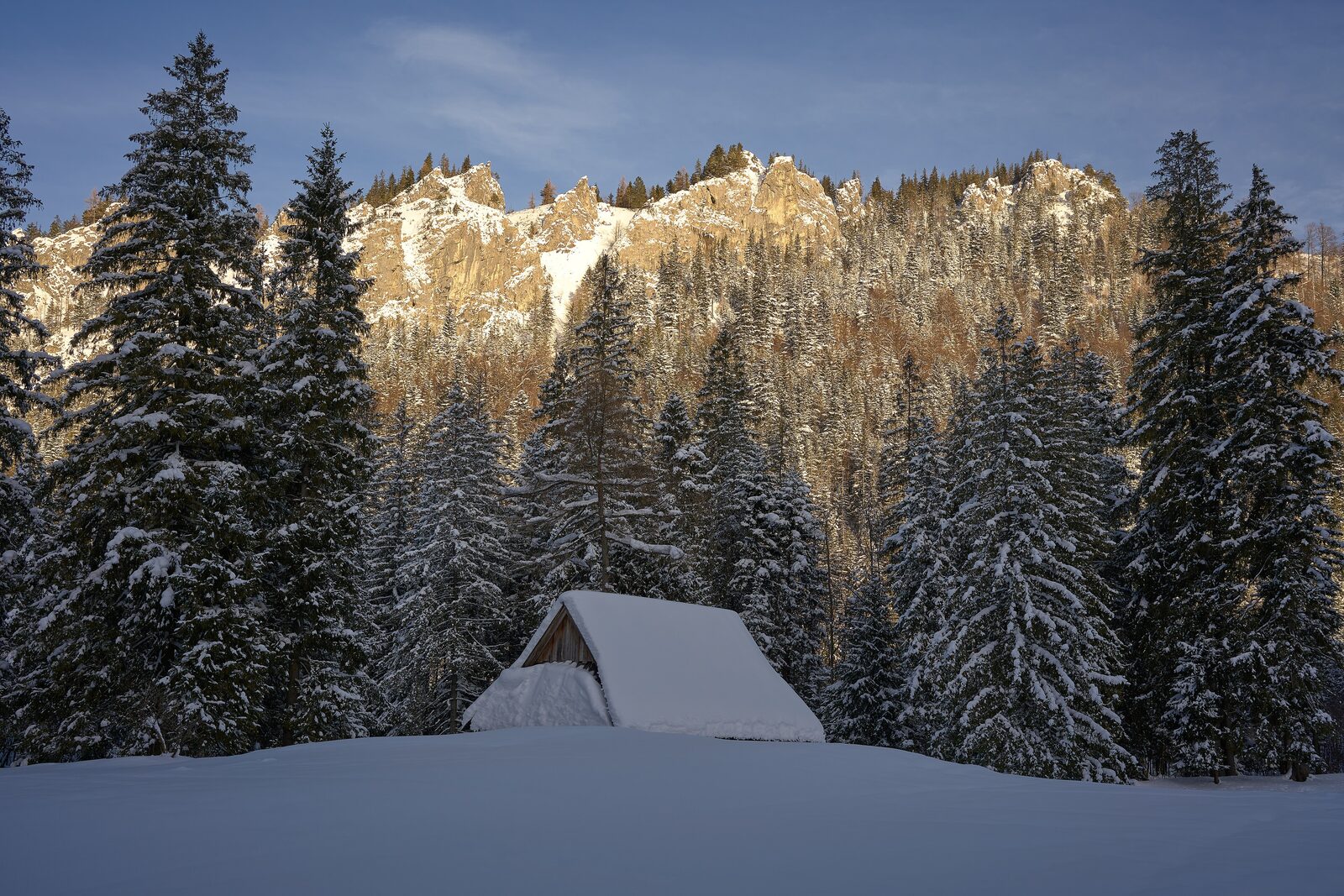
Wooden huts in deep snow – typical of Zakopane and the Podhale region in winter · Foto: Radek Kucharski, CC BY 4.0
Where to stay in Zakopane in winter
In the centre around Krupówki you can walk to restaurants and the Gubałówka funicular, but you pay more and hear more. On the slopes above town you get Tatra views – in winter with steep and possibly icy access roads. We stayed in a glamping dome with a hot tub and would do it again: heated dome, stars above the bed at night, clouds rolling over the peaks in the morning. Skiers heading to Białka should consider staying there. Our review: Glamping dome with hot tub in Zakopane.
Costs: Zakopane in winter at a glance
Item
Price
≈ Euro*
Kasprowy Wierch day pass (online ≥ 7 days ahead / ticket office)
169 / 199 zł
€38 / €45
Kasprowy cable car return, ticket office (high season 2025/26)
165 zł
€37
Gubałówka return online (low season)
37 zł
€8.40
Termy Bukovina 3.5 h (low season)
from 89 zł
from €20
Tatra National Park entry
11 zł
€2.50
Palenica parking (online)
36–75 zł
€8–17
*Converted at the National Bank of Poland mid-rate of 4.4070 zł per euro on 13.11.2026, rounded. Always pay in złoty in Poland, not euros – why, see Money in Poland.
The traps of Zakopane in winter
1. No advance cable car ticket: turning up in Kuźnice without a ticket means long queues in high season. Buy online only on the official PKL website, for a fixed slot.
2. Counting on the Morskie Oko e-bus: it hasn’t run since 14.11.2026. Plan for the 8 km walk or the shortened cart ride.
3. Buying parking on site: at Palenica there are only leftover spaces at the top price – book online through the national park website.
4. Unofficial “Zakopane” websites: some sites with Zakopane in the name are private resellers, not the town. Get tickets and information from the operator itself: PKL, TPN, the spa.
5. “Pay in euros?”: always choose PLN at the terminal, otherwise the merchant converts at its own rate.
6. Underestimating the mountains: no summit without the avalanche bulletin, gear and experience. TOPR rescue: 985.
Our recommendations for Zakopane in winter (advertising – we earn a small commission at no extra cost to you):
Tours and day trips in Zakopane and the Tatras: Zakopane on GetYourGuide – usually free cancellation.
Compare hotels and guesthouses in Zakopane and Białka: Booking.com
A wooden chalet or apartment with Tatra views: Airbnb
Yes, if you love snow, mountains and thermal spas. Zakopane is Poland’s most snow-sure mountain town, with skiing at almost 2,000 metres, spas facing the Tatras and winter walks in the valleys.
How cold is Zakopane in winter?
According to IMGW, the January mean in Zakopane is −3.3 °C (average high 1.1 °C, average low −7.0 °C) and −7.4 °C on Kasprowy Wierch.
When does the ski season start in Zakopane?
On Kasprowy Wierch it depends on natural snow; the 2026/27 start date hasn’t been published yet. Areas with snowmaking such as Kotelnica Białka usually open earlier.
How much is a ski pass in Zakopane?
The Kasprowy Wierch day pass most recently cost 169 zł online (at least 7 days ahead) up to 199 zł at the ticket office – roughly €38–45.
Can you visit Morskie Oko in winter?
Yes, along the roughly 8 km asphalt road from Palenica Białczańska, about 2.5 hours each way. The e-buses have been suspended since 14.11.2026, and horse carts only run to Wodogrzmoty Mickiewicza.
Which thermal spa near Zakopane is best in winter?
Termy Bukovina has outdoor pools facing the Tatras, Terma Bania sits right next to the Kotelnica ski slopes, and Chochołowskie Termy is especially large. An evening in an outdoor pool is special at all of them.
How do you get from Kraków to Zakopane in winter?
By train (the fastest Pendolino takes about 1 h 57 min according to PKP Intercity), by bus in about 2 hours, or by car on the Zakopianka – expect delays with snow and at weekends.
Do you need winter tyres in Poland?
They aren’t legally required in Poland, but strongly recommended in the Tatras. Where sign C-18 is posted, snow chains are mandatory.
What is the emergency number in the Tatras?
TOPR mountain rescue: 985 or +48 601 100 300, or 112 if your signal is weak.
Our verdict: Zakopane in winter is a fairy tale – if you plan it
In just a few days, Zakopane in winter gives you everything a mountain holiday can: high-alpine runs, snowy valleys, steaming spas beneath the peaks and evenings full of charcoal smoke. Most disappointments don’t come from the weather but from missing tickets, closed lifts and underestimated mountains. Book cable car and parking officially and in advance, check the avalanche bulletin, pay in złoty – and treat yourself to an outdoor pool with a Tatra view at night. We’ll definitely be back – next time with snow.
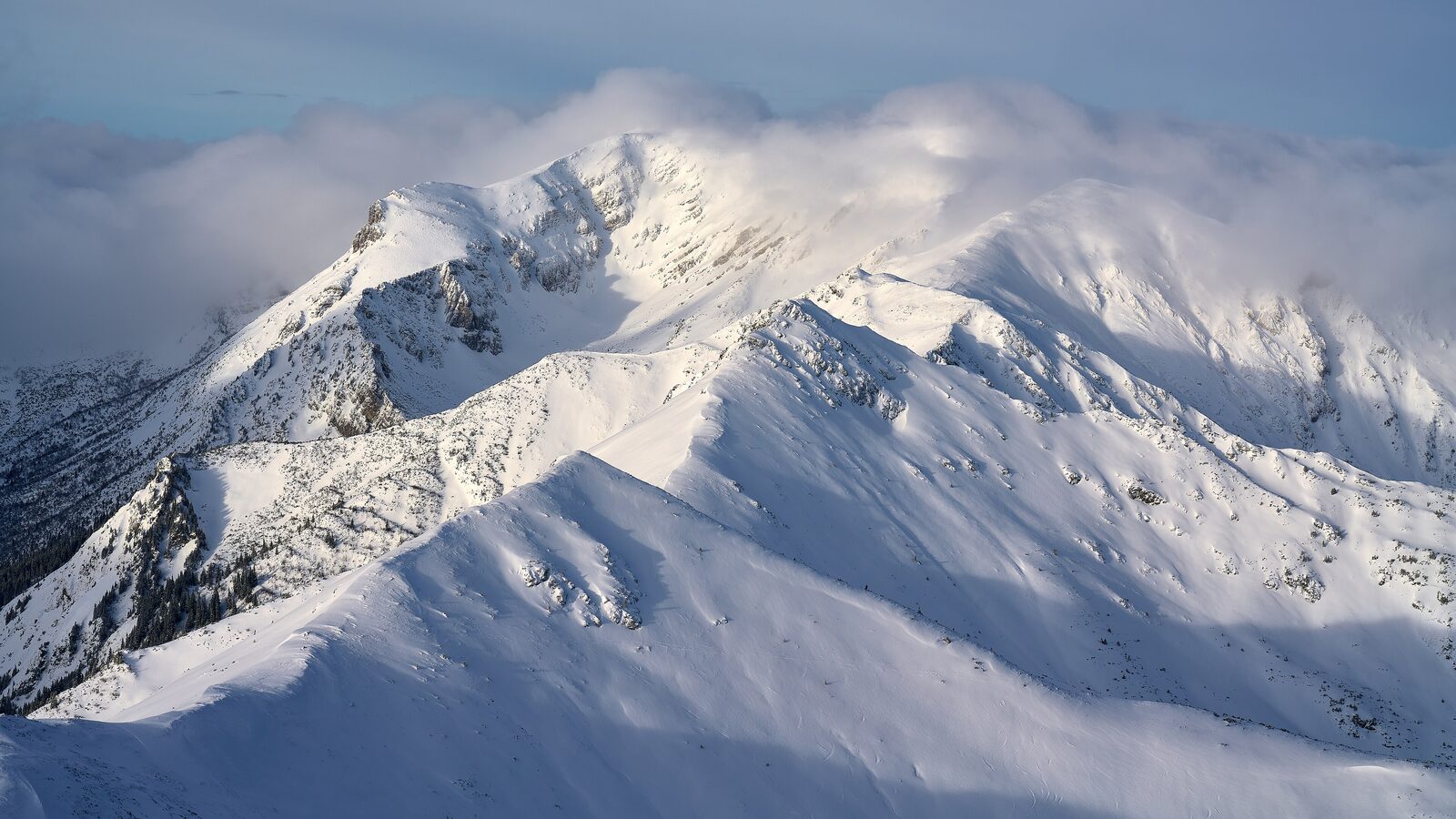
The winter photos in this guide are not ours – they are freely licensed (Wikimedia Commons): Cover photo: winter landscape on Kasprowy Wierch – Radek Kucharski, CC BY 4.0; Zakopane in winter: snowy street with wooden houses and fir trees – Konrad Wąsik, CC BY 3.0; Top station of the Kasprowy Wierch cable car in winter – Margoz, CC BY-SA 4.0; Gubałówka funicular in winter: snowy tracks with a view of the Tatras – Kgbo, CC BY-SA 4.0; Morskie Oko in winter: frozen lake below snowy Tatra peaks – Aneta Pawska, CC BY 3.0; Wooden hut in deep snow near Zakopane in winter – Radek Kucharski, CC BY 4.0. You’ll find our own photos from Zakopane in our guide Zakopane in summer.
🔔 Get new articles & deals as a notification?No spam – max. 4 a day, switch off anytime.
Your choice
We only use what is necessary to run this website. Everything else – such as statistics or content from third parties – only with your consent. You can change your choice at any time.