
Destination
Phuket Hidden Gems: Quiet Beaches, Old Town and the Traps That Cost Travellers Money
Phuket hidden gems 2026: quiet beaches, Old Phuket Town, Phang Nga Bay, the Similan season, the free TDAC and cheap airport transfers.…
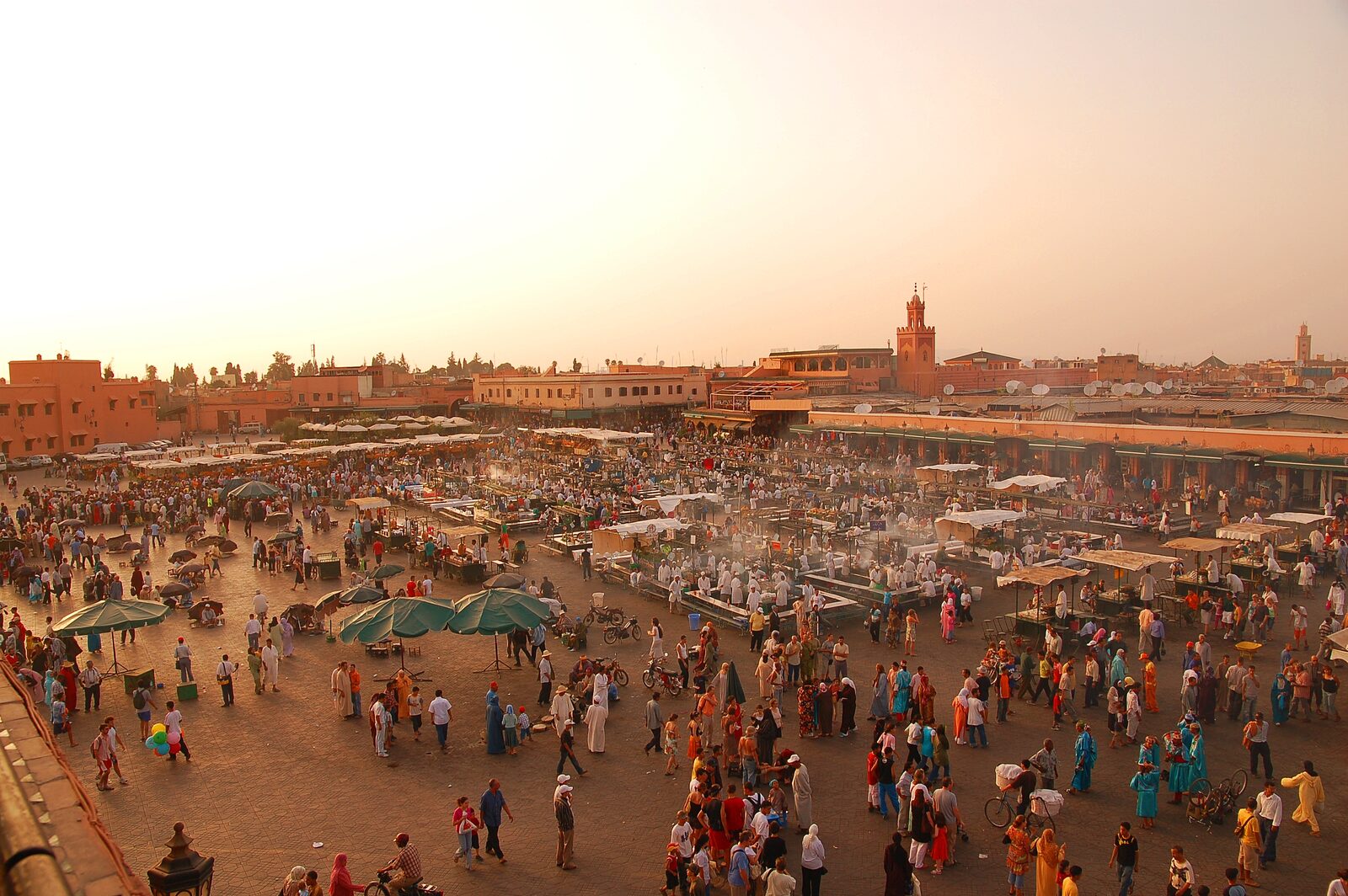
There are plenty of things to do in Marrakech – but not all of them are worth it. So here is our honest list: what we saw ourselves, how much time you should allow and what you can safely skip.
Marrakech is loud, cramped and unforgettable. The medina is a maze where you will get lost – and that is part of it. Not every sight lives up to what the guidebooks promise. Here is a selection with time needed, approximate entrance prices and an honest assessment.
All prices are guide values in dirham (MAD), as of 2026. To convert: 1 euro is roughly 10–11 MAD, and the rate fluctuates. Entrance fees and opening times change, so check them on site or on the official websites of the sights.
| Sight | Time needed | Entrance (approx.) | Our verdict |
|---|---|---|---|
| Jemaa el-Fna | 1–2 hrs, ideally in the evening | free | must-see |
| Souks of the medina | 2–3 hrs | free | must-see, bring patience |
| Bahia Palace | 45–60 min | approx. 70 MAD | worth it |
| Saadian Tombs | 30–45 min | approx. 70 MAD | worth it, often a queue |
| Ben Youssef Madrasa | 30–45 min | approx. 50 MAD | worth it |
| El Badi Palace | 45–60 min | approx. 70 MAD | optional |
| Jardin Majorelle | 1–1.5 hrs | approx. 150–200 MAD | beautiful, but busy and expensive |
| Le Jardin Secret | approx. 45 min | approx. 80 MAD | quiet alternative |
| Koutoubia Mosque | approx. 15 min (from outside) | free | photo stop |
| Menara Gardens | 30–45 min | free to low, depending on the area | overrated |
| Day trip to Essaouira (return) | 1 day, better more | drive: approx. 3 hrs each way | highly recommended |
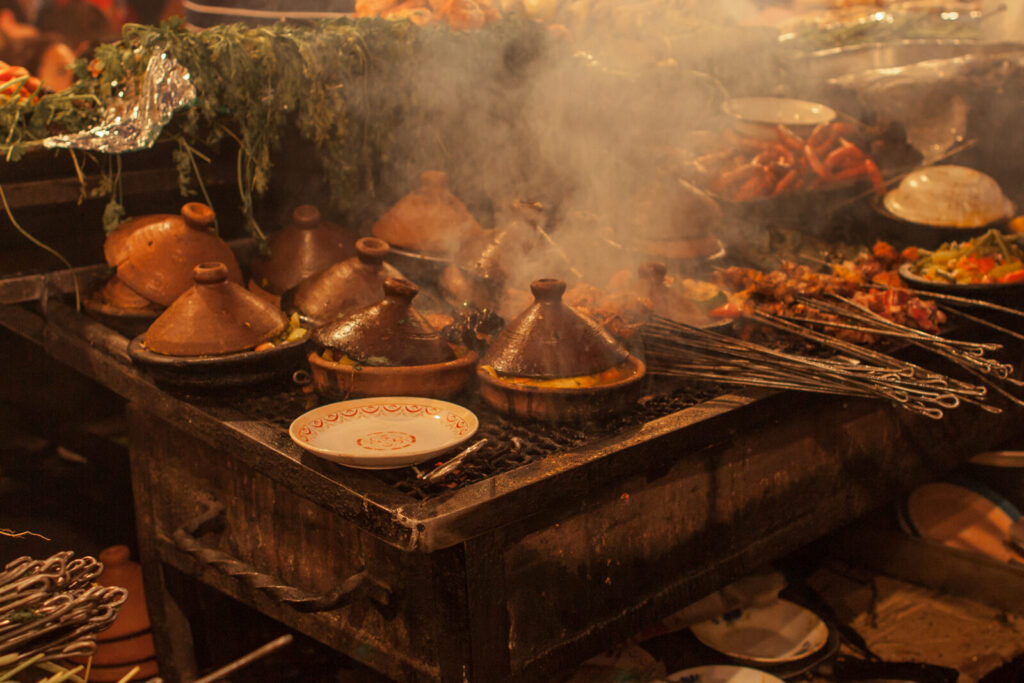
The heart of the medina is Jemaa el-Fna. During the day you’ll see orange juice stalls and water sellers. In the evening the square turns into a huge open-air kitchen with smoke, drums and storytellers. So come twice: once during the day to get your bearings and once after sunset to eat and marvel. If you have to choose between the food stalls: pick a busy one and ask for the price before you order.
With children, stay together and keep little ones by the hand or in a carrier. It is crowded, loud and confusing.
The souks start north of the square. Let yourself drift, but don’t plan on being in a hurry. Haggling is part of it here. Start at about a third of the first price you’re quoted and meet somewhere in the middle. If you don’t want to buy anything, say so politely and move on. That is completely fine.
A pushchair is hard work in the narrow alleys. You’ll get through more easily with a carrier or a backpack.
The 19th-century palace is worth seeing less for any single room than for the sequence of courtyards, painted ceilings and gardens. Allow about 45–60 minutes. It is emptier early in the day, and the courtyards feel much calmer then.
The complex is compact. The famous room with the twelve columns draws the crowds, so there is often a queue. 30–45 minutes is plenty. If you see a long queue at the entrance, try again later in the day.
The former Koranic school has a courtyard full of cedar wood, stucco and zellige mosaics – in a small space and for a modest entrance fee. If you are interested in craftsmanship and detail, this is the place for you.
Jardin Majorelle with its cobalt-blue building is one of the most photographed places in the city – and it is correspondingly busy and expensive. If you like taking photos and come early, you will be rewarded. Check in advance whether there are timed online tickets so you can skip the queue. If that is too much hustle for you, Le Jardin Secret in the middle of the medina is a quieter and cheaper alternative.
The minaret can be seen from far away and helps you find your bearings. Non-Muslims generally cannot enter the mosque. A short photo stop is enough.
We spent two days in Marrakech and found it intense, but enough. For two days we would plan like this:
A hammam is a good way to unwind after all the hustle. In tourist hammams prices vary hugely depending on facilities and package, so ask exactly what is included beforehand.
From Marrakech it is about three hours by car to the Atlantic. The route is a well-built country road. On the way you’ll see the famous goats in the argan trees. They are often placed there by farmers, and a photo costs a few dirham.
Essaouira is the opposite of Marrakech: relaxed, windy, white and blue.
From Essaouira we drove on to Imsouane, a small surf village about one and a half to two hours south. One of the longest waves in Africa rolls in there – gentle and ideal for beginners and longboards. Five days were exactly right for us to unwind. You’ll find the whole itinerary in our travel story: Morocco: Marrakech, Essaouira and Imsouane – two weeks between the medina and the Atlantic. And if you ride: we also spent several days horse riding on Morocco’s Atlantic coast.
| Route | Driving time (approx.) |
|---|---|
| Marrakech – Essaouira | about 3 hrs |
| Essaouira – Imsouane | 1.5–2 hrs |
Passend dazu:
Our absolute favourite dish in Marrakech is djaj mhamer – and we’ll say it clearly: you have to try it, it is so delicious! A whole chicken is first slowly braised in a sauce with saffron, cumin, garlic, onions and butter and then roasted golden brown in the oven. The meat almost falls off the bone, the outside is crispy, and you dip fresh bread into the spicy sauce.
If you would rather discover Moroccan cuisine with a local, book a Marrakech food tour on GetYourGuide.
A riad is an old town house with a courtyard in the middle of the medina. It is quiet, beautiful and often comes with breakfast on the roof terrace. After a day in the alleys it is the best place to retreat to. For taxis and luggage: you can’t drive into the medina itself. Ask your riad how best to find it – they often pick you up at the edge of the medina.
If you have a rental car, park at the edge of the medina in a guarded car park. You cannot drive into the medina. There are a great many speed checks on country roads and in towns, often right before and after a village. The police collect fines on the spot, so stick exactly to the speed limit. At roundabouts, traffic entering often has priority, so drive carefully. The main roads are good; motorways (for example towards Agadir) are tolled.
The dirham is a closed currency. Officially you may only take small amounts in and out of the country. So withdraw cash locally from ATMs with your Wise card and spend it before you fly or change it back (keep the exchange receipt). In the medina, at stalls and in taxis it is cash only. Riads and larger restaurants accept cards.
You can get a local SIM (Maroc Telecom, Orange or inwi) at the airport with your passport, and data packages are cheap. Alternatively, buy an eSIM before you leave. In Imsouane the signal was weak on some days – if you need to work there, have a backup.
Before you travel, check the official sources – for example your government’s travel advice for Morocco (such as the UK Foreign Office or the US State Department). There you’ll find current information on entry requirements, travel documents, safety and health. These rules can change, so check them again shortly before you leave.
Marrakech is worth it if you embrace the noise, the crowds and the haggling. Jemaa el-Fna in the evening, the souks and one or two palaces are enough for a well-rounded picture. After that, a day by the sea in Essaouira does you good. We would do it the same way again, but stay longer on the coast and limit Marrakech to two nights.
Our verdict on things to do in Marrakech: plan less and take your time for the places you really like. It also pays to visit the most famous sights early in the morning or in the evening, because it is quieter then. You’ll find more places we have been to ourselves in our travel stories; general background on the city’s history is available on Wikipedia.
Two days are enough for the main highlights: Jemaa el-Fna, the souks, one or two palaces and a garden. We spent two days there and would again limit it to two nights next time. If you move more slowly in the heat or need lots of breaks, plan a third day.
They include Jemaa el-Fna in the evening, the souks of the medina, Bahia Palace, the Saadian Tombs, the Ben Youssef Madrasa and a garden such as Jardin Majorelle or Le Jardin Secret. The Koutoubia Mosque is a good landmark and photo stop.
Most palaces and museums cost about 50–80 MAD (as of 2026). Jardin Majorelle is considerably more expensive at about 150–200 MAD. Jemaa el-Fna and the souks are free. Prices change, so check them on site.
The animal shows on Jemaa el-Fna are one example: photos cost money there, and it is unclear how well the animals are treated. In our view the Menara Gardens and El Badi Palace are also optional. Jardin Majorelle is crowded and expensive at peak times.
Start at about a third of the first price and meet somewhere in the middle. If you don’t want to buy anything, say so politely and move on. That is completely fine and part of the experience.
In the medina, at stalls and in taxis it is cash only. Riads and larger restaurants accept cards. Withdraw dirham locally from an ATM, for example with a Wise card. Officially the dirham may only be taken in and out of the country in small amounts, so don’t withdraw too much.
Yes. From Marrakech it is about three hours by car to the Atlantic. Essaouira is relaxed, windy, white and blue, with a fishing harbour and the city wall (Skala) for sunset. If you have more time, stay the night or drive on to the surf village of Imsouane.
Last updated: 20 Oct 2026. Prices and rules change – please check with the official sources before you travel.
Ad: partner links – if you book through them, we earn a small commission and your price stays the same.
Phuket hidden gems 2026: quiet beaches, Old Phuket Town, Phang Nga Bay, the Similan season, the free TDAC and cheap airport transfers.…
Paris hidden gems 2026: 15 quiet spots, free museums, Seine swimming, airport taxi flat rates and the official ticket sites that save you mo…

Iceland in winter: aurora tips, ice caves, Secret Lagoon, Reynisfjara status 2026, winter tyres, parking fees and the official sites that sa…
We only use what is necessary to run this website. Everything else – such as statistics or content from third parties – only with your consent. You can change your choice at any time.