
Destination
Phuket Hidden Gems: Quiet Beaches, Old Town and the Traps That Cost Travellers Money
Phuket hidden gems 2026: quiet beaches, Old Phuket Town, Phang Nga Bay, the Similan season, the free TDAC and cheap airport transfers.…
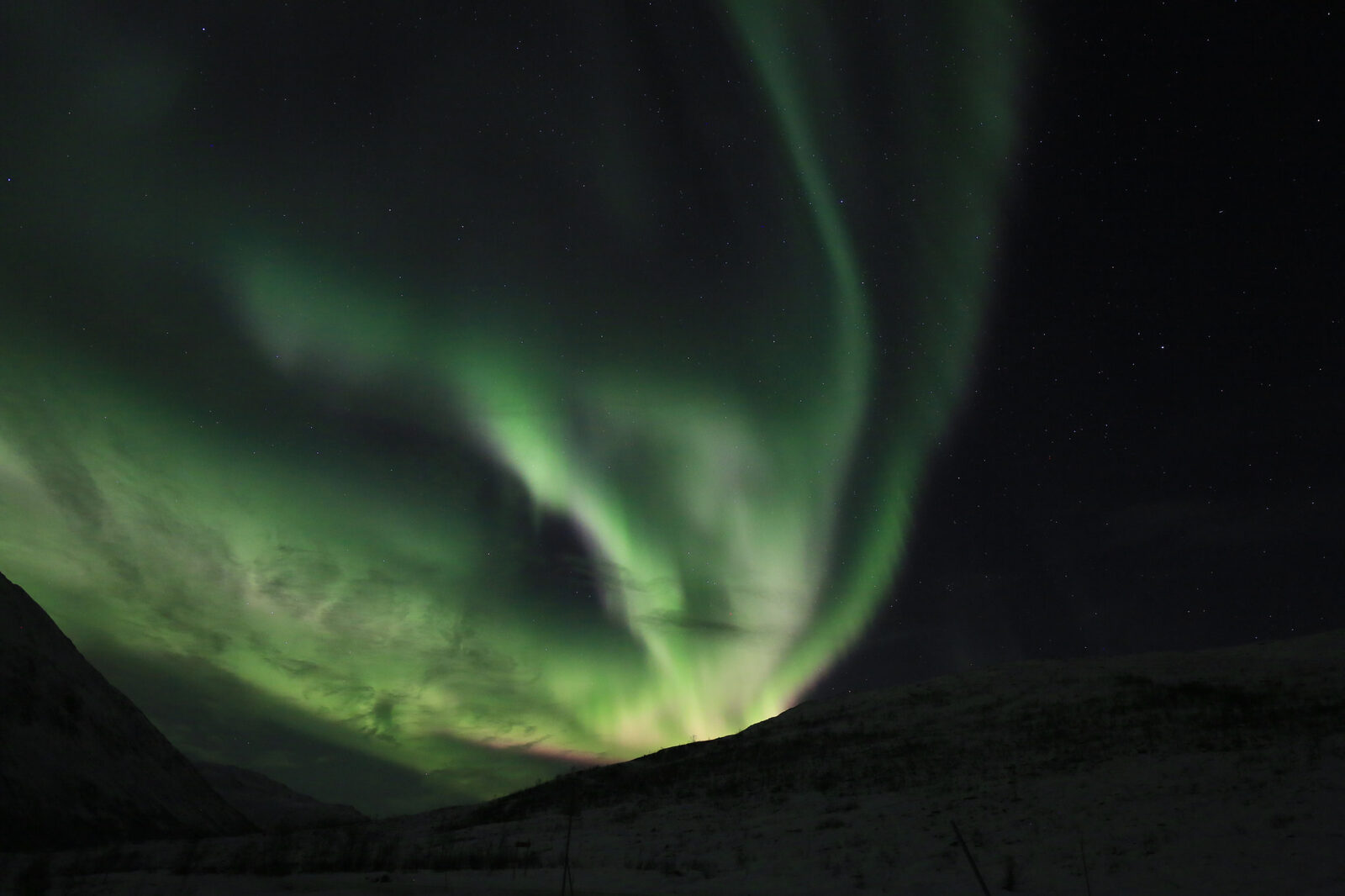
There are many things to do in the Lofoten Islands – but not all of them are worth it. So here is our honest list: what we saw ourselves, how much time you should allow and what you can safely skip.
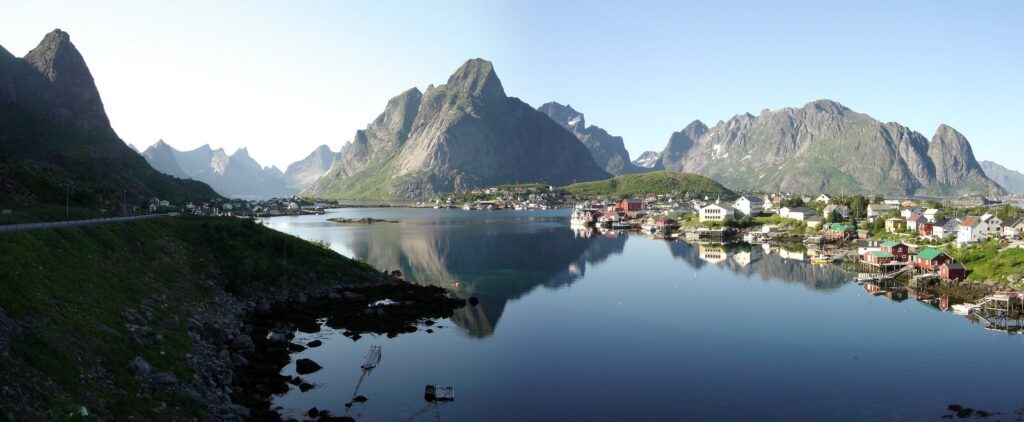
The Lofoten Islands are an archipelago in northern Norway, north of the Arctic Circle. The main road is the E10. It links the islands via bridges and undersea tunnels and ends in the south at the village of Å. That makes planning easy: you basically drive one line from north-east (Svolvær) to south-west (Å) and turn off onto side roads to beaches and villages as you like.
The most famous motifs are in the south: Reine and Hamnøy, with red rorbuer in front of steep mountains right by the sea. The wide sandy beaches are more on the west side, around Leknes. The places in the north (Svolvær, Henningsvær) are livelier, have more cafés and restaurants and are more geared towards tourism.
Without a car it gets tedious. There are buses, but they’re infrequent, especially in winter. We travelled by rental car, and that’s what we’d recommend for Lofoten too.
These are guide values (as of 2026). Prices and opening times change, especially in winter. Check them on the provider’s website before you go.
| Sight | Location | Time needed | Cost (approx., as of 2026) |
|---|---|---|---|
| Reine & Hamnøy | south, right on the E10 | 1.5–3 hrs | free (some car parks charge) |
| Å (fishing village, museums) | end of the E10, approx. 5 km past Reine | 1–2 hrs | museums approx. 100–200 NOK per adult |
| Haukland & Uttakleiv | west side, approx. 15 km from Leknes | 1–2 hrs | free |
| Kvalvika beach (hike) | Fredvang, south-west | approx. 3–4 hrs return | free |
| Reinebringen (viewpoint) | near Reine | approx. 2–3 hrs return | free (not for beginners in winter) |
| Henningsvær | side road off the E10, approx. 30 km from Svolvær | 1–2 hrs | free |
| Nusfjord | side road in the south | 1 hr | village entry approx. 100 NOK |
| Lofotr Viking Museum | Borg, middle of the archipelago | 2–3 hrs | approx. 200–300 NOK, often limited in winter |
| Trollfjord boat tour | from Svolvær | approx. 3 hrs | approx. 900–1,200 NOK per adult |
For distances: Svolvær–Reine is about 125 km and a good two hours’ drive, Leknes–Reine about 80 km. In winter, allow more time.
This is why most people come. The red rorbuer stand on stilts in the water, with steep mountains rising behind them. Hamnøy is right on the E10 and a classic photo stop; Reine is a few minutes further on. Both are seen in a few hours, but the light decides how good it gets.
In December 2024 we were on Lofoten in the middle of the polar night. The sun didn’t rise, but around midday there are two or three hours of blue, almost violet twilight, often with a pink edge to the sky. It’s exactly this light that makes the cabins so special in winter. So plan your outings between about 10 am and 2 pm and use the rest of the day for food, sauna and northern lights.
If you want to sleep in a rorbu, book through Airbnb or Booking. In December there’s plenty of choice; from February (northern lights plus daylight) it gets tight. In summer it’s even busier, so book early.
Å is a small fishing village with old wooden buildings, a fishing museum and a stockfish museum. It’s a lovely end to a drive south. Its appeal lies in the atmosphere: drying racks, cabins, the sea. The museums are worth it if you’re interested in fishing and history. For kids it’s more of a short stop than a full-day programme.
On the west side you’ll find pale sandy beaches with turquoise water and mountains behind. In summer it feels almost Caribbean; in winter it looks stark and vast. Both beaches are free and easy to reach by car. If you only want to see one side of Lofoten that isn’t about cabins, choose this one.
Henningsvær sits on small islands connected by bridges. There are galleries, cafés and plenty of rorbuer. The approach is along a side road, so you need some time. Half a day is ideal, especially if you stay in or near Svolvær. In winter many places have reduced opening hours, so plan your food.
Nusfjord is an old fishing village considered particularly well preserved. A small entry fee is usually charged (about 100 NOK). If you’ve already been to Reine and Å, you’ll get similar motifs here, just smaller. Worth it if you have time and like the cabins; otherwise you can skip it.
The Trollfjord is a narrow, steep-sided fjord. Boats go in from Svolvær, in winter sometimes as sea eagle tours. It’s one of the more expensive activities, but from the water you see the mountains in a different way. Trips are cancelled in bad weather, so plan a buffer day.
Kvalvika is a remote beach you can only reach on foot. The path is shorter than it looks, but steep and difficult in winter with snow and ice. Reinebringen is the well-known viewpoint above Reine with built stone steps. Very popular in summer; in winter, because of ice, snow and avalanche risk, only for experienced hikers with the right equipment. Ask locally about current conditions before you set off.
Lofoten has a completely different face depending on the season.
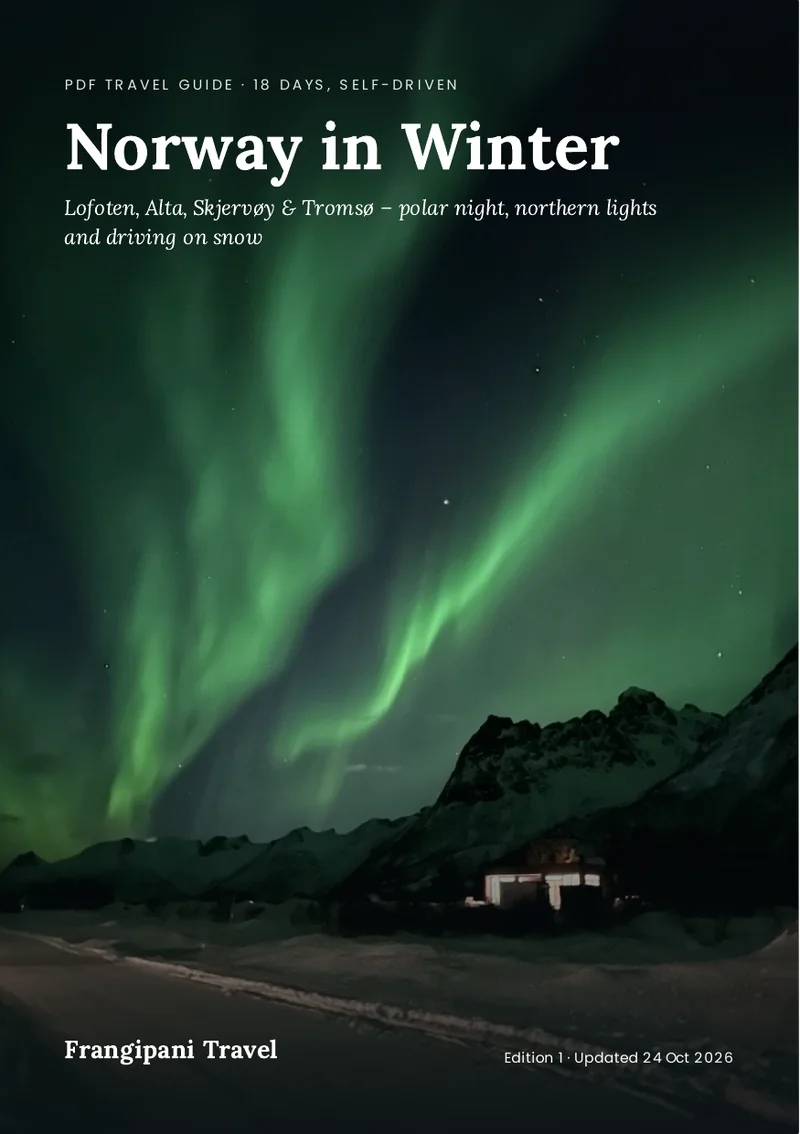
Our experience: eighteen days without a sunrise in northern Norway were still one of the most beautiful trips we’ve ever taken. More in our story Norway in winter: Lofoten, Alta and Tromsø – Christmas and New Year in the polar night.
Norway is practically cashless. We didn’t withdraw any cash on the whole trip and paid for everything in kroner with our Wise card. Always pay in NOK at the terminal and never let it convert to euros. Why that matters is in our post money abroad.
Mobile coverage along the main roads is surprisingly good, but there are dead spots in fjords and behind mountains. If you work on the road, Starlink in the car keeps you on the safe side.
Restaurants and alcohol are the main expenses. Wine and spirits are only sold in the state-run Vinmonopolet. Accommodation with a kitchen and supermarket shopping make it cheaper. Diesel and tolls add up on long distances. Tolls are charged automatically by number plate, and the rental company bills them afterwards.
For current entry requirements, documents and safety advice, check your government’s official travel advice. If you’re travelling with a dog, also check the import rules with the Norwegian Food Safety Authority (Mattilsynet). Weather and road conditions change quickly in winter, so plan buffer time.
Lofoten is worth it above all for the landscape, not for individual buildings or museums. Reine and Hamnøy, a beach in the west and a quiet day without a programme are worth more than ten ticked-off villages. Would we go again? Yes – but next time at the end of February or in March, when there are northern lights and daylight. You have to experience the polar night once, though. It’s magical.
Our verdict on things to do in Lofoten: plan less and take your time for the places you really like. It also pays to visit the most famous spots early in the morning or in the evening, because it is quieter then. You’ll find more places we have been to ourselves in our travel stories; general background on the islands is on Wikipedia.
Passend dazu:
Reine and Hamnøy with the red rorbuer, the fishing village of Å and a beach on the west side such as Haukland or Uttakleiv. If you have more time, add Henningsvær and a boat tour into the Trollfjord.
About three days are enough for the main places in the south and west. With hikes, Henningsvær and a boat tour, five to seven days are more relaxed. In winter, plan more time because of the short daylight hours.
Most places such as Reine, Hamnøy and the beaches are free. For museums, expect about 100–300 NOK per adult; a Trollfjord boat tour costs about 900–1,200 NOK (as of 2026). Accommodation, food and the rental car are the bigger costs.
Yes, if you want to experience the polar night and the northern lights. It’s quiet and the light around midday is special. On the other hand, daylight is short and many places have limited opening hours. If you want both, northern lights and daylight, go at the end of February or in March.
We recommend it. The E10 connects the islands, but buses are infrequent, especially in winter. With a car you’re flexible and can also drive to the northern lights. Get the rental company to confirm winter or studded tyres.
The football pitch in Henningsvær, which mainly looks spectacular from the air, and Svolvær as a destination in itself. Ticking off lots of similar fishing villages doesn’t achieve much either. Fewer places with more time is better.
Northern lights are possible in the dark months, often between 9 pm and 1 am. What matters is a clear sky, not just a high Kp index. Check the cloud map (e.g. yr.no) and drive to places without village lights. There’s no guarantee.
Last updated: 20 Oct 2026. Prices and rules change – please check with the official sources before you travel.
What we learned on the road, condensed into one PDF – so you can plan less and enjoy more.
€9.90 PDF · English + German in one purchase · instant downloadBuy now – €9.90 →Look inside the PDF ›Ad: partner links – if you book through them, we earn a small commission and your price stays the same.
Phuket hidden gems 2026: quiet beaches, Old Phuket Town, Phang Nga Bay, the Similan season, the free TDAC and cheap airport transfers.…

Paris hidden gems 2026: 15 quiet spots, free museums, Seine swimming, airport taxi flat rates and the official ticket sites that save you mo…
Iceland in winter: aurora tips, ice caves, Secret Lagoon, Reynisfjara status 2026, winter tyres, parking fees and the official sites that sa…
We only use what is necessary to run this website. Everything else – such as statistics or content from third parties – only with your consent. You can change your choice at any time.