
Destination
Phuket Hidden Gems: Quiet Beaches, Old Town and the Traps That Cost Travellers Money
Phuket hidden gems 2026: quiet beaches, Old Phuket Town, Phang Nga Bay, the Similan season, the free TDAC and cheap airport transfers.…
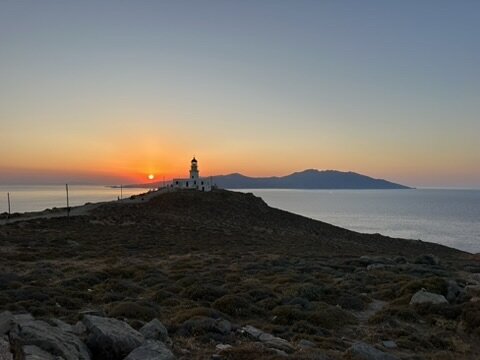
There are more things to do in Mykonos than you can fit into two or three days – but not all of them are worth it. So here is our honest list: what you should see, how much time you should allow and what you can safely skip.
Mykonos is a small Cycladic island in the Aegean Sea, about 85 km² in size – without traffic you can cross it from end to end in 30 minutes. It’s known for white cube houses, narrow lanes, windmills and a nightlife that runs until morning in July and August. Away from all that there are quiet coves, a village in the interior and, with Delos, one of Greece’s most important archaeological sites just off the coast.
We were on Mykonos on 22 and 23 July 2025 – two days as part of our 40-day Europe road trip, between Athens and Santorini. Anything beyond that is general information about the island that you should double-check before your trip.
Distances are from Mykonos Town (Chora) and rounded. All prices are guide values (approx., as of 2026) and vary by provider and season.
| Sight | Region | Distance from Chora (approx.) | Time needed (approx.) | Cost (approx., as of 2026) |
|---|---|---|---|---|
| Chora, Little Venice & windmills | west coast, town | 0 km, on foot | 2–3 hrs | free |
| Panagia Paraportiani | Chora | 0 km, on foot | 15–30 min | free (seen from outside) |
| Delos (boat trip) | island off Mykonos | boat from the Old Port, approx. 30–45 min | 4–5 hrs incl. boat | boat approx. €25–35 pp return, entry approx. €15–20 |
| Armenistis lighthouse | north-west | approx. 6 km, 15 min | 30–60 min | free |
| Ano Mera & Panagia Tourliani monastery | interior | approx. 8 km, 15–20 min | 1–2 hrs | free, donations welcome |
| South coast beaches (Psarou, Platis Gialos, Ornos) | south | approx. 3–5 km, 10–15 min | half a day | sunbeds approx. €20–60, much more at beach clubs |
| Paradise & Super Paradise | south | approx. 6–7 km, 15–20 min | half a day | sunbeds from approx. €30, expensive drinks |
| North coast (Agios Sostis, Fokos) | north | approx. 8–10 km, 20–25 min | 2–3 hrs | usually free, hardly any facilities |
Chora with Little Venice and the windmills is on the west coast, right next to the Old Port with the boats to Delos. The New Port (Tourlos) is about 2 to 3 km north of town. The well-known beaches line the south coast, the quieter coves are in the north. Ano Mera is in the interior, Armenistis lighthouse on the north-western tip.
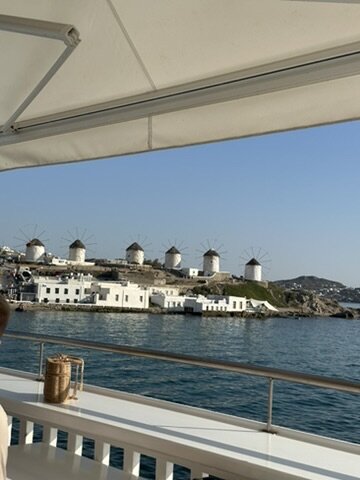
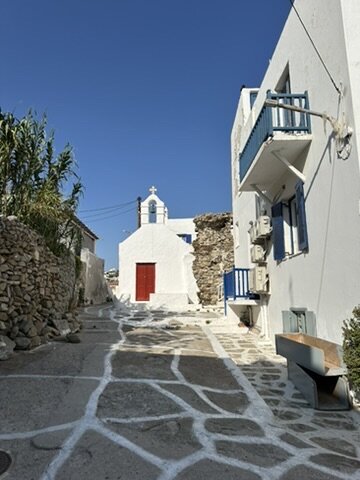
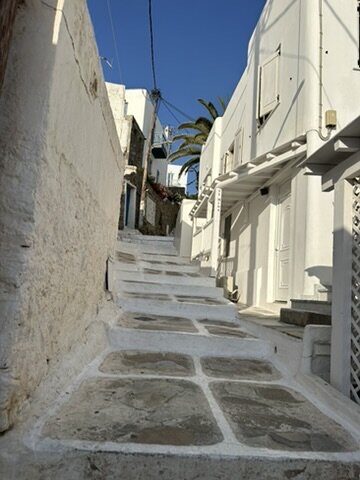
The old town of Mykonos is a maze of white lanes, blue shutters, bougainvillea and little chapels. According to tradition, the lanes were deliberately laid out in a tangle to slow down pirates and the wind – getting lost is part of it. In Little Venice the houses stand right on the water, with balconies hanging over the waves. Just behind it, the Kato Mili windmills stand on the hill – the island’s most famous photo spot.
Chora is at its most beautiful early in the morning, when the lanes are still empty, and late in the evening. At sunset, Little Venice and the windmills are very crowded – better find a spot a little above the windmills or along the waterfront road.
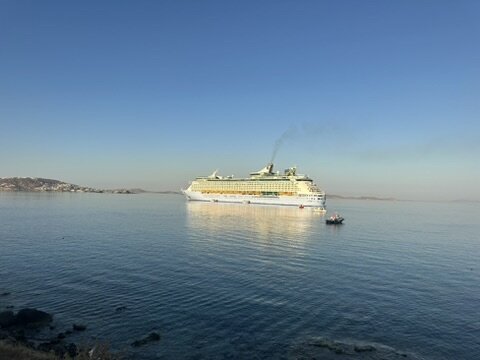
Typical mistake: walking through Chora at midday when several cruise ships are in port. You’ll be pushing through crowds.
In Greek mythology, the small, uninhabited island of Delos is the birthplace of Apollo and Artemis, and it is a UNESCO World Heritage Site. Highlights include the Terrace of the Lions, houses with mosaic floors, the ancient theatre and sanctuaries. Boats leave from the Old Port in Chora; the crossing takes about 30 to 45 minutes. You can’t stay overnight on Delos, and return times are fixed.
There’s hardly any shade. Bring water, a hat and sturdy shoes, and plan your visit for the morning. In a strong meltemi wind boats can be cancelled – keep a spare day if you can.
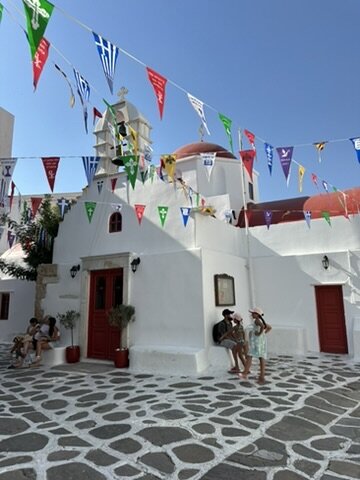
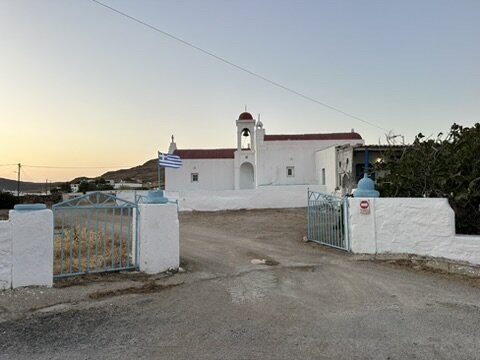
The Paraportiani is the island’s best-known church: a white, irregular building made of several chapels that grew together from the 15th century onwards. It sits on the edge of Chora near Little Venice and combines well with a walk through the old town. Matoyianni is the main shopping lane with boutiques, galleries and cafés – liveliest in the evening.
Most beaches are in the south and are easy to reach by bus or water taxi. Ornos and Platis Gialos are rather family-friendly with calm water; Psarou is known for chic beach clubs and high prices. Many beaches are almost completely covered in sunbeds. If you want to swim without renting one, look for a free stretch at the edge or head to the north coast.
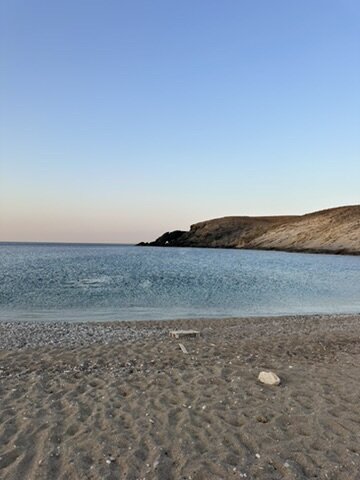
The 19th-century Armenistis lighthouse stands on the north-western tip. From here you have a wide view over the Aegean to the neighbouring islands, and the sunset is much quieter than in Little Venice. The north coast has unspoilt coves such as Agios Sostis or Fokos. There are hardly any facilities, but plenty of space. In a north wind, though, the sea here can be rough.
Ano Mera is the island’s second village, in the quieter interior. On the village square stands the 16th-century Panagia Tourliani monastery with a carved altar screen. Around the square there are tavernas that are quieter and often cheaper than in Chora. A good stop on the way to the beaches in the east, such as Kalafatis.
If you have more time, add a beach day on the north coast in between. Mykonos combines well with Santorini: depending on the connection, high-speed ferries take around two to three hours.
You get to Mykonos by plane (the airport is just a few kilometres from Chora) or by ferry from Piraeus or Rafina near Athens. Rafina is closer to Athens airport. Depending on the route, high-speed ferries take about two to three hours, slower ferries much longer. Check your ticket: Mykonos has an Old Port right by Chora and a New Port in Tourlos, about 2 to 3 km north. Current timetables and prices are on the ferry companies’ websites.
Think carefully about whether you need to bring a car: the crossing with a car is expensive and parking on the island is scarce. On the island, buses (from Chora to the main beaches and Ano Mera), water taxis on the south coast, scooters, quads or a small rental car are often the better choice. There are only a few taxis, and in summer you’ll wait a long time.
For us, Mykonos was part of a bigger trip. How the island fits between Albania, Zakynthos, Athens and Santorini is in our story 40 days around Europe by car: Krka, Kotor, Albania, Zakynthos, Athens, Mykonos, Santorini – and back via the Balkans. The highlights of the Ionian side are in things to do in Zakynthos.
The usual EU rules apply to Greece. For current information on entry, safety and natural hazards such as wildfires, check your government’s official travel advice shortly before you leave, as the situation and rules can change. In strong wind: take the warning flags on the beaches seriously and don’t swim far out.
The old town of Chora with Little Venice and the Kato Mili windmills, the archaeological island of Delos, the Panagia Paraportiani church, Armenistis lighthouse and the village of Ano Mera are among the highlights. Add the beaches in the south and quiet coves in the north.
Two days are enough for the highlights. With beach time and a relaxed trip to Delos, three to four days are more pleasant. We were there for two days, on 22 and 23 July 2025.
Yes, if you are interested in history. Delos is a UNESCO World Heritage Site and can be reached by boat from the Old Port in about 30 to 45 minutes. Plan a morning, bring water and sun protection, and expect cancellations in strong wind.
Not necessarily. Buses run from Chora to the main beaches and Ano Mera, and there are water taxis on the south coast. For more freedom, a scooter, quad or small rental car is more practical than a big car, because parking is scarce.
By plane or by ferry from Piraeus or Rafina near Athens. Depending on the route, high-speed ferries take about two to three hours. Check whether your ferry docks at the Old Port in Chora or the New Port in Tourlos.
Yes, Mykonos is one of the most expensive islands in Greece. Accommodation, sunbeds on well-known beaches and bars in Little Venice cost a lot in summer. It gets cheaper in the off-season, in Ano Mera and with self-catering accommodation.
June and September are usually more pleasant than July and August: fewer crowds, lower prices and a warm sea. In high summer the meltemi, a strong north wind, often blows and can disrupt boat trips.
Last updated: 21 Oct 2026. Prices and rules change – please check with the official sources before you travel.
Passend dazu:
Our verdict on things to do in Mykonos: plan less and take your time for the places you really like. It also pays to visit the most famous spots such as Little Venice and the windmills early in the morning or late in the evening, because it is quieter then. You’ll find more places we have been to ourselves in our travel stories; general background on the island’s history is on Wikipedia.
Ad: partner links – if you book through them, we earn a small commission and your price stays the same.
Phuket hidden gems 2026: quiet beaches, Old Phuket Town, Phang Nga Bay, the Similan season, the free TDAC and cheap airport transfers.…

Paris hidden gems 2026: 15 quiet spots, free museums, Seine swimming, airport taxi flat rates and the official ticket sites that save you mo…

Iceland in winter: aurora tips, ice caves, Secret Lagoon, Reynisfjara status 2026, winter tyres, parking fees and the official sites that sa…
We only use what is necessary to run this website. Everything else – such as statistics or content from third parties – only with your consent. You can change your choice at any time.