Travel tips
Coatis at Iguazu Falls: Rules, Wildlife & Tips in the National Park (Brazil)
Coatis (quatis) at Iguazu Falls: why they bite, the official park rules, what to do after a bite, which other animals you will see (toucans,…
Short answer: Bangkok’s rainy season runs roughly from mid-May to mid/late October; the wettest months are September (336 mm) and October (289 mm), the driest December to February. But it does not rain all day: the typical pattern is one heavy downpour in the late afternoon or at night, often lasting only one to two hours – after which the air is clear and the city empty. We were there in August: about two hours of rain a day, and hotels at up to half the high-season price. It is worth going if you plan your day around the rain. As of 11/2026, sources below.
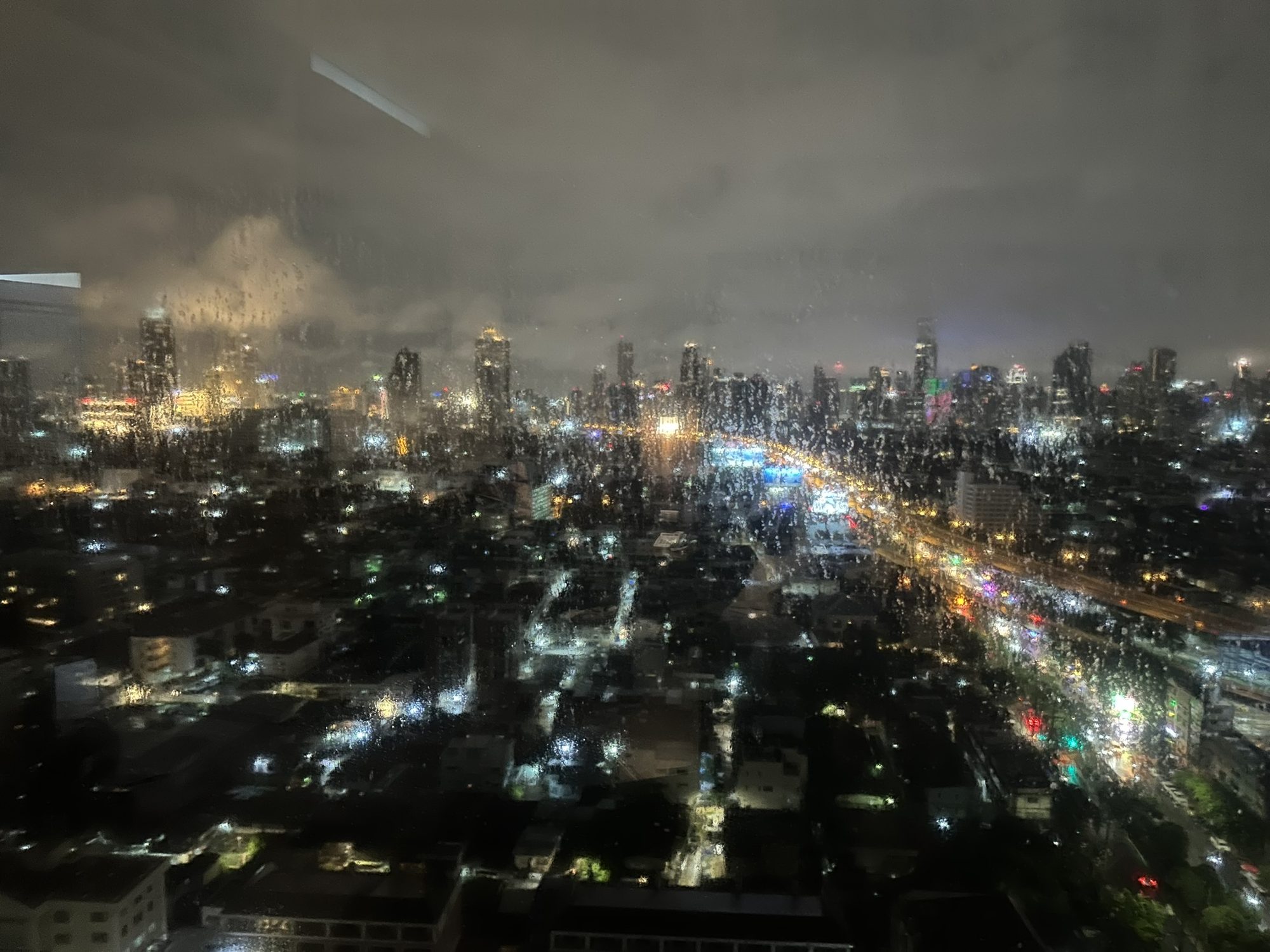
It is 4:20 pm on a rooftop in Sathorn, and the sky over Bangkok is doing something you never see in Europe: within ten minutes a wall of cloud piles up above the towers, grey-violet, as tall as the Mahanakhon skyscraper, and the air suddenly smells of hot asphalt and rain. Then the water comes down – not as a shower but as a wall. Down on the street the food stalls pull out their tarpaulins, the motorbike taxis shelter under the Skytrain viaduct, and two hours later the city gleams as if someone had just varnished it.
Thailand was our first big Asia trip in 2024, and we came back in 2025 – both times with Bangkok days in the rainy season. In this article: which months are really wet (with a climate table), what a rainy day in Bangkok actually looks like, how to plan your day, what to do when it pours, how to get around, what it costs and saves, the traps (flooding, dengue, taxis), plus a checklist and FAQ.
| Month | Rain (mm) | Rainy days | What it feels like |
|---|---|---|---|
| January | 24 | 2 | dry, “cool” (22 °C at night) – high season |
| February | 21 | 2 | dry, warm |
| March | 51 | 3 | hot, first thunderstorms |
| April | 93 | 5 | hottest month (average high 35.7 °C), Songkran |
| May | 217 | 12 | rainy season begins (2025: officially from 15 May) |
| June | 198 | 13 | afternoon showers, often long sunny spells |
| July | 190 | 14 | similar to June |
| August | 227 | 16 | 1–2 hours of rain a day – our month |
| September | 336 | 18 | wettest month, streets briefly under water |
| October | 289 | 14 | still wet, rainy season ends mid/late October |
| November | 45 | 4 | transition, Loy Krathong (2026: 24 November) |
| December | 12 | 1 | driest month, high season |
Source: 1991–2020 climate normals for the Bangkok station, Thai Meteorological Department / WMO (compiled on thailandvoyager.com, as of 28 September 2026). Annual total around 1,700 mm – more than double Vienna’s, but concentrated into a few hours a day.
336 millimetres in September sounds like the end of the world. What such a day really looks like surprises most people.
The morning is almost always dry. Between 7 and 11 am Bangkok has its best light of the rainy season – washed air, less haze, gleaming temples. Around noon it turns muggy, 33 degrees at 80 percent humidity, and cumulus clouds start building. Between 3 and 6 pm the downpour arrives: usually 30 to 90 minutes, sometimes two hours, with lightning over the Chao Phraya. Afterwards it cools to a pleasant 27 degrees, the puddles steam, and the evening is yours. Or it rains at night instead – then you only notice from the wet pavement at breakfast.
What you don’t get: weeks of continuous rain like the monsoon in southern India. Thailand’s Meteorological Department (TMD) officially declares the rainy season every year (in 2025 on 15 May, with the end expected in mid-October), and even in September around 12 days stay without significant rain. In August we had about two hours of rain a day in Thailand – and the rest of the day sun, empty temple courtyards and hotel prices that were in some cases half the high-season rate.
So the trick is not to dodge the rain but to build it into your day. There is a plan for that.
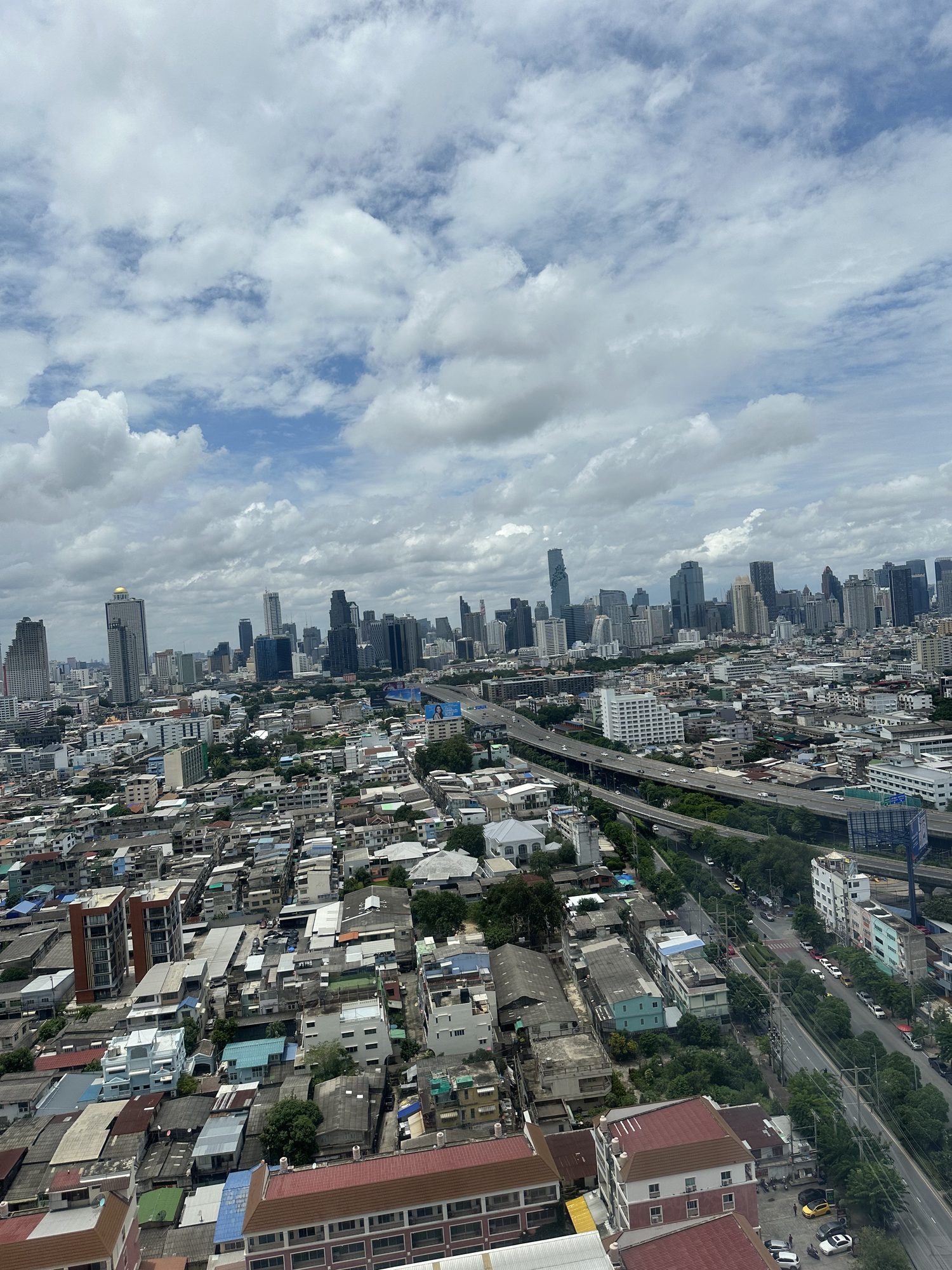
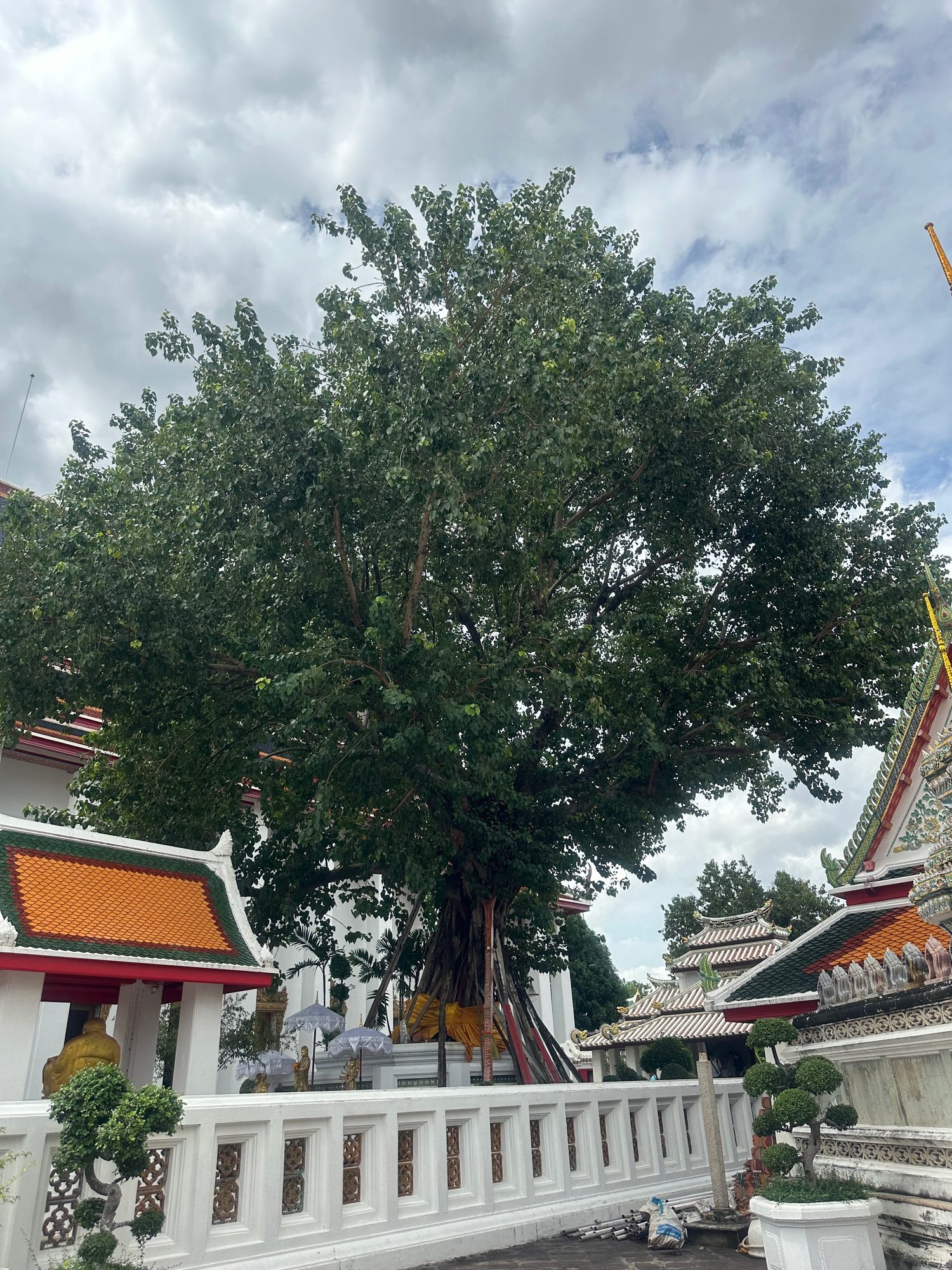
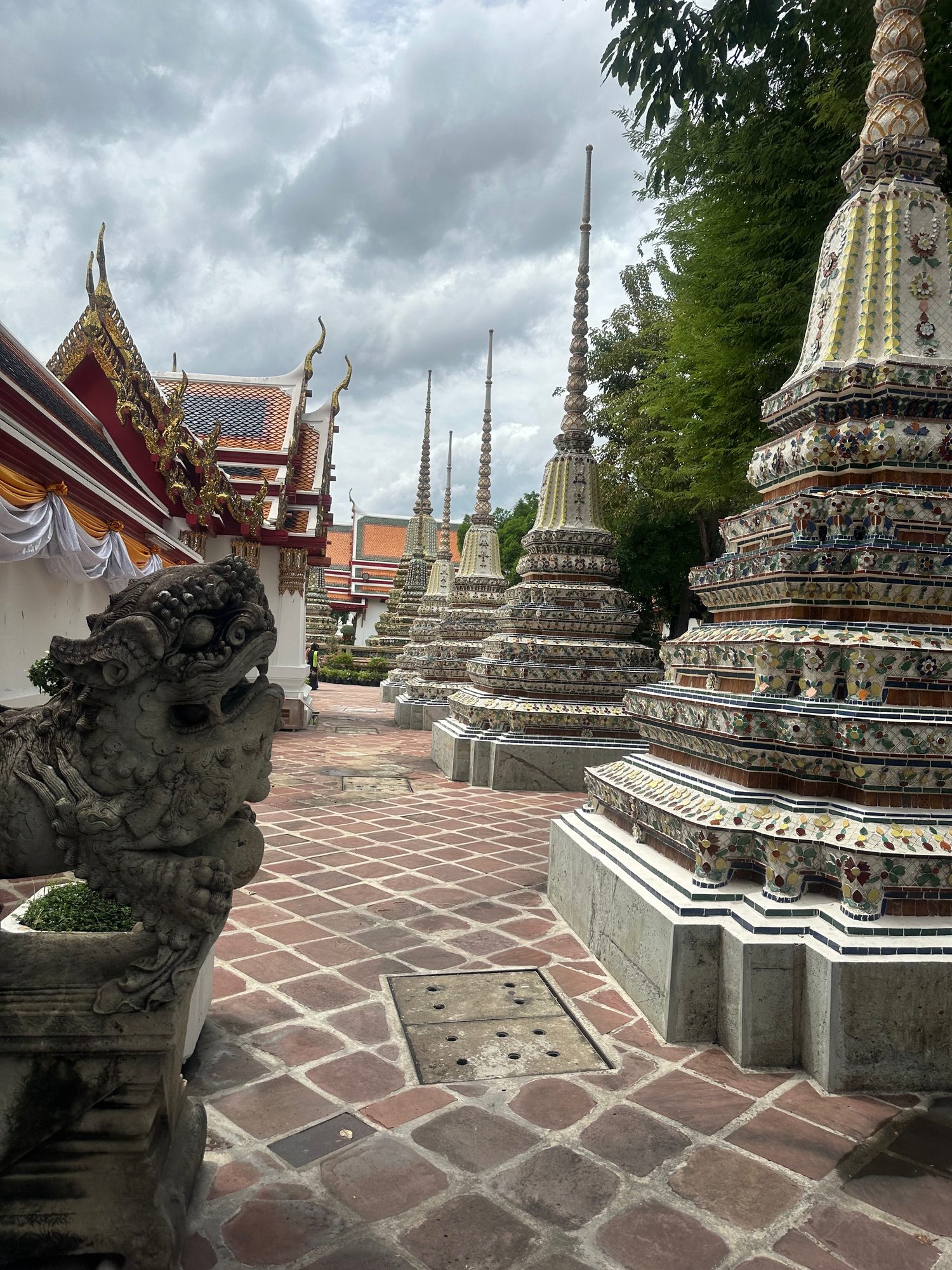
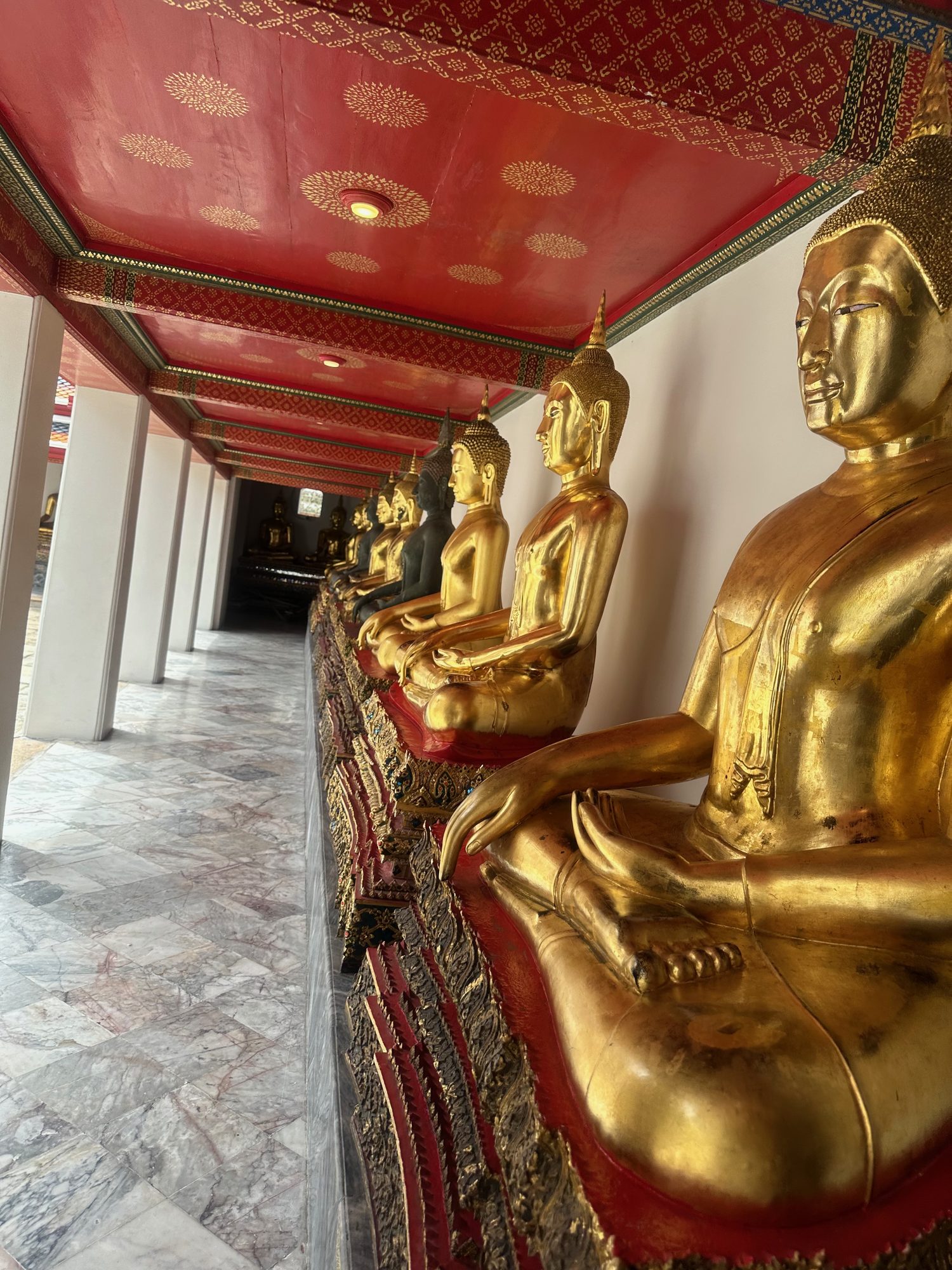
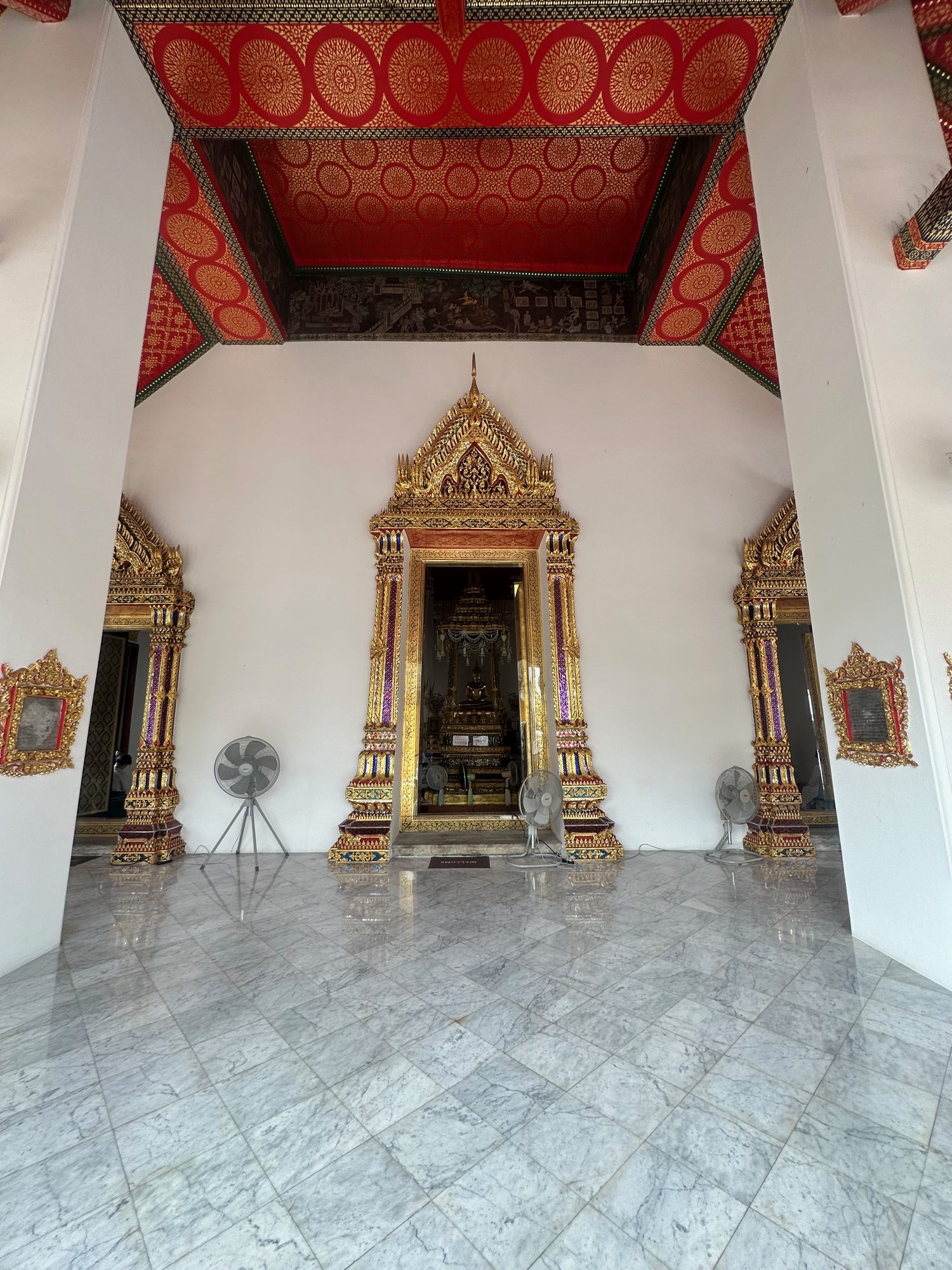
6:30–11:00 am – everything under the open sky. Grand Palace (opens 8:30), Wat Pho from 8 am, Wat Arun by ferry, the Pak Khlong Talat flower market, a ride on the Chao Phraya Express. It is dry now, not yet too hot and at its emptiest – how to have Wat Pho almost to yourself at eight is in Wat Pho Bangkok: entry fee, opening hours, massage.
11:00 am–3:00 pm – lunch and shade. Chinatown street kitchens, a café in Ari or Thonglor, a siesta at the hotel. If you are exploring the city with children, this is pool time.
3:00–6:00 pm – indoors when it crashes down. Jim Thompson House (the silk merchant’s teak house, with guided tour), Museum Siam, the Bangkok Art and Culture Centre, or the malls, which are cultural venues here: ICONSIAM with the indoor market on the ground floor, MBK for electronics, Siam Paragon with the aquarium. An hour of Thai massage fits exactly into one downpour.
From 6:00 pm – the washed city. A rooftop bar after the storm (the air is clearest now), Jodd Fairs night market or Chinatown on Yaowarat Road, a river cruise at night. What to do on which of three days and in what order is in Bangkok 3 days itinerary – in the rainy season you simply rotate each day so the temples fall in the morning.
That leaves the question of how to stay dry between stops – because Bangkok traffic has its own rules in the rain.
| Transport | In the rain | Tip |
|---|---|---|
| BTS Skytrain / MRT | runs, air-conditioned, covered | book a hotel within walking distance of a station (Sukhumvit, Silom, Siam) |
| Chao Phraya Express Boat | usually keeps running, short pause in thunderstorms | fastest link to the old-town temples, piers are covered |
| Metered taxi | traffic jams become standstills, drivers refuse rides | use before 3 pm or after 7 pm, insist on the meter |
| Grab / Bolt | prices rise in the rain, 20–40 min wait | order before the downpour, not in the middle of it |
| Motorbike taxi | runs, but wet and risky on slick roads | short distances only, ask for a helmet |
| Tuk-tuk | open, spray | evening ride after the rain – then it is fun |
Rule of thumb: anything on rails or water stays reliable. Anything on the road stands still. How to get from the airport into town even in a thunderstorm (Airport Rail Link instead of the taxi queue) is in Bangkok airport to city. And when the street really is under water? It happens – but differently from what you expect.
Streets under water: After a cloudburst some streets in Sukhumvit, Lat Phrao or around Chinatown stand ankle-deep in water for about an hour because the canals (khlongs) cannot drain it fast enough. This is everyday life, not an emergency – sandals instead of trainers, and don’t wade through standing water if you can avoid it (rats, sewage). The great flood of 2011 was an exception after months of rain in the north; the old town and the hotel districts have been better protected since.
Dengue: The rainy season is mosquito season, and the dengue mosquito bites during the day. The Austrian Foreign Ministry flags dengue in its Thailand travel information. Repellent with DEET or icaridin from the morning, long light clothing in the evening – and if you get a fever after returning, tell your doctor about the trip. Travel health insurance is non-negotiable for us; a night-time emergency on Phuket in November 2025 showed us why.
Humidity: 33 degrees at 80 percent humidity is more exhausting than 38 dry degrees. Two litres of water a day, electrolytes from the 7-Eleven, a midday break in air conditioning. And one point nobody mentions: in the rainy season the sea on the Andaman coast (Phuket, Krabi) is often rough with red flags – the Gulf side (Koh Samui) has its rainy season later, in October/November. That makes no difference for Bangkok itself, but it does for where you go next.
Sounds like a lot of caution – but it is matched by solid advantages.
What you need to pack for all this is manageable – and almost everything is available locally too.
From Vienna you fly with one change in around 13 to 16 hours to Bangkok Suvarnabhumi; there are direct flights from several German airports. In the rainy season flights are usually noticeably cheaper than from December to February – compare prices on Kiwi.com (advertisement). Arriving in a thunderstorm? The Airport Rail Link runs regardless of traffic and reaches Phaya Thai in 30 minutes. And if you want the sea after Bangkok: which coast is dry when is explained in Phi Phi, Krabi and Maya Bay by longtail – we went twice, once in high season, once not.
For Austrians, Germans and Swiss the rule since 15 September 2026 is: visa-free for up to 30 days (the earlier 60-day rule has been abolished), passport valid for at least six months on entry. Mandatory is the Thailand Digital Arrival Card (TDAC), which you complete free of charge and no earlier than 72 hours before arrival – exclusively at tdac.immigration.go.th, the website of the Thai Immigration Bureau. Current advice from the Austrian Foreign Ministry is at bmeia.gv.at → Reiseinformation → Thailand; visas for longer stays are applied for only via the official e-visa portal thaievisa.go.th or the embassy in Vienna. All details are in Thailand entry requirements 2026.
Warning: There are intermediary websites that charge €50, €80 or more for the free TDAC or a “Thailand visa” and rank above the official page in search results. We once fell for such a site ourselves – since then: official sites only, type the address yourself, never click through an ad. In the guide you will find all official links as QR codes.
Roughly from mid-May to mid/late October. The Meteorological Department (TMD) officially declares the start and end each year; in 2025 it began on 15 May, and the start of the “cool” season in recent years fell between 23 October and 14 November.
September, with an average of 336 mm on 18 rainy days, followed by October (289 mm) and August (227 mm) – 1991–2020 climate normals of the Thai Meteorological Department.
No. Typical is one heavy downpour of 30 minutes to two hours in the late afternoon or at night; mornings are mostly dry. In August we had around two hours of rain a day.
Yes, if you plan your day: temples in the morning, museums and malls in the afternoon. In return you get empty sights, clear air after the rain and hotels that in our case cost up to half the high-season price.
Not normally for travellers: after cloudbursts individual streets are under water for about an hour, then it drains. The great flood of 2011 was an exception. Don’t wade through standing water, wear sandals.
The rainy season is dengue season; the Austrian Foreign Ministry flags it in its Thailand travel information. Repellent from the morning (the dengue mosquito bites during the day), long clothing in the evening, and see a doctor if you develop a fever after the trip.
If this has got you hooked, read next Bangkok: the sights that are really worth it and our route in Bangkok 3 days itinerary. To the sea after the rain? Krabi and Phi Phi by longtail boat.
Ad: partner links – if you book through them, we earn a small commission and your price stays the same.
Coatis (quatis) at Iguazu Falls: why they bite, the official park rules, what to do after a bite, which other animals you will see (toucans,…
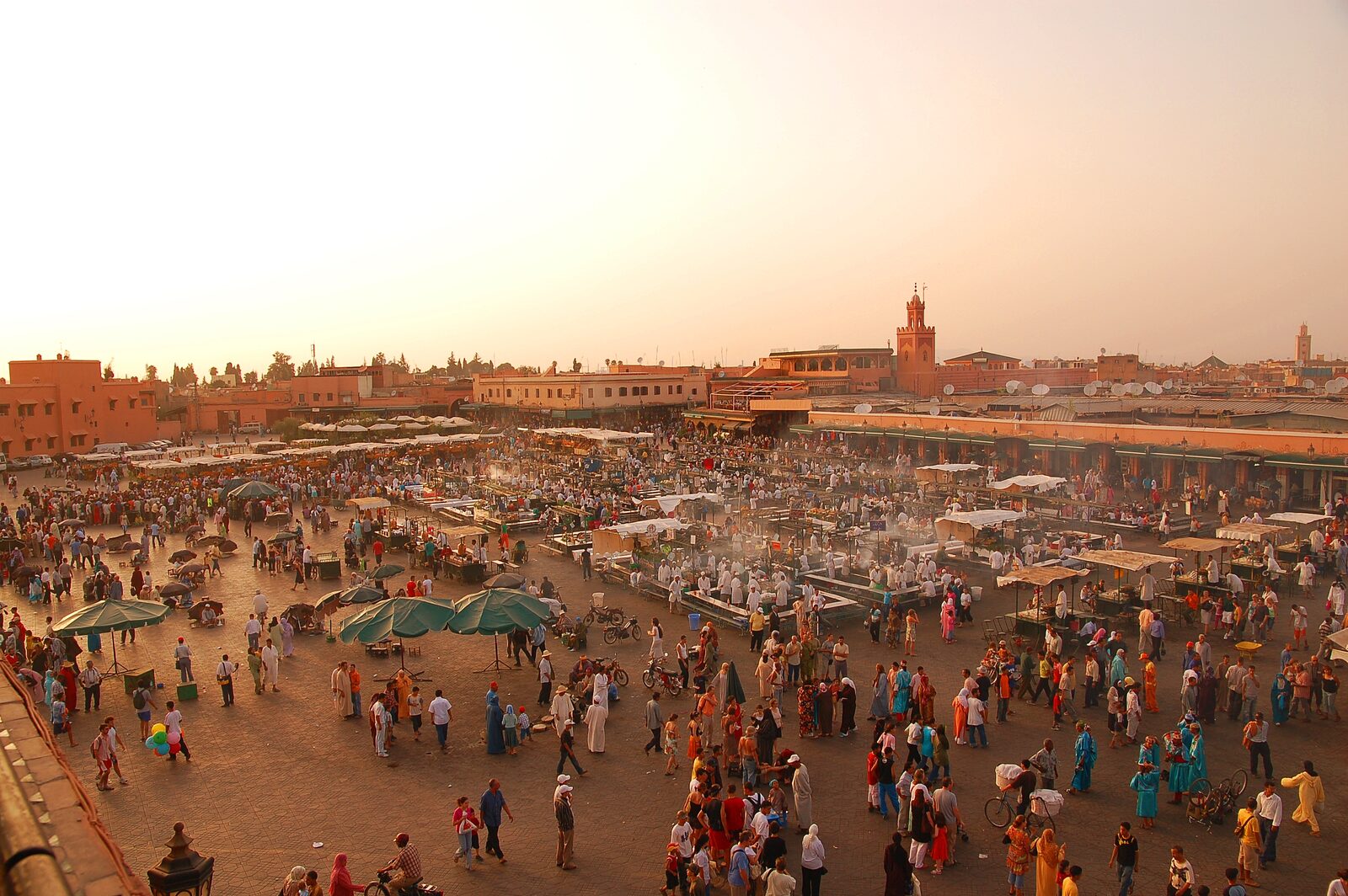
The best time to visit Morocco month by month – with climate data for Marrakech, Fes, the coast and desert, Ramadan 2027, festivals and typi…
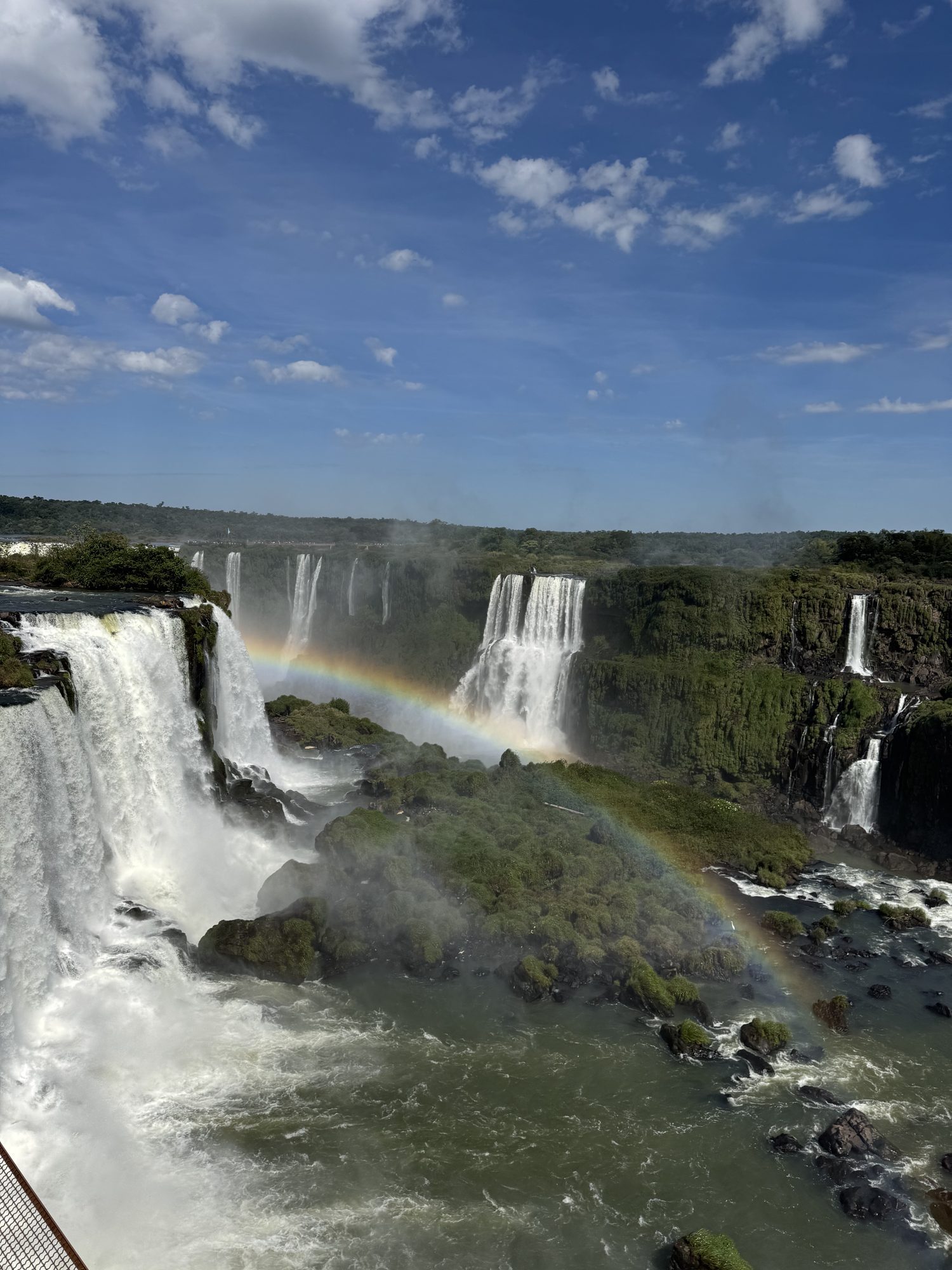
The Iguazu Falls from the Brazil side: current prices from official sources, cheap access by bus 120, best time, extras and the traps that c…
We only use what is necessary to run this website. Everything else – such as statistics or content from third parties – only with your consent. You can change your choice at any time.